Virtuoso by Yelena Moskovich

6376480e-560e-40cf-bbef-0311d6cc6047

Virtuoso by Yelena Moskovich

Published By Serpent’s Tail

Available from all good Bookshops and Online

What They Say

Zorka. She had eyebrows like her name.

1980s Prague. For Jana, childhood means ration queues and the smell of boiled potatoes on the grey winter air. But just before Jana’s seventh birthday, a new family moves in to their building: a bird-eyed mamka in a fox-fur coat, a stubble-faced papka – and a raven-haired girl named Zorka.

As the first cracks begin to appear in the communist regime, Zorka teaches Jana to look beyond their building, beyond Prague, beyond Czechoslovakia … and then, Zorka just disappears. Jana, now an interpreter in Paris for a Czech medical supply company, hasn’t seen her in a decade.

As Jana and Zorka’s stories slowly circle across the surreal fluctuations of the past and present, the streets of 1980s Prague, the suburbs of 1990s Wisconsin and the lesbian bars of present-day Paris, they lead inexorably to a mysterious door on the Rue de Prague …

Written with the dramatic tension of Euripidean tragedy and the dreamlike quality of a David Lynch film, Virtuoso is an audacious, mesmerising novel of love in the post-communist diaspora.

What I Say

From the beautiful cover, through to the very last page, Virtuoso is a lyrical and ethereal novel, unlike any I have read before. I initially thought it was simply about the relationship between two girls, Zorka and Jana. I was ready to learn about their childhood in Prague, and the subsequent paths their adult lives would take.

Virtuoso is just that, but so much more too. It is a startling commentary on life under the Communist Regime in Prague, a novel about what family is to us, how we search for our identities throughout our lives, and what it means to find our place in the world.

The novel starts with a young woman discovering the body of her wife in their hotel room, and immediately you are pulled into their world as you have no idea why this woman has passed away, or indeed who any of the characters are. It serves to draw you in immediately to the plot, and I was intrigued by it. As the novel moves forward, we are observers to the lives of Jana, Zorka and Aimee, all of whom have their stories to tell, and slowly their lives start to come together as we understand how inextricably linked their lives are.

Jana is a respectful and quiet young girl, who lives a fairly unremarkable existence with her mother and father, until one day Zorka and her family move in to her neighbourhood. From the first time they meet, Jana and Zorka have an immediate connection, a sense that their meeting was pre-destined, and Jana seems to be in awe of this fiery and outspoken girl who is absolutely aware of her self and the innate power she possesses. Zorka seems to be someone who refuses to be categorized or tamed, she is determined to live her life how she wants, and Jana can only stand by and watch. What happens from that point on, is that these two women are entwined forever in a relationship neither can adequately describe.

Right from the start of the novel, you are aware of the confines and restrictions placed on women during this time. They are defined by their roles of wife and mother, whilst living in a world of unspoken subservience and fear. You do not know who to trust, and what you can say, and as mothers sit with each other and swap secrets, the playground benches are apparently the safest place to do so. This is why Zorka is such a revelation to Jana and her family. Although initially Zorka seems to be this problematic child, who pushes everyone to their limits, we as readers learn the troubling relationship she has with her mother, and this defiance is a distraction technique so her mother won’t physically assault her.

Little by little, Zorka realises the only way she can survive her childhood is to escape from it, leaving Jana behind, bewildered and shattered at the loss of this young woman who she had come to depend on. What Yelena captures so perfectly is the intensity of friendship between girls, how they mean everything to you at the time, the shared secrets, the confessions and discussions about your hopes and dreams. To have that taken away from you without explanation can be devastating, and for Jana, she now has to work out how to carry on living alone in the very place that Zorka has deserted.

Aimee is living with her father after her parents divorce and is working for his company, however she seems to be unsettled and searching for someone to love. Her memories of her life with her father come out as a stream of remembrances, but this works as it gives the reader an insight into her thoughts and dreams. Eventually she meets and falls in love with Dominique, an actress. Initially their relationship seems idyllic and gives Aimee everything she thought she wanted, but little by little, she comes to realise that Dominque has issues of her own, and she will again fall into a role of caring and supporting someone at the expense of her own hopes and desires.

The novel as it progresses, seems more fractured in terms of the narrative, and is at times almost dreamlike in its telling. There are short, distinct chapters, a nightmarish scene outside a club where Jana is brutally attacked by strange and disturbing children and the ever present blue smoke that seeps into different chapters and permeates the narrative.

Virtuoso is also an exploration of self and sexuality, and the visble and real relationships between Jana and Zorka and Aimee and Dominique are offset by a relationship carried out in the confines of a chatroom. A thread of a conversation between an American teenager called Amy and an Eastern European housewife whose username is Dominxxika_N39 who is effectively kept prisoner by her husband are presented to us without context. Their conversations reveal that Amy is a pupil known to Zorka, but Amy is determined to travel to this woman and rescue her, which as casual observers on their chat is unsettling for the reader, and we are simply bystanders who are unable to intervene to save Amy from her fate.

As the novel draws to its conclusion, it becomes more surreal and is far from a straightforward narrative that many of us are comfortable with. Did I ‘get’ all of it – no. However, it is impossible to not be drawn into Jana, Zorka and Aimee’s lives, to see how they try to define themselves and their place in the world even when the world doesn’t seem to make sense to us.

In Virtuoso, Yelena has written a brave and uncompromising novel, which has interesting and defiant women at its core. It serves only to remind us that fiction can be whatever it wants to be, as long as readers are open to recognising that not everything can be explained neatly and completely.

Thank you very much to Midas PR and to the Dylan Thomas Prize for my copy of Virtuoso in exchange for an honest review.

I’m one of 66 Bloggers taking part in the Dylan Thomas Prize Blog Tour – do follow Midas PR and The Dylan Thomas Prize to see what my fellow bloggers have to say…
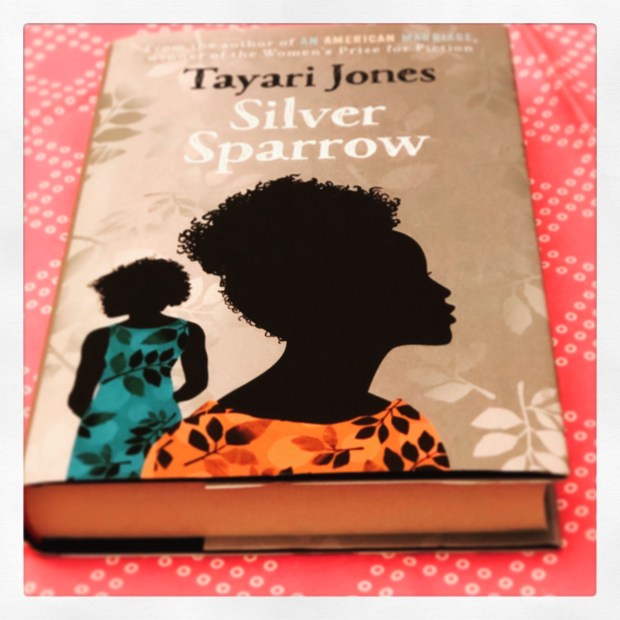
Silver Sparrow by Tayari Jones


 Silver Sparrow by Tayari Jones

Published by OneWorld Publications

Available from all good Bookshops and Online


What They Say.

A breathtaking tale of family secrets, from the international bestselling author of An American Marriage

‘My father, James Witherspoon, is a bigamist.’

This is the story of a man’s deception, a family’s complicity, and the two teenage girls caught in the middle. James Witherspoon has two families, one public, the other a closely guarded secret. But when his daughters meet and form a friendship, only one of them knows the truth. Theirs is a relationship destined to explode.


What I Say

”Silver’ is what I called girls who were natural beauties but who also smoother on a layer of pretty from a jar. It wasn’t just how they looked, it was how they were.’

When I was offered the opportunity to read and review Silver Sparrow, as soon as I read the synopsis, I knew that this novel would be controversial as it deals with the issue of bigamy.  However, what you cannot determine from a synopsis is the emotional and personal stories that are part of the story too, and for me, how the bigamist, James Witherspoon is far from any preconceived notions I may have had as to what a bigamist is actually like.

Silver Sparrow may be about a man who is a bigamist, but do not for one minute think that he is the main focus of this story.  James Witherspoon is the link between the two families, but this novel for me is absolutely about the women in his life.  He is married to Laverne, and they have a daughter called Chaurisse, and his other wife is Gwen, and their daughter is Dana.

The novel is split into two parts – the first tells the story of Dana and her mother, the second is Chaurisse’s and Laverne’s story.  What worked so well for me was that the narrative brings you close to each family in turn, and in hearing Gwen and Dana’s story first, you understand from the start that Dana and Gwen are aware of his other family – but Laverne and Chaurisse have no clue that James has another wife and daughter. In separating the two narratives and slowly bringing them together, you also form attachments to all the characters, and see the reality of what being involved with a bigamist is truly like on a day to day level.

What permeates Dana’s story right from the start is not only her deep love for her parents, but her heartfelt frustration that she and her mother are only half living their lives.  James’ visits to them are sporadic, secretive and Dana cannot really experience the father daughter relationship she desperately craves – because in theory she and her mother do not exist. She and her mother are often referred to as the ‘outside’ family, and Dana feels that deeply.

Gwen is acutely aware of her daughter’s feelings and is determined to ensure that James fulfills his financial responsibilities to his daughter, and that she in turn provides the stability and support Dana deserves.  The situation is complicated by the fact that both families live in the same school area, and as Dana and Chaurisse are close in age that they will cross paths one day. Sure enough, when Dana attends a science event, she notices an upset girl who has forgotten part of her project, and also happens to be wearing the exact same coat James gave her, and realises it is her half sister Chaurisse. As Chaurisse’s mother arrives with the missing papers, there is a devastating moment when Laverne and Dana see each other for the first time and realise who they are.

It is a poignant and understated moment, but for me, Tayari’s sublime writing of that encounter was a perfect snapshot of everything that both families are going through. They exist, but they cannot acknowledge each other, and each daughter and wife brings with them a history with James that the other has no understanding of. James may be the link between the two families, but it is their reality and lives he is unwittingly playing with.  The other interesting point for me, was that James is a character who just seems to have fallen into the role of bigamist – he is not a cold and calculating man who is scheming to hurt his wives, he just seems to love them both for what they bring to his life, and he can’t make a definitive choice. I am not for one minute condoning what he does, but Tayari has written a character where you can’t help but feel for him and this chaos he has created of his own volition.

James’ best friend Raleigh is the stoic and sensible character, who although not related to James, is like a brother to him.  He provides the stability for both the families, and cannot help but become linked to both.  Raleigh is named as Dana’s father on her birth certificate, and it is clear through the novel that he loves Gwen, even though she turns down his marriage proposal as Dana does not want anyone to replace James in her life.

In telling both Gwen and Laverne’s story too, we understand the cultural and societal expectations placed on women at that time, and in hearing Laverne’s story we see how a naive sexual encounter resulted in her pregancy and marriage- at the age of fourteen. She had to marry James, give up school – although James carried on and Laverne lost the baby, but from that moment on Laverne’s destiny is set in stone. She is now James’ wife and is expected to act accordingly. 

As Dana and Chaurisse grow up, they become friends, and all the time, Dana is totally aware of who Chaurisse is, while Chaurisse is just happy to have a friend who she can spend time with and forge a friendship with.  The novel is filled with heartbreaking moments, where we as readers, like Dana, have true understanding of the reality of the situation while Chaurisse is blissfully unaware. When Chaurisse invites Dana to her house – which her Mum also works from as a beauty salon, Laverne is horrified to see this girl in her home, but Dana is desperate to see her father’s other home. As she moves from room to room, and asks Chaurisse numerous questions about her father, we can see that Dana is trying to understand exactly what her father does when he is there, and how this other family exists so openly while she and her mother have to be part of his secret.

The skill in Tayari’s writing is that with each character, you form an emotional connection to them. Their sadness and joy, hope and despair are keenly felt because they are real, truthful and resilient women whose lives are determined by the actions of the one man whom they all love.

Finally, the two families are brought together when Dana and Chaurisse have a flat tyre on a night out together and Chaurisse rings her dad to come and help them, and Dana has phoned her mother.  From that point on, their lives will never be the same again, and everything Chaurisse and Laverne believed they knew about James Witherspoon are about to be shattered. These revelations are even more devastating because Laverne has just been convinced to have a Twentieth Wedding Anniversary Party, and she realises she knows nothing about this man who is also someone else’s husband.

How do these two families ever recover from this? Well, you will need to read Silver Sparrow to find out!

In this novel, Tayari Jones has written about James Witherspoon, and the families who are in his world, but Silver Sparrow is so much more. It is a novel about wanting to belong, about finding your way in the world when you have been forced through no fault of your own to live in the shadows and the truth that family is everything to so many of us, no matter what that looks like to everyone else.

It is an emotional and truthful novel, that delves deep into the heart of marriage and all the complications it brings in this situation. Tayari Jones has taken a subject that could have been sensationalised and derided, and instead has completely ensured that we as readers absolutely understand what it means when the man you love turns your world upside down and the earth shattering devastation it brings to the women involved.

Thank you very much to Oneworld Publications for my copy in exchange for an honest review and a chance to take part in the Blog Tour.

Exquisite Cadavers by Meena Kandasamy

ee648c08-b91a-4ca3-9089-a7cd03f43ef0

Exquisite Cadavers by Meena Kandasamy

Published By Atlantic Books

Available from all good Bookshops and Online

What They Say:

Karim and Maya:
[x] share a home
[x] worry about money
[x] binge-watch films
[x] argue all the time

Karim, a young film-maker, carries with him the starry-eyed dreams of the Arab Revolution. Maya carries her own pressing concerns: an errant father, an unstable job, a chain-smoking habit, a sudden pregnancy. When Karim’s brother disappears in Tunis, and Karim wants to go after him, Maya must choose between her partner and her home city, her future and her history…

In a conversation between forms, fictions and truths, Exquisite Cadavers is a novel about a young couple navigating love in London, and a literary hall of mirrors about an author navigating the inspirations behind her work.

What I Say:

I had read and loved When I Hit You, which was the first novel Meena had written. It was an honest and brutal exploration of a woman in an abusive marriage, and one that I thought about often after reading it.

For Exquisite Cadavers, right from the very first page, you are aware that this novel is one that will push the boundaries not only of conventional literature, but will also ask the reader to be much more involved and aware of the form of the novel than ever before. This novel is not a passive experience for the reader, and if you are looking for a book that conforms to a standard straightforward narrative, then this is perhaps not the novel for you.

I am going to be honest and tell you that initially on reading it, I had no clue as to how I could possibly articulate a review.

The novel is short, impactful, and filled with so much information and knowledge that it feels much longer. The format is like nothing I have ever read before. It has one narrative down the middle of the pages – that of Maya and Karim, whilst in the margins, Meena has written copious notes of her personal life, creative process and what is going on for her in her world as she constructs the novel.

The ingenuity of all this in my opinion is how you choose to read it. Do you read the main narrative and refer to the notes in the margins as you go along, or do you read the margin notes first, or the main narrative first? This is a process that made me stop and think – initially I read the main narrative and notes as I went along, but it was too disjointed for me, so I decided to read Maya and Karim’s story first, and then Meena’s notes. The interesting thing I found, was that I was completely immersed in both stories as I read them separately, but also felt a slight disconnection from Maya and Karim as I read Meena’s notes. I was very aware of how they were constructs of Meena’s imagination, and the influences she had imbued them with as she created them – because they are just that – creations of her imagination.

Maya and Karim are young, married and in love, he is a film maker and his attempts to try and document the world he wants to show are frustrated at every turn. His narrative is slowly edited by the tutors around him so that he works on what they believe he should talk about – no matter how contrived or stereotypical it might be, at the risk of him losing his place on the course. Maya works on a newspaper, but she is acutely aware of the domestic world she is now part of, and is energised by the freedom she has, but is also and Karim both have difficult relationships with their fathers too, and have been increasingly getting frustrated with each other as the day to day reality of marriage becomes more prevalent.

As the novel progresses, Meena’s voice also becomes clearer and informs Maya and Karim’s narrative too. When she feels she cannot relate to Maya, she decides that she will make her pregnant- just as she is in real life. I thought this was a very incisive device to ensure that the reader is aware that everything we read in Maya and Karim’s story is a construct of what Meena wants us to read. As Maya and Karim’s story moves on, we learn that Karim has his own way of viewing his wife – his knowledge as a filmmaker imbues the way in which he views her too.

I felt that throughout this novel , the notion of home and belonging was a strong theme throughout- both in Maya and Karim’s story, but also in Meena’s notations too. She references both her own journey to where she has settled today, but also talks about the reality for those family and friends who are in other parts of the world too. There are also lots of references to cultural and political events which, due to my lack of knowledge meant that I had to stop and research them before returning to the text and rereading them – but this time with a sense of awareness.

When Karim decides to return to Tunis to support his brother who has been wrongfully arrested, Maya stands at a threshold where she can stay at home and watch from afar, or she can make a life changing decision to follow her husband, breaking out of the domestic and social confines they have constructed. What I thought was really interesting was that Meena’s notes stop suddenly, bringing the reader immediately back to Karim and Maya’s story, and the stark reality of the decisions they have to make,

Without a doubt, Exquisite Cadavers was a novel at first I was intimidated by. I have to think why that was. I believe it was because it so pushed me out of my comfort zone that my first reaction was to stop. However, isn’t that what literature and reading is all about? To read things that bring new worlds and ideas to us, to challenge our preconceived ideas and to show us the world beyond our comfortable own?

Now I have had time to reflect on it, I think it is an extremely intelligent and thoughtful novel that makes us as a reader really engage with the words on the page, and think about the writer behind them too. The story of Maya and Karim may be the one we are immediately drawn to, as it is what our eye searches for as soon as we open the novel, but for me, the creative process and education I received by taking the time to read Meena’s notes in the margins, are what added the important and brilliant dimension to this work.

Exquisite Cadavers is a novel that demands your full attention at all times. It is breathtaking in its scope, and ambitious in its demands of the reader, but it is impossible to put down. In reading Maya and Karim’s story, we are also gaining a rare and intimate insight into the world of a writer, and for Meena to articulate that so openly and honestly means that we as readers are witness to a world we are all so often blissfully unaware of too.

Thank you very much to Midas PR and the Dylan Thomas Prize for asking me to take part on this Blog Tour in exchange for an honest review.

There are 65 other Bloggers taking part on this amazing Blog Tour for the Dylan Thomas Prize Longlist – why don’t you check out what they are saying too..

ab6a3716-4e5a-479b-b676-4221fc0ba878

Saving Missy by Beth Morrey

c0b3950e-2f39-47f2-bec9-39a7f3c2ea00

Saving Missy by Beth Morrey

Published By Harper Collins

Available from all good Bookshops and Online from 6th February

What They Say.

Missy Carmichael’s life has become small.

Grieving for a family she has lost or lost touch with, she’s haunted by the echoes of her footsteps in her empty home; the sound of the radio in the dark; the tick-tick-tick of the watching clock.

Spiky and defensive, Missy knows that her loneliness is all her own fault. She deserves no more than this; not after what she’s done. But a chance encounter in the park with two very different women opens the door to something new.

Another life beckons for Missy, if only she can be brave enough to grasp the opportunity. But seventy-nine is too late for a second chance. Isn’t it?

What I Say.

“But I still felt it somewhere – that spark. The beginning of something. Or the end. Who knows?”

There is as always, a bit of a back story to my choosing Saving Missy to review (not a long one I promise!). Some of you will see me frequently talk about LoveReading on my Twitter and Instagram feeds, and wonder what they are. In the simplest terms, if you sign up to them, you get the chance to read and review the latest releases in return for posting a review. I should also say that this is not an ad for them, and that all they have done so far is to supply me with fabulous books! Anyway, the always fabulous Liz Robinson of LoveReading sent me a copy of Saving Missy last year, and of course I am not going to spoil the ending, but let me tell you, there were quite a few DMs exchanged between us as to how wonderful Saving Missy is.

Why? I am going to go out on a limb here, and tell you that Saving Missy is already going to be on My Most Selfish Reads of 2020 – because it’s that brilliant.

How to tell you about Saving Missy without saying too much is difficult, but this is what you need to know about the story. Missy Carmichael is a 79 year old woman, her husband Leo is no longer at home, and her children Alistair and Mel have grown up and moved out.

The thing is, Missy now rattles around a large house in Stoke Newington, and just exists in a constant state of following the same routines she always has, often not speaking to anyone from day to day. One day, on a trip to the park, she encounters Angela and Otis, a Mum and son who have come to watch the fish being moved out of the park’s pond. After Missy has a fall, and people rush around her to help, she fades into the background once again. Except she keeps meeting Angela and this time, Angela needs her help to look after a dog called Bobby that she has inherited.

Little by little, Missy finds herself in a situation where she has to start to let people in to her life, to understand that by making connections with the outside world she will start to live the life she really deserves. That may sound melodramatic, but to simply say that Saving Missy is a light hearted feel good novel does no service to the novel or to Beth Morrey.

Saving Missy is a novel that totally resonated with me on so many levels. The notion of Missy always as Leo’s wife, Ali and Mel’s Mum, means that her identity has been shaped by the needs and demands of those around her. Little by little, she has lost herself along the way, and all her hopes and dreams had to be put to one side as she focussed on helping her family thrive. I thought it was interesting to see how in her marriage, her intelligence and passion for learning had to be quashed in order to ensure that her husband is the head of the household. I know so many women who have done the same thing, and the level of frustration and invisibility they feel is more and more evident.

As Beth Morrey goes backwards and forwards in time so you can unravel Missy’s story, it helps to underline how frustrating and unheard so many women were. They had to make a choice, family or career, and those who chose the latter were seen as having made an unnatural choice. This device added an extra layer to the novel, as you were really able to see Missy completely, and how the choices she made and those she was pressured to make, made her the woman she is now.

I thought it was also really interesting to see how Missy’s house is always the ever present place at the heart of everything. First a place to be with her husband, then as a family home, and finally as almost a place where she can escape to when the world gets too much, but it’s also a claustrophobic and lonely place too sometimes. It is only by having the courage to step outside it, and to let people in that she can really start to live again.

In lesser hands, the character of Missy could have been a stereotypical lonely old lady, which would have grated and meant that I didn’t engage with the story at all. Beth Morrey is so adept at making Missy a real, relatable and interesting woman, that you can’t help but absolutely feel you need to see what happens. I loved Angela too, she is such a fabulously unapologetic character, who is doing the best she can, and I wish that authors would do this more often – we need to see people who are not Instaperfect mothers, and who are simply happy that their kids make it through each day!

As Missy gets more and more involved with the world around her, she starts to finally open up to them, and as a result, Missy becomes part of their world as much as they become part of hers. The story moves at a perfect pace, and to say too much would give it a way, but Beth writes so perfectly that the plot is seamless, and it’s simply one of those novels that you lose yourself in.

Saving Missy is quite simply a novel you need to read – especially in a world where at times everything at the moment seems so bleak. It is a perfectly pitched and executed novel about a woman who has almost given up on the world around her, but the kindness of the people who live so close by bring her back to life. It is a book that tackles huge issues such as illness, grief, loneliness, love and sexuality, but not for one moment do you feel like you are being preached to.

It is a glorious, kind, loving and special novel that will resonate with so many readers, and makes us think how the smallest actions we take, can have the biggest impact on those who feel they are invisible and unloved in the world around us.

I absolutely loved it – and I hope you do too.

Thank you as always to Liz Robinson and Charlotte Walker at LoveReadingUK for my gifted copy.

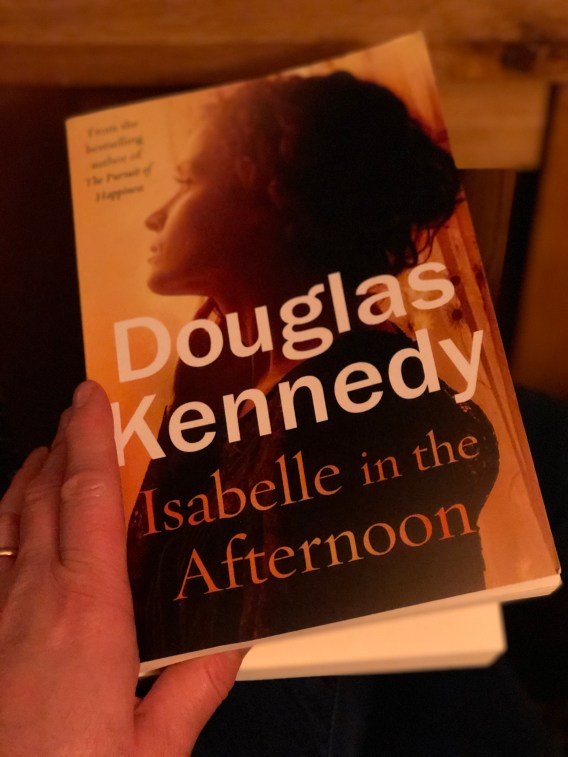
Isabelle in the Afternoon by Douglas Kennedy

img_7877

Douglas Kennedy – Isabelle in the Afternoon

Published by Hutchinson Books on 9th January

Available from All Good Bookshops and Online

What They Say:

Before Isabelle I knew nothing of sex.
Before Isabelle I knew nothing of freedom.
Before Isabelle I knew nothing of life.

Paris in the early Seventies. Sam, an American student, meets a woman in a bookshop. Isabelle is enigmatic, beautiful, older and, unlike Sam, experienced in love’s many contradictions. Sam is instantly smitten – but wary of the wedding ring on her finger.

What begins as a regular arrangement in Isabelle’s tiny Parisian apartment transforms into a true affair of the heart, and one which lasts for decades to come.

Isabelle in the Afternoon is a novel that questions what we seek, what we find, what we settle for – and shows how love, when not lived day in, day out, can become the passion of a lifetime.

What I Say:

“Love when declared after a desperate misstep – it’s the hardest love to embrace”.

I think it is always important to be honest about the books I choose to review on Years of Reading. First of all, this is the first Douglas Kennedy novel I have read (don’t @ me!), and I wanted to read it because I thought the cover looked beautiful. I mean, that is not really the way a book blogger should choose their next novel is it?

Anyway, Isabelle at ed.pr contacted me to ask if I would like a copy, and I can tell you what is inside the novel is just as wonderful as the outside.

Isabelle in the Afternoon is a novel about love, expectation and societal expectations, and I could not put it down.

Sam is an American student who finds himself in Paris before he starts the next chapter of his life at Harvard University.  His mother has passed away, and his father is emotionally distant, who seems almost relieved at the fact that he won’t have to deal with his son over the summer. As Sam navigates Paris alone, he starts to tire of the endless days he has to fill, and finds himself at a Bookshop where he meets Isabelle.

The attraction is instant, and Sam seems slightly overwhelmed at the thought that this elegant woman could possibly find him of any interest.  What is so refreshing about this novel is that right from the start, it is Isabelle that sets the parameters of the relationship.

Isabelle tells Sam that they will only meet at her apartment in Paris between the hours of five and seven in the afternoon.  They will never be seen out in public, and this is all that Isabelle will give to Sam. If he cannot comply with the rules of their relationship, it is over.  The arrangement is complicated by the fact that Isabelle is married, and she will not leave her husband Charles. She is absolutely aware of what is expected of her in Parisian society, and that to veer from that in any way would be catastrophic to the reputation of her husband and herself.

Sam at first accepts this arrangement, and is in the thrall of his older and more experienced lover.  As he settles into the affair, and is seemingly happy with their relationship, he also realises he is falling in love with her, and naively cannot understand why she cannot be with him and leave her husband.  It is interesting to see how Isabelle is unwavering in the rules she has created for their affair, in spite of her passionate relationship with Sam, she refuses to give in to his increasingly desperate demands.

To say that Isabelle is an unfeeling and stoic character, incapable of compassion, would be misleading.  She is in a claustrophobic and cloying marriage, where she has to appear to be the collected and contented wife, in order to comply with what is expected of her in the world she inhabits. Isabelle is very aware that her husband is also far from faithful, and it emerges that both partners seem to be resigned to keeping the marriage intact. It  is only when she is with Sam, that she can be free to express her feelings, desire and sexuality.

Unfortunately, the summer has to come to an end, and Sam has to return to the United States, and Isabelle has to seamlessly move back into her role of wife.  What I loved about this novel, is the way in which the two central characters have to continue the route their lives are expected to follow, whilst at the same time they are suppressing what they really want and feel.

For Sam, he studies, becomes a successful laywer, and meets Rebecca, a woman who in love with him, but you always get the sense that Sam is not absolutely in love with her.  Rebecca, to everyone else is perfect for him, but as the reader you see that she will never emotionally fulfill him.  In Paris, Isabelle is a devoted wife and mother, but similarly, you feel that her heart is always with Sam in America. Both Sam and Isabelle attempt to forget about each other, by conforming to what they are supposed to do, but you know that their lives are only being half lived, and this is what makes their stories so absorbing.

They cannot break the bond, and as their lives go on, the connection between them is constantly tested but never fades.  Sam and Isabelle are characters you feel empathic towards, because they have faults and foibles.  They are not always likeable, in fact at times you feel increasingly frustrated with both of them. However, the skill that Douglas Kennedy has as a writer means that you really do engage with them and want to find out what happens.

The plot moves along at the perfect pace, I always felt that the story was natural and spent enough time engaging with both characters.  The whole premise of the novel, that these two people who are meant to be together, but can’t be, is absorbing and believable.  The novel also addresses many different themes sensitively and effectively, I found the portrayal of Sam’s son’s issues were realistic and affecting, and Rebecca’s mental health  was handled by Douglas in such a way that you really felt for what Rebecca was going through, and the effect that this has on her relationship with Sam and everyone around her.

The twist and turns of Sam and Isabelle’s relationship is played across the decades, and the notion that these two people so obviously in love with each other but cannot completely be together is a delicious one for me.  They spend time together in Paris and America over the years, but the reality is that they are always playing at being a couple, they cannot absolutely commit to each other. The lives of Isabelle and Sam play out, and neither of them can let go of the other, however hard they try.  Do they finally reconcile? You are just going to have to read it to find out.

Isabelle in the Afternoon is a thoughtful and passionate novel, epic in its scope and ambition, and it is a bold move to ask readers to engage with two characters for such a long period of time – especially when they are seemingly thwarted at every turn.  The reason it works so well for me, is that Douglas Kennedy has created a novel where you are absorbed by the characters, their world, and the choices they make.  They matter to you, and as you see how passionate and complete their relationship is, I really wanted Sam and Isabelle to have the life they both desperately wanted. That for me is the sign of an amazing novel, and the mark of a novelist who understands the importance of the reader connecting with their characters.

I loved it.

Thank you so much to Isabelle at ed.pr for my gifted copy, and I decided to write a review simply because I loved it so much! 


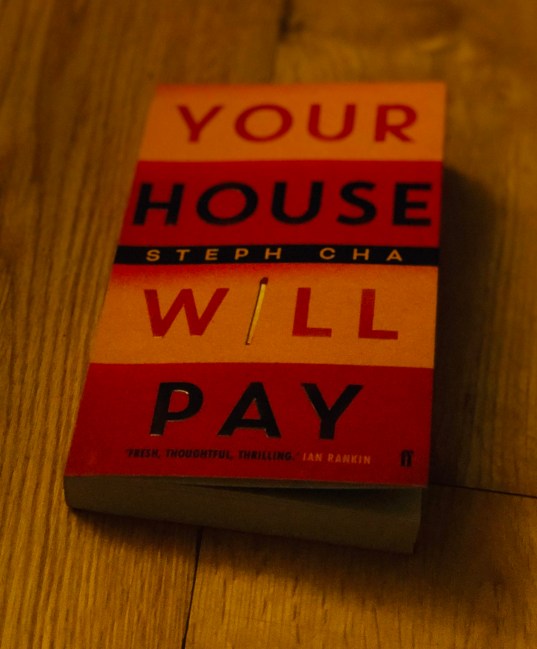
Your House Will Pay by Steph Cha


img_7916

Steph Cha – Your House Will Pay 

Published By Faber and Faber on 16th January

Available from all good Bookshops and Online

What They Say:

Grace Park and Shawn Mathews share a city – Los Angeles – but seemingly little else. Coming from different generations and very different communities, their paths wouldn’t normally cross at all. As Grace battles confusion over her elder sister’s estrangement from their Korean-immigrant parents, Shawn tries to help his cousin Ray readjust to city life after years spent in prison.

But something in their past links these two families. As the city around them threatens to erupt into violence, echoing the worst days of the early 1990s, the lives of Grace and Shawn are set to collide in ways which will change them all forever.

Beautifully written, and marked by its aching humanity as much as its growing sense of dread, Your House Will Pay is a powerful and urgent novel for today.

What I Say:

“Yet it came with a heightened awareness of all that had brought them here, the past clinging to them in thin, sticky layers”.

To try and review Your House Will Pay is a difficult task, not because of the novel itself, which is filled with the tension and pain that permeated 1990’s Los Angeles and its aftermath, but because it is impossible to adequately convey the passion and emotion that Steph Cha has poured into her work.  It examines hugely emotive issues such as race, violence, family and retribution, but does so in a way that never feels didactic.

On the surface, this story of two families in Los Angeles seems at the start to be disconnected.  Why are we learning about what Shawn Matthews and Grace Park are going through, what could possibly link these two seemingly incredibly disparate families? What happened in the 1990’s that could possibly bring them together? The timeline runs between 2019 and the 1990’s and by moving back and forth, we start to understand the realities for Korean and black families living in Los Angeles at that time. It was also an education for me, and I spent some time reading about what happened to try and appreciate more what life at that time was like.

Grace’s Korean family now run a pharmacy, and are apparently settled in their ways and lifestyle, while Shawn who comes from a black family have a chaotic and chequered past which has resulted in him and his cousin Ray spending a lot of time in prison, and his sister has passed away.

Although these two families seemingly have nothing in common, as a reader, you initially feel that slightly disorientated by the switch in focus and storyline.  The absolute skill that Steph has, is that she takes away any pre-conceptions or stereotypes you may expect, and brings the families down to the most basic level. They are simply people who are there for us to see with all their flaws and faults. The issues that the families are going through are set against the backdrop of a world where there are constant tensions between different cultures, and the Korean and black communities are at odds with each other.

In both worlds there is prejudice and inequality – there is a sense that the tensions that are always present in the everyday world are ready to explode at any moment, and you feel it in every page you read. You know that events of the 1990’s Los Angeles has had wide ranging and life changing effects for these families, but you don’t know what they were.  The ever present and all consuming city of Los Angeles is the one constant in this mesmerising and absorbing novel. As the narrative switches between Shawn and Grace, you not only feel that you are slowly starting to understand the very different families, but that there is a constant sense of something seismic about to happen.

Grace is an educated and intelligent woman, who lives at home with her parents, seemingly stuck between trying to please them and be a good daughter, whilst at the same time being aware that there is so much more to the world if she would only have the courage to embrace it.  Her sister Mariam, has been estranged from her parents for a while and lives with her elder boyfriend free from their expectations.

Shawn on the other hand, has become almost a surrogate father to his cousin’s children, and looks after Ray’s family as almost a penance for the life he lived before.  He had a troubled childhood as he attempted to fit in with a world of gangs and crime, and his loyalty to his friends and their beliefs meant that he ended up in prison.  Since his release, he has been determined to ensure he doesn’t make the same mistakes, and is trying to educate Ray’s children so they too can make the correct choices.

For me, what I really enjoyed about Your House Will Pay was the immersive way you are drawn into Grace and Shawn’s world. It addresses the realities of being a young person in a world where you don’t quite fit, and that others expectations mean the choices you make can have a huge impact on not only your world, but those who live in it with you too.  They are people you really believe in, and the way in which we follow their lives serves to underline not only the huge differences between them, but also how similar their beliefs and concerns are.

To try and review this novel is a complicated task, because it is so many things in one book.  When the devastating connection between the family is revealed, trust me, it is one of those jaw-dropping chapters you dream of as a reader! It is thrilling, unexpected and almost like a crime novel as you try and work out who could have done what and when.  However, for me, always at the heart of this book is the notion of family, of belonging.  The secrets they hide in order to protect others, the unspoken bonds that mean it comes before everything, and how your world can be turned upside down by the people you thought you knew the best.

From the moment where we find out how the two families are known to each other, it is a compelling novel that has you turning the pages trying to decide what possible resolution there could be.  I loved the balance between the 1990’s and the modern day, the fact that as a reader you are looking for clues, any little thing you can ascertain that will bring you closer to understanding what has happened and why.

The characterisations are always well rounded and serve to bring you closer to the novel because you really feel invested in what happens to all of them, irrespective of what they have done. There are so many touching familial scenes, acutely and perfectly observed, cut through with reality and humour, with nuances and in jokes that every family has.  This is also what helps to drive the story forward, as you really care what has happened and will happen to the Matthews and Parks.

Your House Will Pay is a timely and devastating novel, that works so well because Steph Cha has created a world where your connection to the characters and the plot mean you only want the best outcome for the Parks and Matthews family.  Who are we to judge the mistakes made by those closest to us when we are far from innocent ourselves? Surely, in times of crisis, the true notion of family and belonging is knowing that by forgiving and protecting those closest to us, we can truly be free. Your House Will Pay makes you stop and think, and want to understand why and what happened to these families. For me, that is truly a sign of a novel that has made a profound impact and changes and educates you as to your view of a world you naively thought you understood.


Many Thanks to Lauren Nicoll from Faber and Faber for a gifted copy of this book and for inviting me to take part in this Blog Tour in exchange for an honest review.

Have a look at what my fellow bloggers below are saying about Your House Will Pay..

your-house-blog-tour

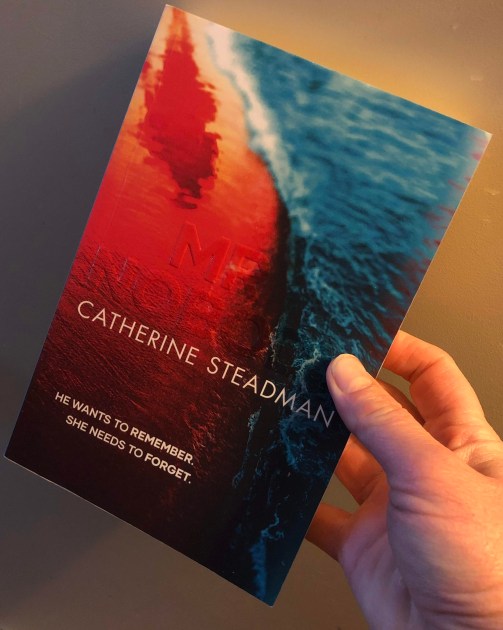
Mr Nobody by Catherine Steadman

img_7830


Catherine Steadman: Mr Nobody

Published By: Simon and Schuster UK

Available online and from all good bookshops

What They Say:

When a man is found on a Norfolk beach, drifting in and out of consciousness, with no identification and unable to speak, interest in him is sparked immediately. From the hospital staff who find themselves inexplicably drawn to him; to international medical experts who are baffled by him; to the national press who call him Mr Nobody; everyone wants answers. Who is this man? And what happened to him?

Neuropsychiatrist Dr Emma Lewis is asked to assess the patient. This is her field of expertise, this is the chance she’s been waiting for and this case could make her name known across the world. But therein lies the danger. Emma left this same small town in Norfolk fourteen years ago and has taken great pains to cover all traces of her past since then.

But now something – or someone – is calling her back. And the more time she spends with her patient, the more alarmed she becomes.

Has she walked into danger?

What I Say:

When I read and reviewed Catherine’s previous novel, Something In the Water , I realised I had found that rare thing, an author who had written a novel where I could not guess one of the twists!

I love the fact that sometimes as a reader, you are as much in the dark as the protagonist, and that the discoveries they make along the way are just as fresh for you as for them. When I was lucky enough to receive a copy of Catherine’s latest novel Mr.Nobody from the wonderful LoveReading I have to admit I was a little concerned that it wouldn’t be able to live up to the brilliance of her first novel.

I think it’s even better.

A man, bruised, battered and absolutely bewildered is found wandering on a beach in Norfolk. He is unable to speak, has no memory of who he is or how he got there.  Added to this, he has no identification on him and no one has reported him missing. He is taken to a local hospital where no one is able to reach him, until the renowned Dr Emma Lewis is hand picked to work on his case.  Her curiosity is piqued as she has to go through various faceless bureaucratic hoops to gain access to Mr. Nobody, and none of her contacts will truly tell her what is happening, or why they are so evasive.

So far so straightforward. However, Emma was not always called Emma Lewis.  It transpires she has a very chequered past with the same small town in Norfolk, after a family tragedy (of course I am not going to tell you what that is – you need to read it!) which meant that she and her family had to move far away and assume new identities.

You can imagine the jaw dropping moment for Emma – and for us as a reader, When she meets Mr Nobody, he calls her by her previous name as soon as he sets eyes on her! He also knew very private information about the Nurse called Rhonda who he has formed a bond with, which he could not have possibly known. Already there is a huge sense of unease in the novel, a delicious sense of anticipation as to what is come, and for me, that is what elevates a story from readable to unmissable, and Mr. Nobody has that in spades.

As this case is so high profile, and potentially dangerous for Emma, she is given police protection.  One of the police officers assigned to the case is her old friend Chris who knew her when she lived here before, and recognises her immediately – he is now married to a story hungry and not particularly likeable journalist called Zara who will stop at nothing to get to the heart of Mr. Nobody, and will use anyone, even her husband to get to the story before everyone else.  As appalling as Zara’s ethics were, it was interesting to see how someone so driven was so willing to put the story above everything else.

Told in alternating viewpoints from The Man and Emma – this device works well and switches easily and also keeps us on our toes.  Mr. Nobody starts to remember things and flashes of memory come back, and we follow him as he attempts to try and piece together what is happening to him now, and what has brought him to this specific beach in Norfolk.

The brilliance of the novel is compounded by the fact that the style is pacy, the narrative believable, and it also brings up many issues of how we as a society cope with people who do not function in the way we do. We get a real sense of the frustration Mr Nobody feels and his bewilderment as to his mental state. Also the book is very frank in its treatment of people who are guilty by association and when Emma’s identity is revealed, we see the way in which the press move and how ruthless Zara is to be the first person with the story.

I also thought that it was interesting to see how both Emma and Mr. Nobody have to deal with the themes of identity and belonging.  Even though Emma grew up there, she no longer really belongs, and has had to create a whole new identity to survive.  Similarly, Mr. Nobody has no idea where he is from or where he has been, and he survives by trying to remember anything to give him that sense of place or time.  The brief flashes of recollection are peppered with a sense of fear and pain, as he cannot put them into any tangible order and this adds to his sense of dislocation even further.

As the novel hurtles towards its conclusion, Emma unravels Mr.Nobody’s true identity and reason for appearing on that particular beach at that particular time. It is an intricate and detailed plot, which means that you are fully engaged with it, but also that you turn the pages faster as you want to see who Mr. Nobody truly is! It was for me, one of those novels where it is so tightly plotted and executed that you absolutely understand every character’s motivation and actions – although you might not always like them, they are real and fallible, and that is what makes the story work so well.

In the hands of a lesser writer, Mr. Nobody could have been a novel that seemed too bizarre and ambitious to work effectively.  However, Catherine Steadman not only engaged me from the outset of the novel, but her clever and intelligent story had me absolutely hooked and the fact that I could not guess where the narrative was going next, only added to my enjoyment of it.

I loved it.

Thank you as always to LoveReadingUK and SimonSchusterUK for my gifted copy in exchange for an honest review.


that Emma and Matthew are both having to deal with the notion of identity and belonging, of celebrity and loss.

I loved it.

Thank you as always to LoveReadingUK for my gifted copy in exchange for an honest review.

Bone China by Laura Purcell

Laura Purcell: Bone China

Published By: Bloomsbury Raven

Available online and from all good bookshops

What They Say:

Consumption has ravaged Louise Pinecroft’s family, leaving her and her father alone and heartbroken.

But Dr Pinecroft has plans for a revolutionary experiment: convinced that sea air will prove to be the cure his wife and children needed, he arranges to house a group of prisoners suffering from the same disease in the cliffs beneath his new Cornish home.

Forty years later, Hester Why arrives at Morvoren House to take up a position as nurse to the now partially paralysed and almost entirely mute Miss Pinecroft. Hester has fled to Cornwall to try and escape her past, but surrounded by superstitious staff enacting bizarre rituals, she soon discovers that her new home may be just as dangerous as her last.

What I Say:

‘Can a woman control a house, a family, through something as brittle as porcelain?’

If you have learned anything about me in our time together, you will know that The Silent Companions is quite possibly my favourite novel. If you need to know why, you can read my review here. I also adored Laura’s next novel, The Corset – and of course I reviewed it!

What you also need to know about me, is that if everyone is raving about a novel at a particular time, I tend to put it to one side to read later. If there is a lot of hype, I need to step away and read the novel when I’m ready without everyone else’s opinions! With Bone China, I wanted to appreciate it when I was ready to read it without everyone else telling me what I should think because I wanted to make my own judgements.

I decided that I wanted to read Bone China before Christmas, and I’ll explain why on Twitter and Instagram very soon.

Well, what can I tell you?

Laura Purcell has written another novel that is so perfectly pitched, which draws you in from the first page and holds you in its thrall to the last. I loved the fact that her writing of landscapes, of lives, of a world which is so close to our own, yet so far from our understanding is one which you cannot help but sink in to from the first chapter.

This is the story of the Pinecroft family, who live in the family home called Morvoren in Cornwall. When Hester Why arrives to take up a post there, she is assigned to look after Miss Pinecroft, who is vulnerable and unable to speak, and sits in her room surrounded by piles and piles of blue and white bone china.

Hester is not an innocent woman who happens to find herself here, she has a past and former identity as Esther Stevens, and as a maid to Lady Rose. She has left behind her a trail of destruction and damage, and has picked up an addiction to gin and laudanum which makes her far from a paragon of virtue – but endeared her even more to me!

For me, the notion of a woman who is slightly disclocated from the world is a delicious and absorbing one. Hester finds herself in this world that is so far removed from the society she has come from, but at the same time, she brings with her the understanding and acceptance of how servants should behave. Her departure from Lady Rose’s employment was far from auspicious, but at the same time, she knows in order to survive, she has to fit in with what is expected of her.

Morvoren is a house creaking with secrets and unspoken understanding. We learn that Miss Pinecroft has a young charge called Rosewyn who is hidden away from the world, and although in her early twenties, is like a child and is fiercely protected by the ferocious Creeda. A woman who has been with the Pinecroft family for a very long time, and rules the house with a devotion that is bordering on the obsessive.

Added to this domineering woman at the head of the household, there are unexplained noises and lights when the household tries to go to sleep, and Miss Pinecroft’s refusal to communicate or move from the room filled with china. This is why Laura Purcell is such a brilliant writer, her talent is the teasing of the unknown, the suggestion of something that we want to discover, but at the same time unsettling us so we are reluctant to confront it.

The narrative switches between the time of Hester Why, and Miss Pinecroft’s story as an assistant to her Father, who is a Doctor on a mission. He has decided that he wants to find the cure for consumption, a disease that left him widowed and without two of his children. Louise is enlisted to help him tend to a group of convicts who are suffering from consumption, and her father has decided to bring them to the caves that are under Morvoren in an attempt to cure them.

In my opinion, this is where Bone China elevates itself above a traditional gothic novel. Louise has not been allowed to ever express herself, she has always had to follow her father’s wishes and help him in his quest to find a cure for consumption. What we see in these pages is an intelligent and inquisitive young woman who has no choice in her destiny other than to appease her father. Her sense of duty means that she has pushed all her feelings and emotions away functions only as a living reminder to her father of the wife he has lost.

As preparations are made for the arrival of the prisoners, a young woman called Creeda is sent to Morvoren to serve the family in exchange for medical help from Dr Pinecroft. As the reader, we soon realise that this mysterious woman who is so entrenched in the traditions and folklore of the Cornish people is the catalyst for a chain of events that will permeate the whole of the Pinecroft family and Morvoren forever.

The prisoners are treated by Dr Pinecroft and Louise, and as the days pass, unexplained things start to happen. Cupping glasses find their way from the treatment table back into boxes, marks appear on the men, and they are convinced that there are fairies trying to drag them away.

Could this be true? After all these men are seriously ill and could be hallucinating, but also they are criminals who could be lying as a means to escape. Added to this sense of confusion and tension, Louise finds herself attracted to one of the prisoners called Harry, and in this underground world unlike any other, she starts to discover who she really is as a woman with devastating consequences. The caves are filled with the sensation that the Pinecrofts and the prisoners have disturbed something no one can explain, and that all of them will have to pay the price.

In the present time, Hester is aware that even though she cannot be certain as a woman reliant on drugs and alcohol, something is very wrong in Morvoren. The way that Creeda exerts control over the household, fixated in her belief that the fairies are intent on their desire to take back with them any woman of child bearing age, disorientates Hester even further, as we are never quite sure what is real and what is the product of Hester’s drink and drug induced reality.

Laura Purcell’s measured and controlled writing means that Bone China is a novel that never falls into the unbelievable. It is not a tick the box clichéd gothic novel, but a sublimely disturbing piece of fiction that disorientates and delights with each chapter. Every character is flawed, hiding from a world they don’t fully understand, but that only serves to make them believable and relatable.

Bone China is an exquisite exploration of a world we cannot explain and do not want to face. As you race to the conclusion, you understand just like Hester, that sometimes the only way to confront your demons is to face them head on whatever the cost.

I loved it.

The Sunday Times/University of Warwick Young Writer Award – The Shadow Panel Winner.

shadow-judge-wob-2019-1

For the past three weeks, I have been reading and reviewing The Sunday Times/University of Warwick Young Writer of the Year Award Shortlist.  It’s been an incredible experience – to read books that have challenged me, frustrated me, and made me sometimes stop in my tracks and love the words inside them.

As you may or may not know, on Thursday 21st November, I met with Anne , David, Linda and Phoebe at a meeting chaired by Houman Barekat to discuss who we wanted to be the Shadow Panel Winner.  It was a lively discussion, and it was fantastic to finally meet the very people who I knew so well on Twitter and Instagram! I really found it intriguing to see what we all thought of the Shortlist, and at times how similar our views were, but believe me, there were a few instances where we were poles apart in our opinions!

Before I reveal who we chose as our winner, here is a recap of each of the shortlist for you.

kim-sherwood-twitter

Kim Sherwood was born in Camden in 1989 and lives in Bath. She studied Creative Writing at UEA and is now Senior Lecturer at the University of the West of England. Her pieces have appeared in MslexiaLighthouse, and Going Down Swinging. Kim began researching and writing Testament, her first novel, after her grandfather, the actor George Baker, passed away and her grandmother began to talk about her experiences as a Holocaust Survivor for the first time. It won the 2016 Bath Novel Award, was longlisted for the 2019 Desmond Elliot Prize and shortlisted for the 2019 Author’s Club Best First Novel Award.

Testament by Kim from riverrun which is an imprint of Quercus Books, was actually the first book from the Shortlist that I decided to read.

You can read my review here,

If you would like to buy a copy, you can of course buy one from all good bookshops, or online or from the riverrun website here.


yara-rodrigues-fowler-twitter

Yara Rodrigues Fowler is a British Brazilian novelist from South London. Her first novel, Stubborn Archivist, was published in 2019 in the UK and USA. It was called ’stunning’ by Olivia Laing, ‘visceral and elegant’ by Claire-Louise Bennett and ‘breathtakingly written’ by Nikesh Shukla. Yara was named one of The Observer’s nine ‘hottest-tipped’ debut novelists of 2019 and longlisted for the Desmond Elliott Prize. Yara is also a trustee of Latin American Women’s Aid, an organisation that runs the only two refuges in Europe for and by Latin American women. She’s writing her second novel now, for which she received the John C Lawrence Award from the Society of Authors towards research in Brazil.

Yara’s book, is published by fleet, an imprint of Little, Brown Book Group. It was my next choice to read and review for the Shortlist, and here’s my review of Stubborn Archivist.

If you would like to buy a copy, you can do from all good bookshops, online, or from fleet directly here

julia-armfield-twitter

Julia Armfield lives and works in London. She is a fiction writer and occasional playwright with a Masters in Victorian Art and Literature from Royal Holloway University. Her work has been published in LighthouseAnalog MagazineNeon Magazine and The Stockholm Review. She was commended in the Moth Short Story Prize 2017, longlisted for the Deborah Rogers Prize 2018 and is the winner of The White Review Short Story Prize 2018.

Julia’s book of short stories Salt Slow, published by Picador was my third read for the Shortlist, and you can read my review here.

It is available to buy from all good bookshops, online, or from Picador directly here

raymond antrobus twitter816698769..jpg

Raymond Antrobus was born in Hackney to an English mother and Jamaican father. He is the recipient of fellowships from Cave Canem, Complete Works III and Jerwood Compton Poetry. He is one of the world’s first recipients of an MA in Spoken Word Education from Goldsmiths, University of London. Raymond is a founding member of Chill Pill and Keats House Poets Forum. He has had multiple residencies in deaf and hearing schools around London, as we as Pupil Referral Units. In 2018 he was awarded the Geoffrey Dearmer Award by the Poetry Society (judged by Ocean Vuong). The Perseverance (Penned In The Margins, 2018), was a Poetry Book Society Choice, the winner of the Rathbones Folio Prize and the Ted Hughes Award, and was shortlisted for the Griffin Poetry Prize and Forward Prize for Best First Collection.

Raymond’s book of poetry, The Perseverance, is published  by Penned In The Margins and was my final read for the Shortlist.  You can read my review here.

It is available to buy from all good bookshops, online, or you can buy it directly from Penned In The Margins here.

There you have it, the four finalists and the four works we as Shadow Panel Judges had to read and review.

shortlist-2019-instagram


I am very proud and honoured to reveal, that The Sunday Times/University Of Warwick Young Writer Award Shadow Panel Winner Is…

Salt Slow by Julia Armfield from Picador Books!

Many Congratulations to Julia and Picador Books!

I am not ashamed to admit that I am absolutely thrilled with this decision.  I also have to tell you that once I finished this book, as I was writing my review I read some of the stories again, and it just confirmed what I already knew, that they are brilliant.

The panel was unanimous in their praise for Julia’s book, and it was really interesting to see not only how we all loved the same and we all loved different stories, but that we all saw something that spoke to us in them. For me, it was the amazing untapped power that the female protagonists have within them, and that their transformations and experiences show us that we all have the potential within us to achieve what we truly deserve.

I have slowly started to read short story collections recently, and Julia’s book has made me want to read even more.

It is a book I will absolutely recommend endlessly, and is one that undoubtedly can be re-read and treasured.

Trust me when I tell you that this was a really difficult decision, all the works on the shortlist are brilliant, unique works that I would urge you all to read. They are all very different, but the one thing they have in common is that they reveal the wealth of literary talent that is all around us, and that for me, the most important thing I can do as a reader, is challenge myself to read more widely, and take a chance on something completely different.

So, what do you think of the Shadow Panel decision?

The final decision now rests with The Sunday Times/University of Warwick Young Writer Award Judges – Andrew Holgate, Kate Clanchy, Victoria Hislop, Gonzalo C. Garcia and Nick Rennison.

The Winner will be announced on 5th December at the London Library, and I wish the judges and the shortlisted authors lots of luck – trust me, it is not an easy choice to make!

Follow #youngwriterawardshadow and @youngwriteryear on Twitter and Instagram to hear more about The Sunday Times/University of Warwick Young Writer Award Shortlist, and of course, to find out who the Overall Winner will be..

The full article about the Shadow Panel is here

You can also read the blogs of the other Shadow Panel Judges to see what they thought too..

Anne Cater at Random Things Through My Letterbox

David Harris at Blue Book Balloon

Linda Hill at Linda’s Book Bag

Phoebe Williams at The Brixton Bookworm

I will be letting you all know what I think about the Winner too, in my final blog post as part of the Shadow Panel (sob!)!


The Sunday Times/University of Warwick Young Writer Award Shortlist – The Perseverance by Raymond Antrobus

Raymond Antrobus: The Perseverance

Published By: Penned In The Margins

Available to Buy From All Good Bookshops and Online

What They Say:

An extraordinary debut from a young British-Jamaican poet, The Perseverance is a book of loss, language and praise. One of the most crucial new voices to emerge from Britain, Raymond Antrobus explores the d/Deaf experience, the death of his father and the failure to communicate. Ranging across history, time zones and continents, The Perseverance operates in the in betweens of dual heritages, of form and expression emerging to show us what it means to exist, and to flourish.

What I Say:

I think the idea of reading this collection was something from the start of my experience as a Shadow Judge that I was slightly anxious about. I was aware that Raymond Antrobus had burst onto the British Poetry scene in a blaze of glory, but having to review his collection for the Sunday Times/ University of Warwick Young Writer Award was absolutely out of my comfort zone. The last time I read poetry critically was probably when I was in University over 25 years ago.

Right from the start, and the very first poem, Echo, you are aware as a reader that this is an intensely personal and autobiographical collection from Raymond Antrobus. He is deaf and as if that was not isolating enough, he is also the child of an English mother and a Jamaican father. Raymond Antrobus has always been at the edge of a society that seemingly continues to move all around him, not understanding either his needs or his heritage. How do you attempt to find your place in a world when you are not recognised by it at all?

The Perseverance is an unapologetic debut that not only recounts his own experiences as a deaf British-Jamaican poet, but also makes the reader (as I did) stop and look up the references to other people from history to understand the importance of their inclusion in the work. We learn about his fractured relationship with his father, the life of his family, and there are also poems which feature deaf people who have their own stories to tell. I thought that this was an eclectic mix which worked well – quite simply because it often disrupts the rhythm of the poems, and whereas in one I could understand and appreciate it, others made me stop and read about the subject and then apply that knowledge to my re-reading of them.

What I thought was very clear about the work, is that Raymond Antrobus wants us to listen to him. How can we possibly understand what it means to be deaf, when we are hearing? We cannot possibly know the reality of being deaf – we may be able to make sweeping generalisations, but it is the minutiae, the day to day things that we take for granted that we need someone to articulate for us, to help us truly understand what we need to do to foster inclusion as oppose to exclusion. The addition of sign language symbols, and the redaction of Ted Hughes’ poem ‘Deaf School’ which was filled with misconception and ignorance, immediately addressed by his poem After Reading ‘Deaf School’ by the Mississippi

In the poem Dear Hearing World, I felt it was really Antrobus’ manifesto, a way of detailing exactly what the hearing world need to understand in order for us to make any progress. It is raw, visceral and real, borne of a life lived and ignorances exposed. The writing is sublime, the imagery is authentic, and there is the absolute sense that our inability to fully appreciate what barriers we have created in our society, that there is a whole world of experience which has been denied a history.

He says:

“I mulled over long paragraphs because I didn’t know

what a natural break sounded like, you erased

what could have always been poetry

This for me is a theme that runs all through his collection. That you have standing in front of you a man who wants to be heard – not only for his own story, but for all of those other deaf people who have come before and after him. There is no one better qualified to educate others about the reality of being deaf than those who are.

In the title poem of the collection, The Perseverance is the pub where his father spends a lot of his time, with Raymond stood outside, waiting for him to return. Theirs is a difficult relationship – it seems that this is a pattern of behaviour that is usual in their lives, and interestingly, Antrobus is excluded from that world too. He is neither Jamaican nor British, not allowed inside the pub as he is a child, but cannot hear what is going on anyway. His own perseverance is deeper than simply waiting for his Dad to emerge and take him home. Even knowing that he is beaten by hs father, Antrobus seems to simply want to be acknowledged and loved by him. There is no doubt that Antrobus’ father loves him, and is fiercely defensive of his son, but their relationship is far from a traditional one, with his father open about his sexual conquests and his treatment of him is at times upsetting to read.

We learn that Antrobus’ father has dementia, and I thought it was incredibly poignant that the final poem in the collection Happy Birthday Moon, is about that most intimate and traditional idea, of a Dad reading his son a bedtime story. In that moment, where they are completely alone and just being with one another is the most real and exquisite recollection of what every child wants. To be heard.

“I’d like to be the Moon, the bear, even the rain

Dad makes the Moon say something new every night

and we hear each other, really hear each other,

As Dad reads aloud, I follow his finger across the page.”

Perhaps this is the point of The Perseverance. Antrobus has honestly and unapologetically showed us what his life is like. The passion and determination that permeates the poems in this collection is a way of standing in front of us and asking us to hear each other. Truly hear each other. It is at times, not an easy work to read, and honestly, at times I was frustrated with Antrobus for making me stop to find out what he was talking about. I felt it disrupted my experience as a reader, but it was balanced with moments where I was just blindsided by the most beautiful poetry that just mesemerised me .

The Perseverance is a poetry collection unlike anything I have ever read. In its pages it encompasses so many themes such as love, loss, grief and the unique life that Antrobus has lived. To read it is to be party to his world and his frustations, his realities and his relationships, and his desire to ensure that his history and those of deaf people is no longer sidelined by those who should know better.

Read it and learn from it, let it make you understand the way in which our society has not listened to those who don’t automatically fit in, and then like Antrobus tells us, understand that that we need to really hear each other.

Raymond Antrobus was born in Hackney to an English mother and Jamaican father. He is the recipient of fellowships from Cave Canem, Complete Works III and Jerwood Compton Poetry. He is one of the world’s first recipients of an MA in Spoken Word Education from Goldsmiths, University of London. Raymond is a founding member of Chill Pill and Keats House Poets Forum. He has had multiple residencies in deaf and hearing schools around London, as we as Pupil Referral Units. In 2018 he was awarded the Geoffrey Dearmer Award by the Poetry Society (judged by Ocean Vuong). The Perseverance (Penned In The Margins, 2018), was a Poetry Book Society Choice, the winner of the Rathbones Folio Prize and the Ted Hughes Award, and was shortlisted for the Griffin Poetry Prize and Forward Prize for Best First Collection.

Follow #youngwriterawardshadow and @youngwriteryear on Twitter and Instagram to hear more about The Sunday Times/University of Warwick Young Writer Award Shortlist, the authors and what the Shadow Panel think too.