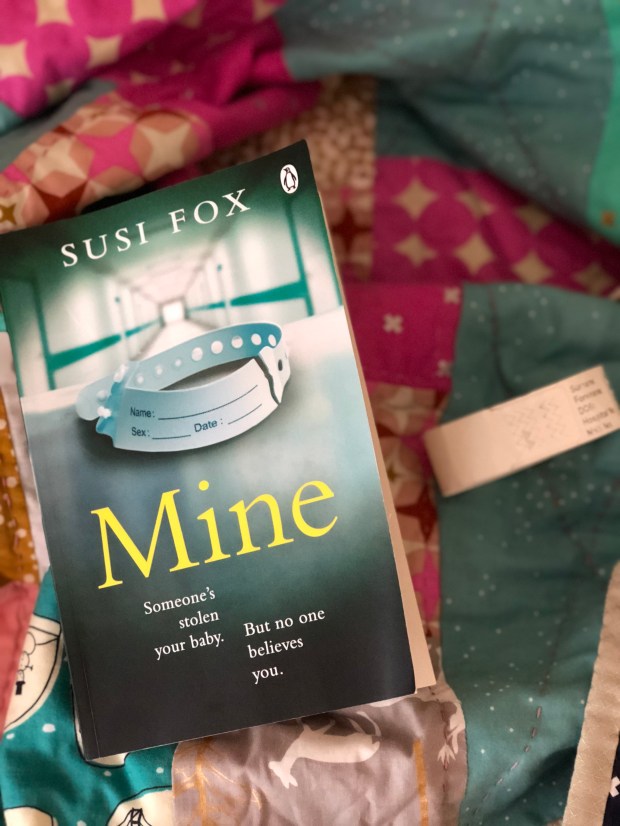
Mine by Susi Fox

img_1063

Susi Fox: Mine

Published By: Penguin

Buy It: here

What The Blurb Says:

You wake up alone after an emergency caesarean, dying to see your child.

But when you are shown the infant, you just know . . .

This baby is not yours.

No one believes you.

They say you’re delusional, confused, dangerous.

But you’re a doctor . . .

Do you trust yourself?

Because you know only one thing – You must find your baby.

What I Say:

Many Thanks to Sam Deacon at Penguin for a review copy of Mine, in exchange for an honest review and for a chance to participate in the Mine Blog Tour.

At the moment, when you go to buy a book, you are faced with a wall of psychological thrillers.  Books that promise you have never read anything like it, that you will never work out the twist, that this is the book everyone will be talking about.  I have to admit, that sometimes I have felt completely overwhelmed by the choice and come away empty  handed.

Mine is a psychological thriller, but I promise you, from one book lover to another, it is a novel you absolutely should read.  It plays on every mother’s deepest fear, makes you wary of the authenticity of every character, and the intense claustrophobic atmosphere means you question every chapter as you hurtle towards the conclusion.

Sasha and Mark Moloney have been trying for a child for a long time.  They have endured miscarriages and the need to have a child has placed their marriage under immense strain.  Her pregnancy is tinged with sadness, as Sasha admits she was considering leaving Mark just before she discovered she was pregnant again.  From the start, you sense that Sasha feels somewhat trapped in her marriage, and that the desire for a successful pregnancy is the only strand holding them together.

The narrative switches from past to present, interweaving key points in Sasha and Mark’s life with the unfolding drama in the hospital.  I liked this device as it helped build up a real picture of how Sasha and Mark got to this point, and how their lives and experiences made them who they are today.  I also thought that this was a subtle way of quietly unnerving the reader, shifting our sympathies back and forth – quite simply because we are never really sure of who really is telling the truth.

When Mark and Sasha go out for a drive, they swerve to avoid hitting a kangaroo and Sasha goes into labour.  She is 35 weeks pregnant, and has to have an emergency caesarean, which means she is no longer following her own birth plans, and instead is reliant on the decisions of others around her.

As Sasha comes round after her operation, Mark is not there – and nor is her baby.  Disorientated and unconscious during birth, she now has to battle with Ursula (a truly ferocious and unfeeling nurse), to go and see her child in the Special Care Unit.  Susi Fox is masterful at conveying Sasha’s bewilderment coupled with the stifling atmosphere of the Hospital wards – where the heating is permanently turned up and the windows are barely open.  There is definitely a sense of Sasha being trapped throughout the novel and that every sense is exaggerated as she becomes increasingly isolated.

As she finally sees her son for the first time, she is sure of one thing.

The baby in the crib is not her child.

Sasha tells everyone – and no one believes her.  It is every mother’s nightmare, and an interesting theme that runs throughout Mine – that the concerns Sasha have, are refuted by those in authority.  Her protestations are interpreted as the ramblings of a woman who must have mental health issues, because her mother did, as oppose to a mother who unwaveringly knows she has the wrong child.

What adds a deeper level to Mine, is that Sasha is also a pathologist, aware of hospital procedures and that this hospital is not blame free. Previous mistakes have been made here, and as she looks on Google, the chilling reality that babies have been mistakenly swapped all over the world makes her believe she has the evidence she needs.

Sasha faces the fight of her life, as Mark still desperately tries to convince her she has given birth to a son, and that he is lying in the crib next to her.

Sasha knows only one person will believe her, and she turns to Bec, the friend she grew up with, the daughter of Lucia, the woman who stepped in to raise Sasha after her own mother apparently disappeared.

We learn that Sasha and Bec’s relationship has become increasingly strained as both struggled to conceive.  When Sasha most recently became pregnant, Bec distanced herself, and now Sasha knows she must get through to her to get one person on her side.  It is due to Bec’s unwavering belief in Sasha’s intuition, and her advice that in order to find her child, she must play the hospital game, that we see Sasha admitted to the Mother and Baby Psychiatric Unit in the hospital.

In order to prove herself, and leave the Unit, she has to convince anyone who matters that they are right and she is wrong.  Sasha has to be the perfect patient to discover the truth, and find out what has really happened to the baby she gave birth to.  Of course, as any book lover knows, I am not going to tell you what happens – you need to read Mine!

Mine is a stunning novel, delving into the highly emotional issues of birth, motherhood, and the age old question of when it comes to our own children, who is really the expert?  It is not an easy read at times, and as it moves towards its conclusion, the scenes are often intense and shocking, but this only served to increase the unfolding drama and tension.

Why?  Because Susi Fox really makes you care about what happens to Sasha and her child.  You understand the frustration and panic that she feels, the fact that she is fighting with every bone in her body for her child, and that processes and procedures mean more than the instinct she has.  I also felt that Mark, who should have been a pillar of strength and the one person she can rely on, lets her down in every single way.

I thought that the other characters such as Ursula, Bec and Brigitte were perfect in their pitch and not a single scene was wasted.  It was interesting to see that even when people are placed in an non-judgemental environment which is meant to be one of healing and recovery, we are all plagued by the notion that we have to keep up the facade of proving how perfect we are, be it as a professional, partner or mother.  To admit defeat, to ask for help is seen as a sign of weakness and a sense that we have failed.

Mine is a fast paced, clever and thoughtful examination of the lengths that we will go to for our children. It is brilliantly written, perfect in its execution and I finished it in two days.

Susi Fox has written a psychological thriller that shakes you to your core and doesn’t let you forget it.  I was still thinking about Mine long after I finished it, and I know you will be too.

I loved it.

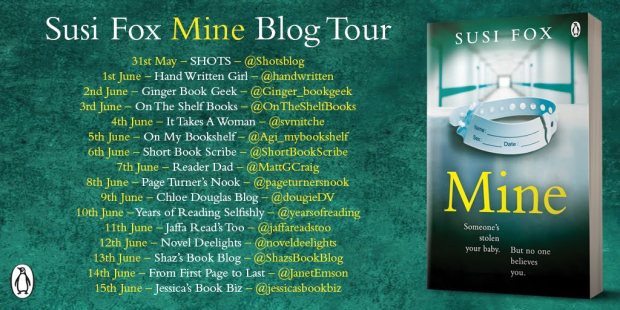
The Mine Blog Tour continues with these amazing fellow bloggers – don’t just take my word for it, see what they have to say too..!
img_1098

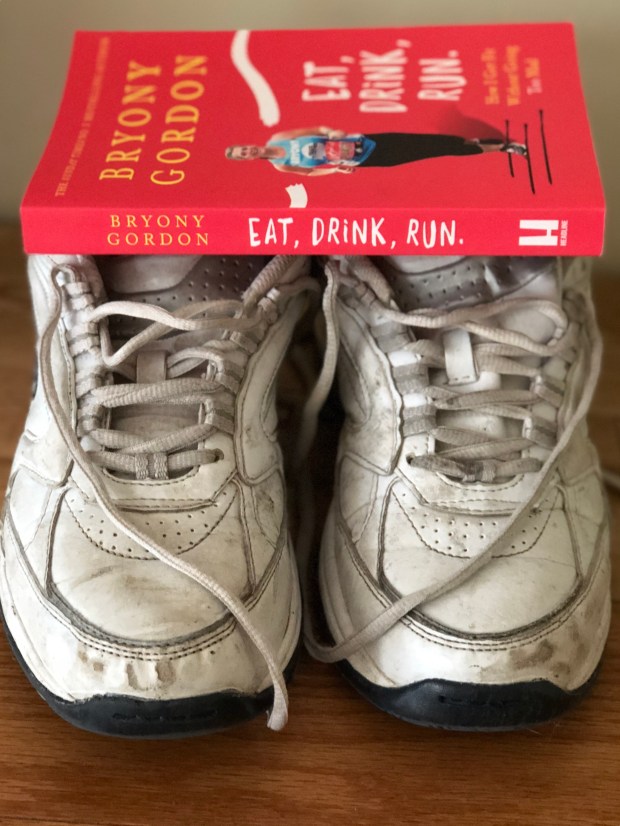
Eat Drink Run by Bryony Gordon

img_1066

Bryony Gordon: Eat Drink Run

Published By: Headline

Buy It: here

What The Blurb Says:

Bryony Gordon was not a runner. A loafer, a dawdler, a drinker, a smoker, yes. A runner, no. But, as she recovered from the emotional rollercoaster of opening up her life in her mental health memoir MAD GIRL, she realised that there were things that might actually help her: getting outside, moving her body and talking to others who found life occasionally challenging. As she ran, she started to shake off the limitations that had always held her back and she saw she had actually imposed them on herself. Why couldn’t she be a runner?

In April 2017, Bryony Gordon ran all 26.2 miles of the London Marathon. In Eat, Drink, Run., we join her as she trains for this daunting task and rises to the challenge one step at the time. Of course, on top of the aching muscles and blistered feet, there’s also the small matter of getting a certain royal to open up about his mental health. Through it all, Bryony shows us that extraordinary things can happen to everyone, no matter what life throws our way.

What I Say:

Thank you so much to Georgina Moore at Headline and Bookbridgr for my advance copy of Eat Drink Run in exchange for an honest review.

I had heard of Bryony and her work with the amazing Mental Health Mates, but had never read any of her books. Eat Drink Run is the story of how Bryony trained for and ran the 2017 London Marathon for Heads Together, the mental health charity established by Prince Harry, Prince William and the Duchess of Cambridge. Believe me, the scene where Bryony inadvertently agrees to run the marathon is absolutely worth the cover price of this book alone!

One of the many things I loved about Eat Drink Run, is that this is not some self-righteous motivational manual, it is a refreshing look at someone just like you or me deciding to make a change in their life. For me, it felt like having a chat with your best friend, over a couple of glasses of wine and that is a real credit to Bryony’s writing.

Having agreed to run the London Marathon, we see Bryony go from elation, to the shocking realisation of the enormity of what she has decided to do. As a backdrop to this, and throughout the book Bryony openly and honestly explains how her own mental health issues impact on how she tackles this immense task. She does not patronise us by claiming she has had some major revelation, and that her way is the only way. It is more as if you were sitting down with one of your friends, and you were talking about how bloody hard and unglamourous training for a marathon really is. Nothing is off limits – from Bryony going to a luxurious boot camp in Ibiza where she has to get help to get into her sports bra, to the rather unfortunate effects certain energy boosting drinks have on her bowels….

Eat Drink Run also gives a voice to the people who Bryony meets through her Mental Health Mates walks. We gain a real insight into what it means to have a mental health issue, and how this is something that does not discriminate, and has such a massive impact on the day-to-day ability of someone to function. For me, this was one of the most poignant parts of the book, as it was an opportunity to really understand what it means to feel like this, and how talking and normalising mental health is the first step to this becoming something in our lives that no longer carries any stigma or prejudice.

Alongside Bryony’s training, and trying to balance all the aspects of her hectic work and personal life, we see how she forms a unique connection with Prince Harry. His willingness to talk to her about his own mental health issues and having to very publicly deal with the death of his mother, brought this topic to the attention of the British public and press. I have to say that the transcript of Bryony’s podcast with Prince Harry is one of the most emotional and moving interviews I have read.

Just as a personal aside, I read the podcast interview during the weekend of Prince Harry’s marriage to Meghan Markle. I was 26 in 1997, and vividly remember William and Harry walking behind Princess Diana’s hearse, an image that broke a million hearts and showed the reality of two little boys who had lost their Mum. To now watch Harry walk to St George’s Chapel with William, and then to see him visibly moved by the sight of his bride, his Mum not there, was an immensely moving and timely backdrop to the interview. I promise you that by the end of that chapter, you will want to reach into the pages and hug him and tell him know how proud his Mum would have been.

Bryony’s journey from a woman who had to battle to get her head out above her duvet, to a runner completing the London Marathon is one that is packed full of humour, honesty and is a whip smart lesson in having the confidence to believe in yourself.

This is a glorious, life affirming book, that captivates from the first page and draws you in completely, willing Bryony to succeed. I am being totally honest when I say, that Bryony’s book has absolutely inspired me. After a period of huge self doubt and believing that all my reading and blogging was pointless, Bryony and the people we meet in Eat Drink Run, have given me to have the courage to keep my blog going (and walk a lot more too!).

Thank you Bryony.

To the rest of you – go buy Eat Drink Run!

The Trick To Time by Kit de Waal

img_10081


Kit de Waal: The Trick to Time

Published By: Viking

Buy It: here

What The Blurb Says:

Mona is a young Irish girl in the big city, with the thrill of a new job and a room of her own in a busy boarding house. On her first night out in 1970’s Birmingham, she meets William, a charming Irish boy with an easy smile and an open face. They embark upon a passionate affair, a whirlwind marriage – before a sudden tragedy tears them apart.

Decades later, Mona pieces together the memories of the years that separate them. But can she ever learn to love again?

The Trick to Time is an unforgettable tale of grief, longing, and a love that lasts a lifetime.

What I Say:

This is not a planned blog post, where usually I will have taken notes, written out poignant quotations, and analysed the themes and narrative.

I have consciously been taking a break from blogging these past few weeks for a number of reasons.

Firstly, I have a LOT of books to read and review over the next few months and wanted to concentrate.  Secondly, I have been finding that keeping up with social media and liking and retweeting, and following (and in some cases unfollowing), meant one simple thing was getting overlooked.

I had stopped reading selfishly, for myself, and was in danger of going against everything Years of Reading is about.

I knew that I just wanted to read The Trick To Time without distraction.  I loved Kit’s previous novel, the astounding My Name Is Leon, and the premise of this one, ” If you lost the love of your life, what would you do to live again” sounded perfect for me.

Quite simply,  I loved The Trick to Time so much, I needed to tell everyone about it.

The Trick to Time is the story of Mona and William.  Mona, a young Irish woman on moving to Birmingham in the 1970’s, meets and falls in love with William, a young Irish man.  Together they live and love, decide to get married and tentatively navigate their way through their new life together.  Mona has had a good relationship with her father, after having lost her mother to cancer as a young girl, and William, initially evasive about his family, is determined that he will be a better father than his alcoholic Dad was to him. Kit masterfully details the day-to-day realities of life for a young married couple in the 1970’s, where three day working weeks were a reality, and there always had to be a supply of coins to feed the gas meter. As Mona and William’s story develops, we also see how the world around them is becoming increasingly hostile to Irish people following a spate of bombings.

The narrative switches between Mona’s younger life, and where she finds herself now.  Mona is alone, living in a block of flats in a nondescript seaside town in Kent.  Her days, and often nights, are filled with making dolls and their outfits for a shop she has in the town.  She thrives on imaginatively sourcing and creating outfits for the dolls she makes.  Aside from her bespoke dolls, Mona has also created a place where women who have lost babies come, to ask for the baby they have lost to be made for them.  Mona works with a local carpenter to create the dolls which weigh and feel like the children they have lost.  The dolls are given to the bereaved women, who tell Mona the story of what their children would have become, and with Mona’s guidance, they learn to accept what has happened.

How has Mona arrived at this point in her life, no longer with William or living in Birmingham?  The novel moves backwards and forwards, filling in the missing chapters of their life, revealing the twists and turns and overwhelming tragedy that has led Mona to this place.

Mona is now approaching 60, and she starts to question herself and the choices she has made – we see her struggling to decide whether she should finally move on from William.  Mona makes tentative steps to get to know a seemingly sophisticated neighbour called Karl, but her heart never really seems to be in it. As Mona decides whether or not she should get to know Karl better, she discovers that appearances can be deceptive.  It is apparent that we all have our frailties and faults, our fears and resentments as we attempt to determine our place in the ever-changing and unfamiliar world.

The novel is so exquisitely written, often very understated, but is filled with an overwhelming emotional power that draws you in and absorbs you completely.  Mona is a woman of immense strength, tenderness and resilience which means she spends the majority of her time ensuring everyone else is looked after, whilst constantly suppressing her own emotions. She has had no other choice but to keep soldiering on, and has never had the luxury of time to herself to be able to process and recover from what she has had to endure.

Mona comes to the realisation that she is tired of always having to survive, of living a life she has not chosen, and the final chapters of The Trick To Time show how she starts to take charge of her future.  She longs to return to Ireland, to finally go home, and her choice means that she also has to decide if she has the strength to find William and bring him back with her.

The Trick to Time is a beautiful, haunting and elegiac novel.  It shows us that although love is what we all need and strive for, that grief is just as important and needs to have a voice for us to be able to deal with it.

This novel will stay with you long after you have read it, as will Mona and William, whose story is testament to the compelling power of love.


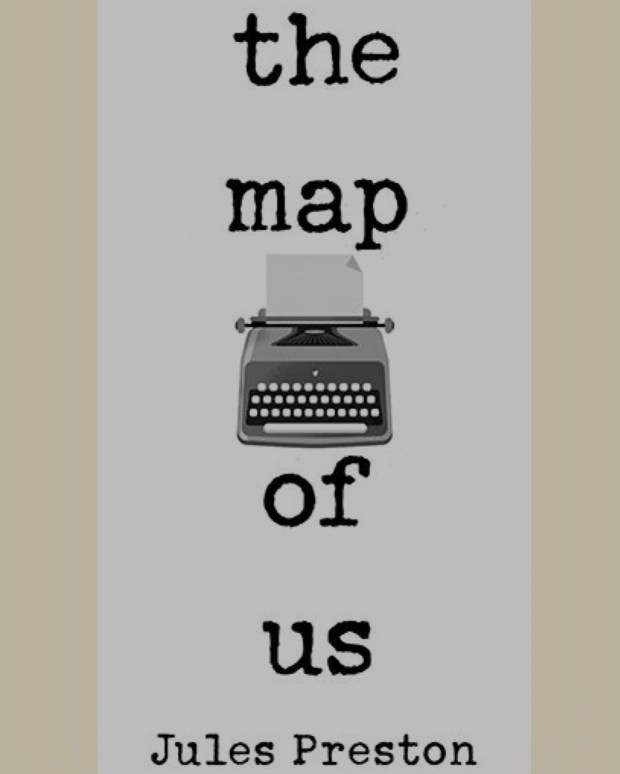
The Map of Us by Jules Preston

IMG_0889.jpg

Jules Preston: The Map of Us

Published By:

Buy It: here


What The Blurb Says:

A story of love and lost directions

Violet North is wonderfully inconvenient. Abandoned by her family and lost in an imagined world of moors and adventure, her life changes in the space of just 37 words exchanged with a stranger at her front door.

Decades later, Daniel Bearing has inherited his father’s multi-million pound business, and is utterly lost. He has no idea who he is or where his life is headed.

When Violet’s granddaughter’s marriage falls apart, Tilly, always adept with numbers, compiles a detailed statistical report to pinpoint why. But the Compatibility Index Tilly creates has unforeseen consequences for everyone in her world.

Tilly and Daniel share a secret too. 10.37am, April 22nd.
Soon, a complex web of secrets and lies is exposed and an adventure begins with a blue typewriter…


What I Say:

Sometimes, a book comes along that you hadn’t really heard of, you choose it because the premise sounds a bit different, and then you realise that it is one of the most innovative, unique and eloquent novels you have read for a long time.

Well, hello and step forward The Map of Us…

The story tells of the North family, starting with the Grandmother Violet, who, having contracted polio, is abandoned by her family in a rambling house with an untamed garden, with only her imagination and a blue typewriter for company.

Violet creates the character of Arthur Galbraith, who takes walks in an imaginary landscape, entirely of her own making.  She starts to type up the journeys, illustrating and devising a whole world where Arthur has travelled, using the walls in her room as the canvas for her ideas.  Violet becomes a published author – under Galbraith’s name, and his landscapes become her escape from the loneliness she feels.  One day, a man called Owen arrives seemingly from nowhere, with a wheelbarrow and a dog, ready to clear and maintain the gardens for Violet.  As she starts to see the garden being restored to its former glory, she too emerges from the shadows of the house and falls in love with Owen.

The action moves between Violet’s story, and that of her family –  Owen, their daughter Rose, and her grandchildren Tilly, Katherine and Jack.  We also learn about Daniel Bearing and his father, two men who have put the profits of their health food company before living and loving.  As the novel progresses, the seemingly unconnected families edge closer together in a roundabout but absolutely unavoidable way.

The Map Of Us is made up of very short, snappy chapters and can be read like individual anecdotes.  The style of the novel is like nothing I have read before, and I have to admit that initially I found it a little unusual.  The chapters are sometimes in prose, sometimes they seem to be poetry, and the chapter titles are things like ‘N’, ‘more sofa’ and ‘64.726%’.  Don’t let it put you off.  It is a clever device to keep you intrigued and to engage you while you try to work out how on earth this novel is going to work out.

The sheer brilliance of the writing and the truly clever narrative structure means that as you read, you realise that every chapter has a point to make.  There is always a reason it is there, a way to understand the character, their life and why they are who they are.  Little by little, chapter by chapter, the novel expands to provide us with a complete history of the North family.

As we learn about the grandchildren, we see how they attempt to navigate their way through their daily lives.  Tilly is methodical and analytical, with a way of telling things exactly how they are, and an unwitting knack of saying what everyone is really thinking!  Her way of coping is to rationalise everything by applying statistical analysis, even working through her marriage breakdown by constructing a Compatibility Index to understand why it happened.

Katherine hides her sadness by buying handbags she doesn’t really need, with a pitch perfect patter in justification and a husband who loves her but doesn’t know how to reach her.  Their marriage seems to be stalled at a stage where you sense from the writing that their communication, like many couples in long-term relationships is characterised more by what is not said as oppose to what is…

Jack meanwhile, has become the world’s leading authority on the colour blue (I told you that this was a unique novel!), who is seemingly the most contented and free of the three siblings.  However, his world is genuinely shattered when the woman he falls for turns out to be not what she seems, and as he slowly regains his connection to the world around him, he finds solace and hope in the place he least expects.

Every character in this novel feels real. They are far from perfect, they have their flaws and faults, but Jules’ skill in not being afraid to show them means we love them all the more for it.  As we learn more about the Norths, and see their story weave around and through the novel, for me, the overwhelming theme is one of finding your place in the world.  It may not be how you imagined it, it may be scary and difficult to imagine, but when you have the courage to be true to yourself, the rewards make it all worthwhile (and no, I am not going to spoil it by giving anything away – read it and find out!).

The Map Of Us is a beautifully crafted, intelligent book, which plays with the traditional form of the novel to tremendous effect.  The characters spill out of the pages and into your heart, and it is a joy to read.  It deserves to be a huge success, and Jules Preston has created a novel which will stay with you a long time after you have finished the last page.

I absolutely loved The Map Of Us, and I hope you do too.

Thank you to @Netgalley for an advance e-copy of The Map Of Us in exchange for an honest review.


Entanglement by Katy Mahood

IMG_0790.jpg

Katy Mahood: Entanglement

Published By: The Borough Press

Buy It: here

What The Blurb Says:

2007: at the end of a momentous day, Charlie, Stella and John cross paths under the arches of Paddington Station. As Charlie locks eyes with Stella across the platform, a brief, powerful spark of recognition flashes between them. But they are strangers … aren’t they?

Plunging back thirty years we watch as, unknown to them all, the lives of Stella and John, and Charlie and his girlfriend Beth, are pulled ever closer, an invisible thread connecting them across the decades and through London’s busy streets.

For Stella, becoming a young mother in the 1970s puts an end to her bright academic career in a way John can’t seem to understand. Meanwhile Charlie gambles all future happiness with Beth when his inner demons threaten to defeat him.

In rhythmic and captivating prose, Katy Mahood effortlessly interweaves the stories of these two families who increasingly come to define one another in the most vital and astounding ways. With this soaring debut, she explores the choices and encounters that make up a lifetime, reminding us just how closely we are all connected.

What I Say:

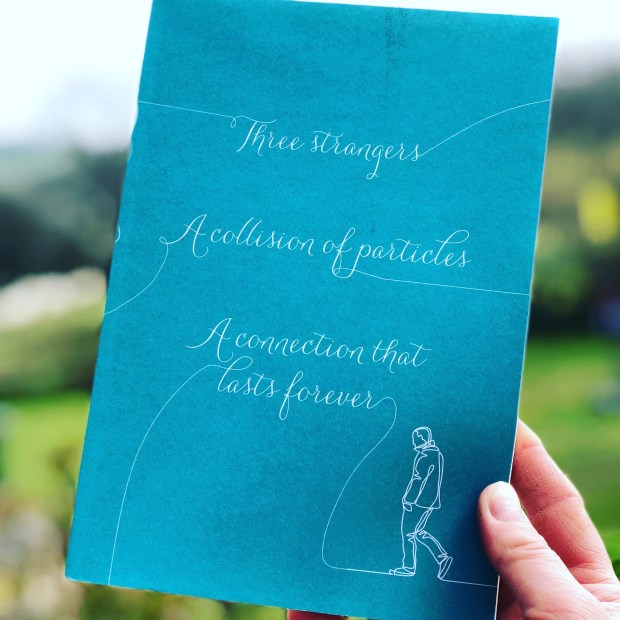
“A collision of particles, a change that lasts forever, so that even far apart they respond to one another.”

I was lucky enough to receive a proof copy of Entanglement from Harper Insider, and loved it so much I just had to write a blog post about it. However, this is not an easy novel to blog about, because it is so richly layered and complex. I was genuinely concerned about how I could possibly do it justice!

Entanglement tells the story of Charlie, Beth, Stella and John. The city of London, glorious and imposing, provides the ever present backdrop to their lives. It is throughout the book in landmarks, in street names, in the routes the characters take to different places and it is under London’s watchful eye that the novel unfolds.

However, it would be too simplistic to say that this is just a novel about the lives of four characters. Entanglement is so much more. Katy Mahood asks the question; are we really as separate as we believe? Isn’t there a chance that our lives may intersect with many more people than we realise and that our range of human interactions is far wider than we can comprehend.

The novel moves us through the lives of the four main characters. The narrative shifts between the relationship timelines of the two couples and we are party to the very different lives that they lead. Stella and John marry after Stella finds out she is pregnant. Charlie is in love with Beth, and despite being not exactly what her parents want in a future son in law, they marry too.

One of the many themes that is present throughout the novel is one which was very pertinent for me; that of the role of women in marriage and society. Stella is a creative and intelligent woman, whose academic and professional ambitions are sidelined while she at times, reluctantly fulfills the role of wife and mother. Ironically, her passion is writing about female writers whose voices need to be heard. She has to put her own hopes and dreams on hold while she supports John, a quantum physicist as his own academic career (a clever plot device that he is studying the field of entanglement) soars, culminating in him winning the coveted Fitzpatrick Medal for Physics.

Katy describes Stella’s frustrations at the limitations she faces, and deftly brings them to the surface of the novel. As a reader in 2018, I completely sympathised with the internal struggles she faces, as she longs for some sort of recognition as Stella, as oppose to a wife or mother. Unfortunately, Stella’s situation was commonplace then, and even more frustratingly, in 2018, this is still an issue which is relevant to many, many women.

Charlie meanwhile, has to deal with the aftermath of his sister’s death and his own injuries after the pub they were in is bombed. From the start of the novel, there is a charm and vulnerability to Charlie, who seems to be always working to create the stable family unit he lacked in his childhood. This is not to say he is perfect, but his mother’s alcoholism and the fact he has lost his sister, means that Charlie has experienced so much in his life already. He always seems to be just on the edge of losing his grip on the world around him. When Beth loses the baby they are both desperate for, Charlie starts to drink and stray from Beth.

As time goes on, Beth starts to correctly suspect that Charlie is having an affair. After she discovers she is finally pregnant, and gives birth to a daughter, she and Charlie decide to reconcile and try to raise Effie. Interestingly, as Charlie remains sober, Beth feels increasingly trapped in her marriage, frustrated by her teaching career and wanting to her academic potential.

Her desire to become a psychotherapist sees Charlie now in a position where he is unsure about his wife’s love and commitment to their marriage. All the time, Katy shifts the narrative focus between the characters, but it is always natural, and the dynamics flow easily between the different people, couples and world around them.

What distinguishes and makes Entanglement a must read novel, is the intricate plotting of the fleeting connections the characters make without ever truly knowing each other. Stella and John see Charlie in the aftermath of the bombing, Charlie sees Stella and John with their daughter, and in one scene, all the characters are at the same carnival. This is such a clever premise, that permeates the whole novel, but never seems staged or forced. They all interact and at points acknowledge each other, making snap judgements about the people they see in front of them, without knowing the reality of their lives.

Stella and John’s marriage is also tested, by a devastating illness that John suffers, and again we see how hard Stella works to ensure that everything stays intact, in spite of how unfulfilled she feels. For Stella, she finds her release in music, which also brings her finally emotionally back to John, as Charlie and Beth move further apart, connected only by Effie. As the novel progresses, and the characters age, we see how their lives shift and change, moving in ways that no one could have predicted.

Hope and Effie, the daughters of Stella and John and Charlie and Beth, move the novel towards its eloquent and hopeful conclusion, proving how powerful the theory of Entanglement is.

“Quantum entanglement, it turns out, is a good way in which to talk about marriage..because when two particles become entangled they remain connected even when they are far away from one another.”

Entanglement is one of those rare novels, which defies easy categorisation and is a fiercely intelligent and beautiful story of love, loss, the power of women, and the fleeting moments when we unwittingly connect with strangers. It is unlike anything I have ever read, and I was so entranced by it, that not only have I recommended it to everyone, I also went and bought a published copy!

I truly loved Entanglement, and hope you do too.

Larchfield by Polly Clark


IMG_0763.jpg

Polly Clark: Larchfield

Published By: riverrun

Buy It: here


What The Blurb Says:

It’s early summer when a young poet, Dora Fielding, moves to Helensburgh on the west coast of Scotland and her hopes are first challenged. Newly married, pregnant, she’s excited by the prospect of a life that combines family and creativity. She thinks she knows what being a person, a wife, a mother, means. She is soon shown that she is wrong. As the battle begins for her very sense of self, Dora comes to find the realities of small town life suffocating, and, eventually, terrifying; until she finds a way to escape reality altogether.

Another poet, she discovers, lived in Helensburgh once. Wystan H. Auden, brilliant and awkward at 24, with his first book of poetry published, should be embarking on success and society in London. Instead, in 1930, fleeing a broken engagement, he takes a teaching post at Larchfield School for boys where he is mocked for his Englishness and suspected – rightly – of homosexuality. Yet in this repressed limbo Wystan will fall in love for the first time, even as he fights his deepest fears.

The need for human connection compels these two vulnerable outsiders to find each other and make a reality of their own that will save them both. Echoing the depths of Possession, the elegance of The Stranger’s Child and the ingenuity of Longbourn, Larchfield is a beautiful and haunting novel about heroism – the unusual bravery that allows unusual people to go on living; to transcend banality and suffering with the power of their imagination.


What I Say:

There is a price to pay for hiding from the truth,

One can love, but never be loved. 

One can describe freedom, but never be free“.

Larchfield is a novel unlike any other I have read for a long time.  It is massive in its scope, ambitious in its creativity and tackles issues which would seem contrived in the hands of some authors.  It is also a novel where I read the first few pages and knew I was going to love it immediately.

This is the story of Wystan H Auden, the poet, who takes up a teaching post in Larchfield school,  Helensburgh in 1930 and Dora, who moves there with her husband Kit in the present day.  The narrative shifts between Dora and Wystan, and we uncover more about what each of them feels thinks and wants in their lives.

Dora and Kit move to a seemingly idyllic flat, with picture perfect gardens and a belief that this will be the new start they need as they prepare for the birth of their first baby.  From the outset, it is very apparent that Dora feels unnerved by the isolation and scrutiny her arrival in Helensburgh will bring.  Dora is not like other women in the village, who are entrenched in the teachings of the church and the intricacies of the tight knit community.  She is a creative and intelligent woman who wants to ensure that she forges her own identity and gains recognition for her academic work.  As she tentatively settles in to her new home, the occupants of the flat upstairs start to make it very clear that Dora is not welcome, as their son was allegedly promised the flat.

Wystan has retreated to Larchfield after a failed engagement, and is aware that his arrival at the school is preceded by his reputation as an enigmatic and mysterious poet.  He knows that his homosexuality is a facet of himself that he has to hide, and he is isolated from the world around him as he realises any admission of his sexuality could result in serious repercussions.

Dora and Wystan exist in two different decades, but are united in the loneliness and isolation they feel. Polly’s beautifully eloquent writing links these two similar souls, both poets, and at odds with the world around them.  When Dora is confined to bed after nearly losing her baby, her sense of estrangement and isolation from Kit and the world  becomes more and more resonant.   When their baby daughter is born prematurely, she is thrust into a world of motherhood she could never have envisaged.

Recognising a fellow unhappy outsider, Wystan becomes the protector of Jamie Taylor, a young boy at Larchfield who is subjected to bullying by his fellow pupils, and unwanted sexual attention from one of the teachers. Wystan is also increasingly aware of how at odds he is with the heterosexual, patriarchal ideologies and practices of the boarding school – he is expected to participate in a rugby match that causes him to comment:

This is the space that heroes occupy, that men understand.  Why does he not feel pride?  Why does he feel so lost?”

Wystan articulates in that single statement the very essence of his battle and the source of his unhappiness.  Wystan is hiding who he truly is in order to fit in, and is allowing his identity to be shaped by what others believe a man should be, increasingly to the detriment of his happiness.  He finds solace in visiting the beach, where briefly he can be at peace, and one day he launches a bottle with a message inside into the sea, asking for contact.

Polly Clark constantly asks us to question what is identity? How is it formed and by whom? For me, the poignant issue that ran throughout this novel was whether it was better to live the life you want, or the one that society thinks you should have?

Dora is thrown into motherhood and is dealing with it as best as she can.  She is on her own in a new town, with an increasingly distant husband.  Dora is having to deal with scrutiny from social services who have been called in after a tip off from Mo and Terrence, her neighbours upstairs.  Like Wystan, she is feeling isolated and overwhelmed, and her identity is being slowly eroded as she is identified solely as a mother or a a wife.  This is sharply brought into focus when Dora is visited by her friends, who refer to her as RJ, which is the name she wrote under, as she is forced to confront the fact that she is no longer that person.

 “Her existence, her visibility was uncertain even to her husband”.

As the pressure of caring for a premature baby, as well as her concerns about her husband encroach on Dora’s thoughts, she starts to hear a voice saying ‘I can win this’, but has no idea what this means.  Like Wystan, she finds comfort in visiting the beach, and finds a bottle with a message inside, and a phone number.  Dora calls it, and someone at Larchfield answers.  Dora has found Wystan, and he has found her.

This is the beauty of Polly’s writing.  The interaction between Dora and Wystan feels natural and totally believable.  They co-exist in each other’s worlds and the narrative shifts again to one where as the reader, you are not sure whether this is a an actual physical connection or a depiction of Dora’s deteriorating mental state.  As the lines between fiction and reality become blurred, we see Wystan finding love with Gregory and they escape for a holiday where they can truly be happy.

After a number of events, culminating in leaving her daughter in a car for a short period of time, Dora is removed from her family and given medical help,  In a beautiful and elegiac dream like sequence, Dora and Wystan step closer to a life together, but then she makes a choice about what direction she wants her future to take.

Larchfield is an exceptional novel, that captivates the reader from the first page and does a very rare thing. Not only does it sensitively and intelligently address many themes such as motherhood, identity and societal expectations, but Polly’s writing ensures you  completely empathise with Dora and Wystan and the challenges they face.  All you wish is for Dora and Wystan to find the happiness and contentment they truly deserve.

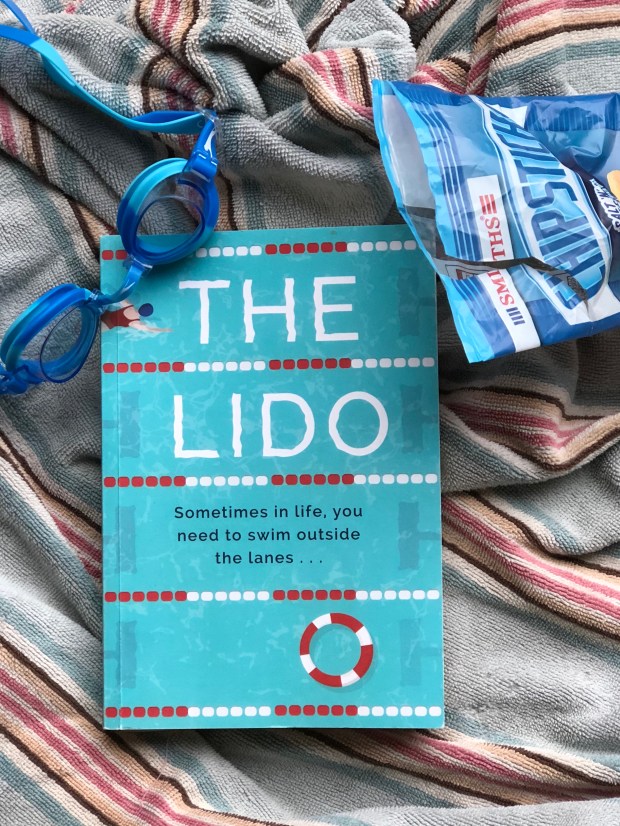
The Lido by Libby Page

IMG_0438.jpg

Libby Page: The Lido

Published By: Orion

The Lido is due to be published by Orion Books in the UK on 19th April 2018

What the Blurb Says:

Rosemary has lived in Brixton all her life, but everything she knows is changing. Only the local lido, where she swims every day, remains a constant reminder of the past and her beloved husband George.

Kate has just moved and feels adrift in a city that is too big for her. She’s on the bottom rung of her career as a local journalist, and is determined to make something of it.

So when the lido is threatened with closure, Kate knows this story could be her chance to shine. But for Rosemary, it could be the end of everything. Together they are determined to make a stand, and to prove that the pool is more than just a place to swim – it is the heart of the community.

The Lido is an uplifting novel about the importance of friendship, the value of community, and how ordinary people can protect the things they love.

What I Say: 

I have to admit, lately I had fallen a little bit out of love with reading.  I had tried tackling books that people have recommended, and picked up novels that I was told were worthy and should be read.  Nothing connected with me or had me wanting to keep turning the pages.

Then I was sent a copy of The Lido.

The Lido tells the story of Kate and Rosemary, two women who live in Brixton.  Kate has recently moved there, and in spite of having a job and a place to live, she feels utterly alone.  Like Kate, I moved to a big city after my graduation, and Libby absolutely describes the reality of being a young single person trying to find your way while everyone else seems to be so together and confident.  Everything for Kate is overwhelming, and she is having panic attacks too which start to make her wonder whether she has made the right decision.  People assume that for Kate, she should be at this point, living her best life, but really at the start of The Lido, she is struggling to work out what that is.

Rosemary, a fiery and determined 86 year old, on the other hand, has always lived in Brixton.  Although she is very much a part of the local community, she has lost George, her husband and love of her life.  Rosemary is now alone, and facing overwhelming loneliness for the first time.

Rosemary’s day is punctuated by her daily visits to the local Brockwell Lido, a place of calm and serenity in a bustling, loud and chaotic Brixton.  Libby’s writing astutely shows how when Rosemary swims there, everything slots back into place, and gives her back a sense of order and reconnection with the world and the people at the Lido.

After discovering that the Council intend to sell it off to a property development company, Rosemary knows instinctively that she must campaign to keep the Lido open for her and for the community.  Kate, a junior reporter at the Brixton Chronicle, is given the task of interviewing Rosemary after her flyers come to the attention of the editor.

Rosemary tells Kate that she will only agree to an interview if Kate swims there first.  It was interesting to see how although Kate was so uncomfortable at the thought of pushing herself out of her comfort zone, when she does, she understands the effect that Rosemary’s daily swim has on her and why the Lido is so important.  We are all different, with our own experiences, hopes and dreams, but when we are swimming, at our most basic and vulnerable, we are all the same, looking for that moment of peace.  The meeting between the two women starts not only a campaign to ensure that the Lido remains open, but also a powerful and uplifting friendship that is life changing for both of them.

As the novel develops, we learn about Kate and Rosemary’s lives, and how their past experiences have brought them to this point.  Kate remembers her connection with her elder sister Erin, and how when she learnt to swim, her parent’s marriage was crumbling around them.  For Rosemary, the Lido is utterly intertwined with the very essence of who she is and how she and George lived and loved.  To lose the Lido, would mean that Rosemary would lose her place in the world, and she would also lose her last physical connection to George.

However, The Lido is not just the story of Rosemary and Kate.  Libby Page makes sure that the story of the community around Brixton is heard too.   Her writing of the world around Kate and Rosemary is vibrant, evocative and is filled with descriptions that fill all your senses as you turn the pages.  The characters around Rosemary and Kate add to the power and momentum of the story and their willingness to help them campaign against the closure of the Lido shows how when a community comes together, amazing and unexpected things can happen.

By going out and about with Rosemary, Kate also starts to realise that she now has a chance to really start living, understanding that she can truly make her way in the world and be the person she wants to be.  Reporting the Lido campaign leads to Kate getting more stories and embracing the career she loves.  She also meets Jay, a photographer, and as they work with Rosemary to save the Lido, they realise that they have an attraction to each other too.

The story of Kate and Rosemary are entwined with the stories of those who use the Lido every day, and provides a far deeper and more interesting narrative than just two women taking on a property development company.  By telling the stories of those who use the pool, we understand not only how important the Lido is to the whole community, but that everyone has a story and only by talking to each other can we learn about them, forge friendships and keep our communities alive.

The Lido is simply an absolute joy to read.

In a frantic world where we are constantly bombarded with bad news, sad news and fake news, it is so refreshing to read a novel that has love, hope and compassion at its core. The Lido is about believing in yourself and understanding that the notion of family today is far wider than ever before, and that we all ultimately want to feel is that someone cares and is listening to us.  The story of Rosemary and Kate and the Brixton community who love the Lido will stay with me for a long time, and I hope when you read Libby Page’s stunning debut, that it stays with you too.

I was given a proof copy of The Lido, in exchange for an honest review of the book.

Thank you to @RebeccaGray at Orion Books for my proof copy and a chance to take part on my first ever blog tour.

You can follow Libby Page on Twitter here

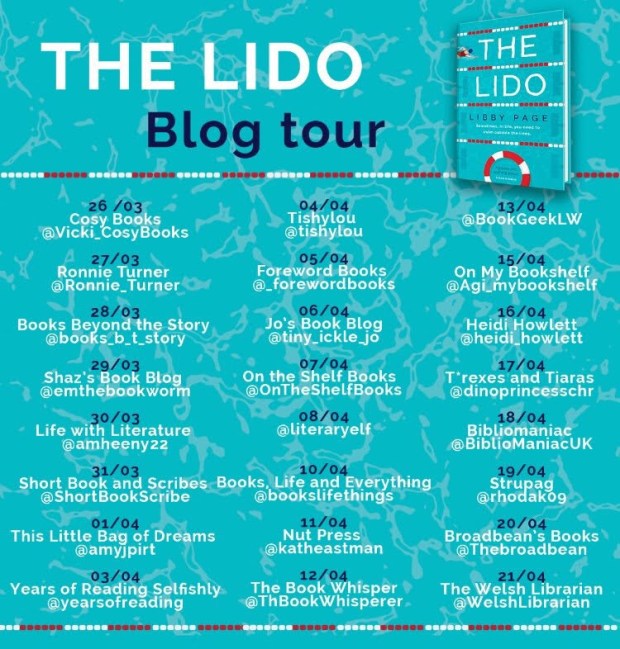
#LoveTheLido Blog Tour continues with these brilliant bloggers below:

IMG_0361.jpg

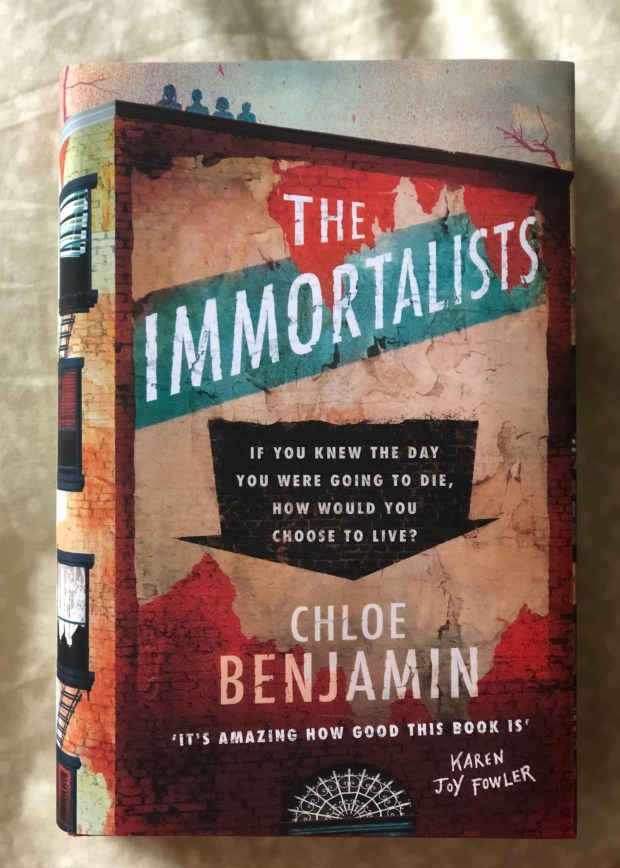
The Immortalists by Chloe Benjamin

IMG_0380.jpg

Chloe Benjamin: The Immortalists

Published By: Tinder Press

Buy It: here

What The Blurb Says:

It’s 1969, and holed up in a grimy tenement building in New York’s Lower East Side is a travelling psychic who claims to be able to tell anyone the date they will die. The four Gold children, too young for what they’re about to hear, sneak out to learn their fortunes.

Such prophecies could be dismissed as trickery and nonsense, yet the Golds bury theirs deep. Over the years that follow they attempt to ignore, embrace, cheat and defy the ‘knowledge’ given to them that day – but it will shape the course of their lives forever.

What I Say:

So this is how it started: as a secret, a challenge, a fire escape they used to dodge the hulking mass of their mother..” 

In 1969, the four Gold children, Varya, Daniel, Klara and Simon hear of a mysterious psychic woman who can tell you the date on which you will die.  Intrigued and perhaps needing some distraction from the endless summer days, they decide to seek her out.

One by one, the children are called in to hear the date on which they will die.  From that point on, we as readers watch what happens in each of their lives until the day of their death.  Chloe asks us all an important question.  If you knew the date of your death, how would you choose to live?

The four sections of The Immortalists follow each child – we live their lives with them, and see how the psychic’s revelation has impacted the decisions they make.

Simon, aware that he is expected to take over his father’s tailoring business, realises that he now has a chance to explore who he really is.  In finding the courage to move away from New York to San Francisco, he can finally embrace his sexuality and creativity.

“In New York, he would live for them, but in San Francisco, he could live for himself”.

Klara and Simon decide to leave New York together, and while Klara temps by day and practises her magic by night, Simon starts dancing professionally.  He takes classes at the San Francisco Ballet Academy, and it is there he meets Robert, another dancer, and they start a relationship and fall in love.  Acutely aware of his mortality, and that the date of his death is fast approaching, Simon becomes increasingly hedonistic and cheats on Robert numerous times.

As we know each character has been told the date of their death, I found that there was an extra dimension to the book.  We are as much in the dark as the characters as to how they will die, but we know it is going to happen. It made me turn the pages even faster, wanting to know, but not wanting to read how the Gold children pass away.

Throughout The Immortalists, Chloe cleverly weaves American history through the lives of our protagonists.  For Simon, he lives in a time of the AIDS epidemic, and eventually he falls ill and is hospitalized.  The first date the psychic has predicted comes true, and the Gold family loses their youngest son.

Klara won’t be a woman who is sawed in half or tied in chains -nor will she be rescued or liberated.  She’ll save herself, she’ll be the saw”.

Klara, who had been in San Francisco with Simon is distraught at his death, as she chillingly realises that the first prediction was right.  She now has to navigate her way through her life, aware that an imminent death sentence is hanging over her head.

Her passion has always been magic, and attempting to gain recognition in a heavily male dominated world takes all her energy and determination.  When she meets Raj, they go into business together, she can concentrate on refining her magic, he attempts to further her career by booking different venues and assisting her off stage.

What becomes clear even as they fall in love and have a baby called Ruby, is that Klara is frustrated by Raj’s attempts to determine her life.  Perhaps she is already aware that she has a time limit set on her existence, and she wants to be in control of the time she has left. Raj pushes Klara to work in Las Vegas, a situation she is clearly uncomfortable with, and she realises her daughter will have to live without her, and grieves all the milestones she will miss.  As the date of her death approaches, she is convinced she hears Simon trying to communicate with her.  Klara decides to remove herself from her family and again the psychic’s next prediction proves to be true.

Klara and Simon left their siblings Varya and Daniel back in New York, and they have had to change their lives in order to be around to care for their mother.  I wonder if they hadn’t visited the psychic, would this be where the remaining Gold children found themselves – tied to the family home and resentful of Klara and Simon’s freedom.

As the novel moves on, we learn that Daniel is in contact with Raj and Ruby, and that they have continued Klara’s act and are now millionaires.  Daniel struggles with his relationship with them, he does not trust Raj, and is jolted by how much Ruby reminds him of Klara.  He has been demoted at work, and as the day of his death approaches, he becomes consumed with the idea of finding the psychic who put the whole chain of events into motion.

Daniel works with Eddie O’Donoghue, a police officer known to Klara and Simon, who tells him that the woman was part of a team of con artists, but they are unable to trace her.  Feeling he has nothing to lose, Daniel decides to try to find her, to find an answer as to whether she really can predict their deaths.  If she truly is a con artist, than maybe her predictions are baseless and he has a chance to change his life and its ending.

As he searches desperately to find the woman, called Bruna, we feel his anguish and mounting exasperation as he attempts to get the answers he wants to find before his death.  Eddie and Daniel’s wife Mira find him, holding a gun to Bruna as she chants;

“Akana mukav tut le Devlesa”

“I now leave you to God”

The final Gold child, Varya, has decided that her life is going to be very different from that of her siblings.  Instead of living, Varya merely exists.  She works at the Drake Institute for Research on Ageing, which is invested in researching conditions such as Parkinsons, heart disease and cancer.  The Institute’s aim is to increase human longevity, something we recognise as very poignant for Varya, especially considering how her siblings passed away (and no I am not going to tell you..!).

Varya has sealed herself off from the world around her, only interacting with her mother.  She does not have friendships or relationships, her whole life is planned and organised with meticulous detail, her apartment is sparse and sterile, devoid of any personality.

Fear that she had no control, that life slipped through one’s fingers no matter what”.

A young journalist called Luke arrives at The Institute and Varya finds herself inexplicably drawn to him, confiding in and talking to him about herself and her life.  As she talks, she starts to examine the choices she has made in light of the date the psychic gave her, and wonders whether she is really doing the right thing.  A devastating revelation from Luke, sends Varya completely off course, questioning everything she believed to be her safe compartmentalised reality.

Varya is responsible for a high-profile twenty year study at the Institute, which looks at the effect of dietary choices on monkeys.  Against all her professional judgement, she finds herself empathising with Frida, one of the monkeys in the controlled diet group and releases her with disastrous results.

Fired from her job, and reeling from Luke’s story, Varya now has a choice.  To retreat from her life and the family she has left, or to take a leap of faith, embrace her mortality and truly live.

Simon, Klara, Daniel and Varya are by no means perfect.  They have their faults, their foibles and their issues, but they are human.  Chloe’s skilful writing portrays a family that we can empathise with, people we can understand and a dilemma we can all relate to.

The Immortalists is a novel that picks you up from the first page and hurtles you along with the life of the Gold children.  The writing is tender, eloquent and achingly poignant. It provokes not only intense reactions to the story, but made me re-examine the way I live my life too.  It made me realise that I would rather look back on my life and know that I have given it my all, instead of wondering “what if?”.

Simon, Klara, Daniel and Varya are three-dimensional, living, loving and wonderful characters.  Every single one of them made me want to reach into the novel, bring them close and tell them that we understand the choices they have made and the lives they have lived, and that we love them for it.

The Immortalists is already one of my favourite books of 2018, and I truly loved it.

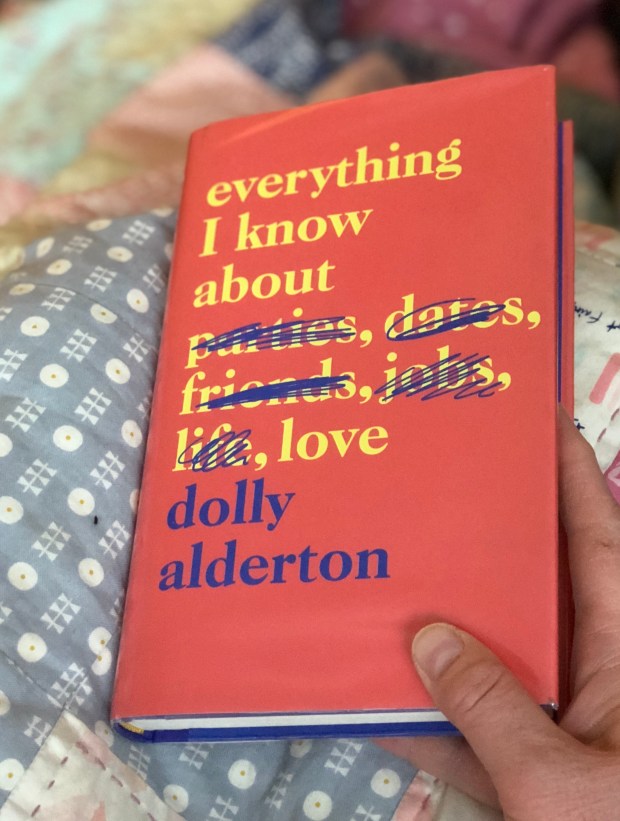
everything I know about love by Dolly Alderton

IMG_0257.jpg

Dolly Alderton: Everything I Know About Love

Published By: Fig Tree

Buy It: here

What They Say:

When it comes to the trials and triumphs of becoming a grown up, journalist and former Sunday Times dating columnist Dolly Alderton has seen and tried it all. In her memoir, she vividly recounts falling in love, wrestling with self-sabotage, finding a job, throwing a socially disastrous Rod-Stewart themed house party, getting drunk, getting dumped, realising that Ivan from the corner shop is the only man you’ve ever been able to rely on, and finding that your mates are always there at the end of every messy night out. It’s a book about bad dates, good friends and – above all else – about recognising that you and you alone are enough.

Glittering with wit and insight, heart and humour, Dolly Alderton’s powerful début weaves together personal stories, satirical observations, a series of lists, recipes, and other vignettes that will strike a chord of recognition with women of every age – while making you laugh until you fall over. Everything I know About Love is about the struggles of early adulthood in all its grubby, hopeful uncertainty.


What I Say:

“Because I am enough.  My heart is enough. 

The stories and the sentences twisting around my mind are enough.”

Let me say from the start, because I am always upfront about my reviews, that I don’t know why I chose to pick up this book other than I had heard lots about it on Twitter, and it was on the ‘New Books’ Shelf in my local library.

I didn’t think that I was in any way the target demographic.  I am a 47 year old Mum of two, who has been married to the same man since 1996, and have been with Mr Reynolds since 1992. Even writing that down surprises me!  Dolly is 29 and as she explains in her book, has not been in a relationship for longer than two years.

So, I thought, we have nothing in common.  I was sure I would read a couple of pages and disregard it as another self-indulgent memoir that was only on my radar due to the power of social media.

If I tell you that I started this book at six thirty this morning, and finished it by midday,  then you can probably guess that I completely misjudged everything about this book.

Dolly Alderton, if by any chance you ever read this blog post.  I humbly apologise to you and have only one thing to say to you.  Thank you – this book resonated with me on every level.

Everything I Know About Love is Dolly’s memoir, explaining what she has learned through her experiences and what knowledge from different points in her life she can share with us.  What makes this book stand out, and I think relatable for every woman, is that this is not some gloating, Instaperfect look at a privileged life that we really couldn’t care about.

Dolly’s writing and her narrative tone reminded me very much of Jilly Cooper’s style, but this is meant as a huge compliment as I love the deftness of touch and humour that both women have in their writing.  The addition of recipes and the asides such as the excruciating baby shower and hen do emails, serve to lift this book way above the usual memoirs with a horrifying realisation that we have all been party to something like this.

Dolly, and her wonderful friends that we meet – (I guarantee you will especially love  Farly, Dolly’s best friend) are normal human beings.  They make mistakes, they drink too much, they sometimes make bad life choices, worry about paying their bills and get themselves into situations that made me wince a few times, but ultimately they embrace life.   Dolly and her friends love each other without question.

As many of us now realise, your family are not always those related to you by blood, they are the ones who are there to listen to your latest relationship disaster, to make sure you have food in your fridge, to be there when life seems to be overwhelming and to sometimes say nothing at all.

Dolly is unflinchingly honest in her memoir.  No topic is off-limits, she is brutally frank as she tells us of her love of alcohol, her online dating disasters and her route to therapy as she struggled to find her way in today’s increasingly pressured society.  Make no mistake, she is not looking for our pity or attention, instead she is saying to us, it is ok for us not to be perfect.  Just because someone might seem to have it all, and appear to be leading the life we wished we had, it doesn’t mean they are any happier than we are.

Everything I Know About Love is the book I wish I had when I was in my twenties.  I too tried to navigate my way through the complexities of being a young woman, but my time was in the early nineties.  I had done the expected thing of A levels and then Leeds University, but nothing prepared me for real life afterwards.

I realised then, and more so now that like Dolly, my friends were truly everything, and together we believed we were invincible and would have done anything for each other. Dolly’s book is a love letter to female friendship, to understanding that you may be in and out of each other’s lives as time goes on, but that you will always be bound by the love, laughter and tears you have shared.

Everything I Know About Love is a beautifully written, razor-sharp and stunning memoir.  I will be pressing a copy in to my nieces’ hands as soon as they are old enough, and will tell them that they should appreciate the women around them, relish the friendships that will endure, and know that they are always enough.

I loved it.


You Don’t Know Me: Imran Mahmood


img_0059251459823.jpg

Imran Mahmood: You Don’t Know Me

Published By: Michael Joseph

Buy It: here

What the Blurb Says:

It’s easy to judge between right and wrong – isn’t it?

Not until you hear a convincing truth.

Now it’s up to you to decide…

An unnamed defendant stands accused of murder. Just before the Closing Speeches, the young man sacks his lawyer, and decides to give his own defence speech.

He tells us that his barrister told him to leave some things out. Sometimes, the truth can be too difficult to explain, or believe. But he thinks that if he’s going to go down for life, he might as well go down telling the truth.

There are eight pieces of evidence against him. As he talks us through them one by one, his life is in our hands. We, the reader – member of the jury – must keep an open mind till we hear the end of his story. His defence raises many questions… but at the end of the speeches, only one matters:

Did he do it?

What I Say:

“Maybe it don’t matter who tells the story because there is no way of making a person understand what it is to be you”.

You Don’t Know Me is one of those books that had been on my radar for a while (it was a Radio 2 Book Club Choice), so half-term seemed a perfect time to sit and really take my time to read it. Unfortunately, it is not one of those books you want to slowly savour – it is a book you want to read and read until you can’t keep your eyes open, turning the pages until you find out what has happened. It is a fast paced, twisting turning novel that doesn’t stop pulling you along until the very last page – and then leaves you hanging on the precipice!

You Don’t Know Me tells the story of an unamed man who is on trial for murder. He decides to fire his barrister just before the closing arguments, and takes the decision to tell the jury his side of the story.

His story fills in the blanks for us – the everyday mundane and irrelevant, the things we don’t really need to know, but also the things that mean we are seeing a fully formed person in front of us as oppose to a representation skewed by legal arguments and cross-examination. – we listen to him talking to the jury and telling them everything that his barrister can’t possibly know.

He gives us not only a blow-by-blow account of how he ended up being tried for murder, but also a glimpse into the day-to-day reality of living in a world where the gang culture is everything. I have no experience of anything like this, and You Don’t Know Me was a huge learning curve. I had no idea how organised and structured this world is, how children are beguiled by the sense of belonging and having a family that always has your back, and that they can work their way up through the ‘ranks’ to become a pivotal member of the gang.

Belonging to, and being an active member of a gang is everything to many young people. It gives them not only a sense of identity, but a shared life experience and a belief that they are ultimately untouchable.

The narrator who has no legal experience meanders and goes off point, swears and apologises immediately and has to stop and explain the different terms and slang he uses to us. This serves to only make the monologue much more authentic and natural. We, the reader become the thirteenth member of the jury, and are drawn in to his story and start to realise that we are starting to make judgements and assumptions based on the evidence he is presenting us with.

We learn how he met his girlfriend Kira, and how their relationship seemed to be going well, she loves books, he loves working on his cars, they settle into a routine that seems to work. However, Kira’s brother, Spooks is in prison, scared for his own safety, and his fear means that he trades his sister’s wellbeing to ensure he is not touched in prison. Kira is forced to work the streets by a gang. Bereft at having lost his girlfriend, the defendant searches the streets until he finds her and takes her home, realising that she will never be the same again, shattered by what she has been forced to do with almost a weary acceptance as she wants her brother to be safe.

From this point on, You Don’t Know Me turns up the tension even further, as Kira and the defendant, along with Curt, his best friend, play a dangerous game with the gangs that surround them. A young man called JC, who is working for the Olders gang taunts the defendant that he knows Kira is back with him, and from that point on, a devastating chain of events is set into motion which means that our narrator is left alone to face a charge of murder.

The events that overtake the defendant, Kira, Curt and his family put them into situations that Imran describes so convincingly, you can feel their desperation and their desire to return back to the mundane and everyday that they longed to escape from. They realise that the grass is not always greener, and that they are completely subsumed in the gang culture that they are trying to escape.

You Don’t Know Me is a truly remarkable novel – the narrator holds the whole book together as he gives his impassioned closing speech to us, the jury. However, the freshness and the pace of Imran’s writing never flags, and you feel that you are sat in court watching this young man uncomfortably standing in front of us, trying to recall any tiny piece of information that could help prove his innocence. We are constantly forced to confront our preconceptions and beliefs as a young man asks us to look behind the case notes and judge him simply as a human being.

He stands in front of us, fallible, flawed and imperfect, but pleading with us to believe him. That is the crux of You Don’t Know Me, as Imran Mahmood presents us with no narrative other than that of the defendant, as you, the reader are finally asked – so, who do you believe?

I loved it.