Possibly, Maybe

Let’s be honest, it’s been a while.

Late in 2024, I had every intention of turning over a new leaf and blasting into 2025 with a blog filled with lots of gorgeous and wonderful book reviews, and all the possibilities that a New Year should bring.

Then, in his usual, don’t worry, I’m fine and it’s probably nothing way, my Dad told me that there were a couple of health things he was dealing with. Except this time, things weren’t ok, and he wasn’t fine. He was diagnosed with kidney cancer in February this year, and passed away in April.

Inbetween the diagnosis and Dad’s death, my sister and I were flung into the unknown territories of looking after someone who is terminally ill. We split our weeks in half so that we could both travel to stay with him and look after him, dealing with medication, and doctors, and hospice nurses, and district nurses, and the realisation that in the midst of all this, our Dad was slipping away from us into a world where his lucidity hinged on where he was in his pain medication cycle.

When he died in April, with the grief came the knowledge that at least Dad wasn’t suffering with the excruciating pain he had endured, and as we then fell into the whirl of admin that comes when someone passes away (which made me realise how I need to get my own things sorted!), the only thing that counted was getting through the days however I could.

My sister and I were now, as someone tactfully told us at the funeral, real life orphans, so we settled back into our lives and are still dealing with everything Dad related at a distance. There is that awful realisation that keeps coming in waves, that your Dad isn’t at the end of a phone, or at the house just off the M4 in Wales, and I didn’t know what to do.

My Mum died in 2019, and blindsided by grief I fell back into and consumed books like a woman on a mission to absorb stories as a way to navigate my loss.

In 2025, I felt differently.

Since 2017, I had been calling myself a book blogger, and with it, came the excitement and thrill of reading and reviewing new books, making bookish connections with authors, publishing people, and best of all, a whole world of people who loved reading and books just as much as I did.

When I started, your ‘portfolio’ was your blog – it was a way for publishers to see what you were writing about, and books were being sent to me faster than I could read and review them. Yet I worked really hard at reading and reviewing them for publication day, shouting about them, telling people to read them, and nothing made me happier than an author thanking me for my review or someone telling me they had got a copy of the book because they trusted my recommendation.

By 2025, the blogging landscape had changed so much. BookTok is huge, talking about books on X is like shouting into the void, and the Instagram algorithm is all about the reels and the videos. It feels like a world where I am sat on the bench at the side of the playground, still writing reviews (admittedly on instagram) and shouting about books, but that everyone is looking the other way at the new kids.

Now, sitting with the quietness of not being seen so much, I realised that again, I had lost my joy of reading because I was getting frustrated by feeling that my efforts to read and review books were not being heard. We are always aware as bloggers how we can help and support authors, but I think we need that support too. Anyway, that’s a post for another time.

My Dad was a bookworm like me, and was always asking me how the book blogging was going, and whether there were any books I had read he would like – there usually weren’t, but we had so many brilliant discussions about reading and what different books meant to us at different points in our lives. Now, realising that we wouldn’t have those chats any more and feeling lost, I turned to my bookshelves for comfort. I read books that I wanted to read, books that had been on my shelves for the longest time, and books that I would never have picked up (hello Lonesome Dove, and thank you Amanda for telling me I needed to read it, you were of course right!).

I decided to take the book blogging pressure off myself, because when you put all that effort in, and you feel like no one is listening, or you start to get frustrated that you are missing out on proofs and seeing people with them and your own requests not being seen, I knew it was time to take a step back and take a long hard look at myself.

I guess this post is a long winded way of me telling you that I am still here, still reading, and am trying to get back to reading without the background noise of feeling I should be reading and reviewing all the new books.

When I wrote a post about my Mum, I ended it by saying that the greatest tribute to my Mum would be for me to just keep reading selfishly, because life is too short to read books you don’t love. Now as I navigate my world without Dad too, I have come to realise that one of the best gifts they gave me was my love of reading, and although it’s heartbreaking that neither of them are here with me, for them, I am trying to find that love again in the best way I can.
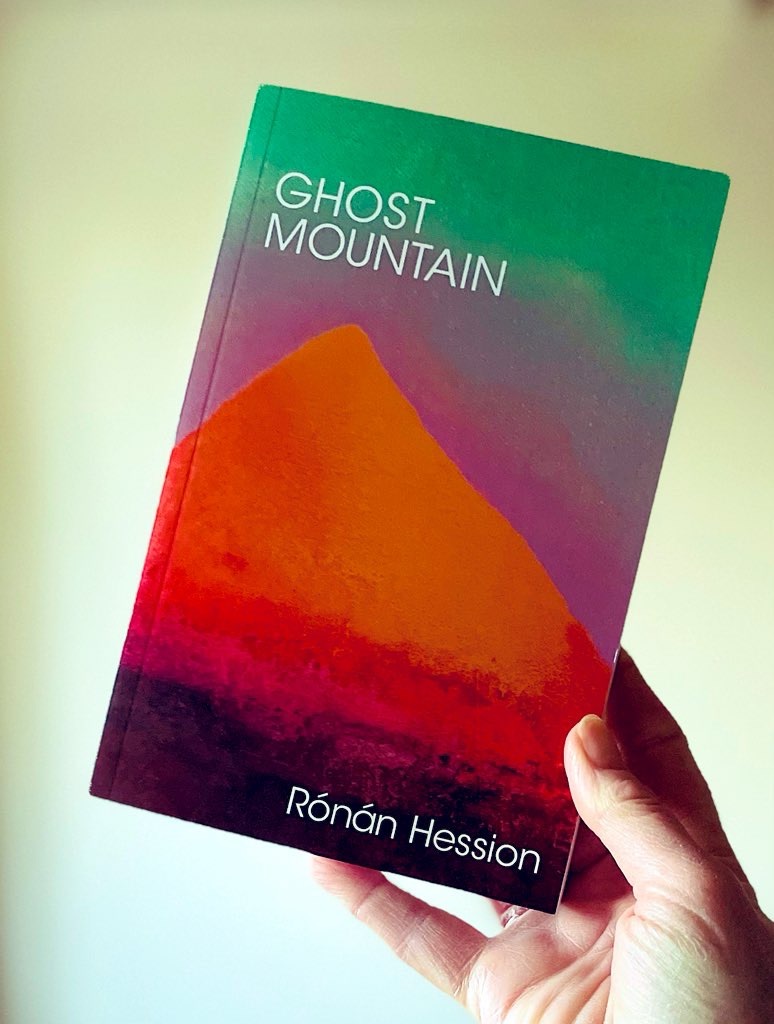
Ghost Mountain by Rónán Hession

Ghost Mountain by Rónán Hession

Published by Bluemoose Books on 23 May

What They Say

Ghost Mountain, is a simple fable-like novel about a mountain that appears suddenly, and the way in which its manifestation ripples through the lives of characters in the surrounding community. It looks at the uncertain fragile sense of self we hold inside ourselves, and our human compulsion to project it into the uncertain world around us, whether we’re ready or not. It is also about the presence of absence, and how it shadows us in our lives. Mountains are at once unmistakably present yet never truly fathomable.

What I Say

I don’t think it’s any secret that I have loved each of Rónán’s previous novels, Leonard and Hungry Paul and Panenka, and knew one thing for sure that Ghost Mountain would be very different to both of them.

Rónán’s skill as a writer is that he constantly surprises you with the way in which he uses the written word and weaves worlds that are like ours but seem slightly magical. I don’t think you can easily categorise his writing, and that is what makes it even more special, and why I love reading his novels.

In Ghost Mountain, the seemingly simple premise of a mountain that just appears one morning, and the reactions of those who know about it becomes so much more. This is a novel about the human condition, of connection and co-existence. It is the story of how our lives can often seemingly be destined to move in one way, but that a decision or action in a single moment can change your world and those of people who you have never met.

When the Ghost Mountain appears in the nameless location, it is discovered by a local woman called Elaine, whose interaction with it ends in tragedy, and her not wanting to articulate to anyone what she has found. As other people discover it, the story spreads, and the mountain is swathed in visitors and tourists, all drawn to the place which has appeared for no reason, bringing with it routines and behaviours and as in society creating a right and wrong way to behave while there.

We meet local couple Ruth and Ocho, married but it seems more because it works rather than for any passionate reason. Both react to the appearance of Ghost Mountain in different ways – Ruth is bewitched by it, and wants to spend time there, while Ocho is highly sceptical of it, and retreats to his parent’s house, a place of safety, mundanity and comfort.

We meet the Clerk of Maps, an unnamed official who sees this ironically as the chance to make a name for himself, and realises he now has professional worth in a world where he was previously ignored. There is also the landowner who has inherited the land Ghost Mountain stands on, finds himself in possession of land he cannot sell, and a tenant who refuses to engage with him.

I loved the character of Dominic – the renowned local drunk with a penchant for making his feelings known by attaching notes to bricks and lobbing them through the relevant windows. When he throws one through Elaine’s window with a promise to pay back for the damage a small amount each week over a period of time, these two people who have stepped back from the world find a connection that draws them together and their lives change.

This for me is the very heart of Ghost Mountain, and what Rónán achieves brilliantly. He shows us how we are all connected, and often want to feel that human connection with someone or a group of people. All the characters in this novel in some way cross paths with everyone else, be it by being in a relationship, meeting because one character knows another, or even by standing behind them in a queue in a butcher’s shop.

Moments of tenderness and joy are set against shocking events that as a reader stop you in your tracks, and Rónán’s understated and thoughtful prose adds to the impact of them. There is a section about a mother’s love and the grief that comes when you lose them that just stopped me in my tracks, and Rónán’s absolute understanding of that life changing experience is present in every single one of those words.

Society is complicated, layered and often wonderful, but it can also be brutal and exclusive. It will alienate those who don’t fit the expected roles or aesthetics, leaving a group of people who live their lives trying to work out how to fit in. The ever present Ghost Mountain serves as a catalyst for this community, prompting some to question what they have accepted for so long, others to take the first step to a new life, and for some to realise that their time in this world is only temporary and to accept that too.

Ghost Mountain is an unforgettable and erudite novel about love, society and inexplicable mountains. It will make you stop and think about what you have read long after you have finished it, and realise that life is fleeting and complicated and often challenging, but that it is up to us to determine the path we take.

I absolutely loved it.

Thank you so much to Kevin and Bluemoose Books for my proof copy.

73 Dove Street by Julie Owen Moylan

73 Dove Street by Julie Owen Moylan

Published by Penguin Michael Joseph

What They Say


When Edie Budd arrives at a shabby West London boarding house in October 1958, carrying nothing except a broken suitcase and an envelope full of cash, it’s clear she’s hiding a terrible secret.

And she’s not the only one; the other women of 73 Dove Street have secrets of their own . . .

Tommie, who lives on the second floor, waits on the eccentric Mrs Vee by day. After dark, she harbours an addiction to seedy Soho nightlife – and a man she can’t quit.

Phyllis, 73 Dove Street’s formidable landlady, has set fire to her husband’s belongings after discovering a heart-breaking betrayal – yet her fierce bravado hides a past she doesn’t want to talk about.

At first, the three women keep to themselves.

But as Edie’s past catches up with her, Tommie becomes caught in her web of lies – forcing her to make a decision that will change everything . . .

What I Say

Sometimes in life there are things you can control and things you can’t. When Amanda (@bookishchat) and I read That Green Eyed Girl back in 2022 we knew straight away that we wanted to feature Julie and her brilliant novel on our joint bookish channel Two Fond of Books, because we knew how many people would love it.

We were right, and as soon as we heard that Julie had a second novel coming out called 73 Dove Street, it was without question that we wanted to ask Julie back to Two Fond so we could celebrate the publication and shout about it as much as we could.

What we didn’t anticipate was that personal circumstances would throw us both a huge curve ball, and we would have to take the difficult decision to end Two Fond of Books before we could have the chance to celebrate Julie and 73 Dove Street.

The last few months have been challenging for me to say the least, for reasons that are not important here, but I always knew that I wanted to read 73 Dove Street when I could really stop and savour every page.

I am so glad I picked it up, and so glad I waited til now to read it, because it is a novel that you will be absolutely and totally immersed in from the very first page.

When Edie first arrives at 73 Dove Street clutching her battered cardboard suitcase, it is very clear to us that she is running from something and someone, and that she needs a place to stay so she can disappear for a while. As Edie’s dual narrative unfurls, we see how Edie’s relationship with her husband Frank goes from a seemingly loving one to a world where Frank controls every aspect of her life, and starts to physically and emotionally abuse her.

As Phyllis, the landlady of 73 Dove Street is dealing with her own marital breakdown after her husband Terry cheated on her with one of the tenants, letting Edie have the attic room works for her, and Edie’s appearance is a timely solution to her need for a new lodger. Phyllis is aware of how she is getting older, and becoming invisible to the world, and as her world slowly unravels, we start to understand how the devastating events of the past have shaped her world and her place in it.

Tommie who lives there already seems to be confident and assured – working for Mrs Vee in her huge Bayswater House by day, and at night living life to the fullest. Yet we also see how Tommie is attracted to a man who simply sees her as a commodity to be picked up and put down as he wants – and she can’t see how he will never want anything more from her.

Let’s get two things straight from the start. Julie Owen Moylan has written a novel that puts you right into the heart of 1950’s London. The sights, sounds, description and domestic detail that permeate every page of this story bring this world so vividly to life, and it feels utterly authentic.

The other thing is is that Julie totally understands women and what it meant to be a women at that time. In another writer’s hands, Edie, Tommie and Phyllis could have been paper thin stereotypes, but Julie’s pitch perfect characterisations mean that these women resonate so deeply with us as readers because they are authentic, vulnerable and flawed.

73 Dove Street is a nuanced and intelligent novel, which for me shows how much Julie absolutely understands her characters and also the people who are reading her words. Julie is not afraid to show that life is often not straightforward and that neat and tidy solutions to life’s problems are not always what happens, however much we would like them to be.

Each of the women has undoubtedly been through things in their lives, and what makes them resonate with us is that in 2023 we still recognise that these issues are still prevalent today. Edie, Tommie and Phyllis are women who may be dealing with significantly different things in their lives, but they are united by two things. The painful and difficult awareness of where they are in their lives and how they got there, and the eventual realisation that it is within them to be the catalyst they need to be to make sure that the next part of their lives is going to be entirely in their control. They just have to understand that they need to have the courage to embrace and acknowledge it.

I absolutely loved it.

Thank you so much to Livvi Thomas and Penguin Michael Joseph for my proof copy.

The Stargazers by Harriet Evans

The Stargazers by Harriet Evans

Published by Headline on 14th September

Available from All Good Bookshops

What They Say

‘Don’t you think there should be a name for people like us?’ he said. ‘Who look up and who dream of more, who dream of escaping? Who never lose faith, no matter how hard it becomes?’

‘Stargazers,’ I said. ‘That’s what we are’

It’s the 1970s, and Sarah has spent a lifetime trying to bury memories of her childhood: the constant fear, the horror of her school days, and Fane, the vast, crumbling house that was the sole obsession of her mother, Iris, a woman as beautiful as she was cruel. Sarah’s solace has been her cello and the music that allowed her to dream, transporting her from the bleakness of those early years to her new life with her husband Daniel in their safe, if slightly chaotic, Hampstead home and with a concert career that has brought her fame and restored a sense of self.

The past, though, has a habit of creeping into the present, and as long as Sarah tries to escape, it seems the pull of her mother, Fane Hall and the secrets hidden there cannot be suppressed, threatening to unravel the fragile happiness she enjoys now. Sarah will need to travel back to Fane to confront her childhood, and search for the true meaning of home.

Deliciously absorbing and rich with character and atmosphere, The Stargazers is the story of a house, a family, and finding the strength inside yourself to carry on.

What I Say

I deliberately made sure that I started The Stargazers on a Friday, and gave myself a whole weekend to read it, because I knew from the start that this would be one of those novels that you can absolutely lose yourself in, and I wanted to savour every page.

This is a complex and thoughtful novel, in which Harriet deftly and pointedly deals with the idea of family and belonging, of what it means to be a mother when you have no idea what that is meant to look like, and learning to realise and accept that family is not always a picture perfect concept.

The novel opens with a young married couple, Daniel and Sarah, moving into an old house on The Row near Hampstead Heath. Daniel is effusive and optimistic about their new life, whereas Sarah seems more cautious and wary of the immense project this house will be for them.

As Daniel immediately ingratiates himself with his neighbours, Sarah feels more isolated, worried that her husband is more concerned with being with other people than their marriage.

Right from the start we become aware that Sarah has not had an easy life, and there are little clues that lead us to understand that to get to this point she has already endured a lot. The novel opens up into a dual timeline, focussing on her childhood with her sister Victoria and her mother Iris in the 1950’s, and her life with Daniel in the 1970’s.

Young Sarah and Victoria live with their mother Iris in a flat in Kensington, but make no mistake, this is not some safe and wonderful childhood, peppered with fond memories and a sense of comfort and calm. Iris is filled with anger and hate, seeing the children as an annoyance and a distraction and is openly abusive and neglectful towards them.

Iris is driven by the fact that she believes that they were wrongly forced to leave Fane Hall, her family home, by her Uncle Clive who is the Earl. Sarah and Victoria lived with their mother there as young children. When their grandfather died Uncle Clive inherited Fane Hall, because as a woman, Iris couldn’t. The family waits for Clive to come back to claim his estate, and Iris believes that once Uncle Clive arrives, they will all be able to live in Fane Hall as one happy family, Uncle Clive has very different ideas. When he and his wife Dotty arrive, Iris and her daughters are shunted off to a shabby flat in Kensington, and Iris is hellbent on ensuring she gets the house back – whatever the cost.

Then one day, she simply decides she is going to get Fane Hall back, and moves the girls and herself in to one of the wings. The house is in a terrible state, falling into disrepair and a far cry from its heyday, and similarly Uncle Clive is an angry and desolate old man, furious that Iris has moved back, determined to gain control of Fane Hall again.

It is only when Sarah meets a local boy nicknamed Bird Boy that she truly feels happy. Together they spend time looking after an injured barn owl called Stella that Sarah rescues, and looking up at the sky to see the stars and planets above them, that provides the peace and escape from her awful home situation that Sarah craves. From the very first moment they meet, they have an implicit understanding of each other, and their connection means they can be honest with each other – something they both can’t be in their everyday lives.

As the two adults battle for control of Fane Hall, Sarah and Victoria are forgotten and then sent off to a dilapidated boarding school where Victoria thrives, and Sarah doesn’t – until she discovers the cello, which gives her focus and distraction from her everyday life. Yet when the school bullies become involved in her cello lessons – including Victoria, Sarah’s world will change forever in ways she could never have imagined.

As we the narrative moves on, adult Sarah feels trapped by motherhood, feeling that she doesn’t know what she should be doing and is overwhelmed by it. Resentful that Daniel seems unaffected and living his life as he always has, Sarah’s love for playing the cello becomes something she can only dream of as she spends her days caught up in making sure that her two daughters and everyone else is looked after, while her own needs and desires are subsumed under the mountain of domestic chaos that is all around her.

It is only when Sarah and Daniel face an unimaginable event, that Sarah finally sees how much of a mother she is, and that her relationship with her own mother and sister has not defined her, but has in fact made her the woman she is today. With a new sense of understanding, Sarah is finally able to articulate what she needs to feel happy, and find the strength and confidence to live the life she deserves.

The Stargazers is such an emotionally rich and satisfying novel, that never feels stretched, and Harriet’s tender and masterful prose shows how connected she really is to both the characters and the ever present Fane Hall, which is not the backdrop to this story, but is instead the very beating heart of this book. This should have been the place to make Sarah and Victoria feel safe, their mother’s determination to own it means that for them their mother and Fane Hall embody everything they want to forget.

Iris is an unforgettable and unlikeable character, whose real motives for getting Fane Hall back are slowly revealed through the narrative. Although her treatment of her daughters can never be condoned, as Harriet skilfully peels back the history of this woman, as a reader you can start to understand exactly what motivates her. Her actions and intent speak for themselves, but at the same time as a reader you see a frustrated and angry woman whose whole existence is determined by getting back her house, as oppose to paying any attention to the daughters who are bewildered by the behaviour of the woman who is their mother.

Harriet absolutely understands her characters, and I loved how they were vulnerable, flawed, and all searching for the very thing that eludes them – a sense of family and home. It is only when Vic and Sarah have that distance from their mother and each other that they finally come to terms with what family means to them, and how they can navigate their own worlds in the best way they can.

I absolutely loved it.

Thank you so much to Rosie Margesson and Headline for my proof copy in exchange for an honest review.

O Brother By John Niven from Canongate Books

O Brother By John Niven

Published by Canongate Books on 24 August

What They Say

John Niven’s little brother Gary was fearless, popular, stubborn, handsome, hilarious and sometimes terrifying. In 2010, after years of chaotic struggle against the world, he took his own life at the age of 42.

Hoping for the best while often witnessing the worst, John, his younger sister Linda and their mother, Jeanette, saw the darkest fears they had for Gary played out in drug deals, prison and bankruptcy. While his life spiralled downward and the love the Nivens’ shared was tested to its limit, John drifted into his own trouble in the music industry, a world where excess was often a marker of success.

Tracking the lives of two brothers in changing times – from illicit cans of lager in 70s sitting rooms to ecstasy in 90s raves – O Brother is a tender, affecting and often uproariously funny story. It is about the bonds of family and how we try to keep the finest of those we lose alive. It is about black sheep and what it takes to break the ties that bind. Fundamentally it is about how families survive suicide, ‘that last cry, from the saddest outpost.’

What I Say

There are different ways you come to read books – some you read as soon as they are in your house, others linger on your shelves until you find them again or you decide that it’s what you want to read at that time. O Brother had arrived at my house a couple of weeks before, and when I was trapped in my dining room with my dog and my oldest son – (long story, boring anecdote) I picked it up, started reading, and just couldn’t stop.

The story starts with John being told that his younger brother Gary is in hospital in Irvine, Ayrshire. After ringing the emergency services, telling them he had been trying to kill himself, Gary was taken to hospital. After being assessed, Gary was placed alone in a room where he attempted suicide again. He was induced into a medical coma, and the family are faced with the realisation that he may never wake up, or that if he does, the brain damage he has suffered would mean that Gary’s family would have to look after him for the rest of his life.

To understand how Gary and John’s life has come to this point, John goes back to his childhood, to tell the story of the two brothers, and later of his sister Linda, and a compelling and heartbreaking story emerges from the two seemingly very different brothers. They are inseparable when younger, both of them getting up to things that will make every parent who reads it (and every child who has done something they know they shouldn’t) wince in recognition. As the two boys grow up, it is clear that their lives will take very different paths – John into the music industry, Gary into a world that involves drug dealing and the occasional carpentry job.

Yet both men are flawed, hellbent on pleasing themselves while causing worry for those closest to them, but John eventually makes the decision to stop and change his life when he realises he is now responsible for a family. Gary meanwhile, although a father and in a relationship, can’t settle, and deals with prison and drug and mental health issues – and when offered help, doesn’t turn up for appointments. In spite of the tireless work by the mental health team, Gary repeatedly goes it alone. The relationship between the brothers and between Gary and his family becomes strained – punctuated by Gary wanting money and help from his family, and the frustrations they feel as they attempt to live their own lives, while constantly on edge, waiting for the next incident they have to get involved in.

At no point does John depict himself or his family as the saviours, the ones who sweep in and save Gary, and this is what makes this memoir even more relatable – because these are normal people dealing with an extraordinarily difficult situation. You absolutely understand how challenging and complex this was for everyone involved, and that although the family may be geographically distant, they are all united by the familial bonds that keeps them together through all the life changing events they endure.

It would also have been easy to demonise Gary, as the unreliable and unlikeable sibling, but John depicts his brother with compassion and tenderness, acknowledging that there are many sides to his brother. Gary loved being the centre of attention, and was mischievous and funny. Yet he could also be cruel, violent, and testing, demanding everyone’s time and money, and causing untold heartache for them all.

Perhaps in writing this memoir, it gave John the chance to reflect not only on the life his brother had led, but also to process his own emotions about what it means to lose someone who decides that the family you are part of is not a strong enough reason to want to live. I can’t imagine what that must be like for anyone, but in reading this book, I feel that I understand so much more about it, and can see the incredible resilience and dignity that John, his Mum and Linda have in dealing with it all.

O Brother is one of the most affecting memoirs I have ever read, ostensibly because John is talking about something that touches us all – what it means to love your family. However complicated, layered or marvellous our family is – we know it is the connections and emotional shorthand we all have, and the fact we so often take it for granted. The in jokes, the nick names, the shared memories, the mundane but necessary evenings in front of the telly, and the times when we couldn’t be closer, and those when we are far apart.

The last chapter completely broke me, and I defy anyone not to be incredibly moved by it. John perfectly captures the culmination and celebration of a life that ended too soon, and the hope that we all have, in reading O Brother, that in death, Gary could finally find the peace and comfort he could not find in life.

I absolutely loved it.

Thank you so much to Anna Frame and Canongate Books for my copy.

Take What You Need by Idra Novey

Take What You Need by Idra Novey

Published by Daunt Books Originals

on 3rd August 2023

Available from All Good Bookshops

What They Say

Take What You Need traces the parallel lives of Jean and her beloved but estranged stepdaughter, Leah, who’s sought a clean break from her rural childhood. In Leah’s urban life with her young family, she’s revealed little about Jean, how much she misses her stepmother’s hard-won insights and joyful lack of inhibition.

But with Jean’s death, Leah must return to sort through what’s been left behind. What Leah discovers is staggering: Jean has filled her ramshackle house with giant sculptures she’s welded from scraps of the area’s industrial history.

Set in the Allegheny Mountains of Appalachia, Take What You Need explores the continuing mystery of the people we love most, zeroing in on the joys and difficulties of family with great verve and humour, and illuminating what can be built from what others have discarded.

What I Say

There are novels that when published, seem to be everywhere, with so many people shouting about them, that often there are quiet novels of pure brilliance that don’t get the attention they truly deserve. I hope that Take What You Need really does find its way onto your bookish radar, because I think it should be front and centre on your reading lists.

In Take What You Need Idra Novey perfectly articulates the complexities and realities of living in modern America while the world beyond your four walls, and the people you love change beyond your control.

Jean and Leah are stepmother and daughter, who are now living in different parts of the country after Jean had to live the familial home when Leah was only ten. Although Leah’s father tried to discourage their relationship, they stayed in touch via sporadic emails and phone calls. Leah is now living in New York with her husband and young son, while Jean lives in Appalachia, a place ravaged by poverty and addiction. When Leah receives a phone call from a stranger, telling her that Jean has died and left her artwork to her, Leah and her husband undertake the journey to the Allegheny Mountains with their young son.

After a life of working, Jean had devoted herself to her art, and used steel and lots of different ephemera that she collected from flea markets and wherever she could to create her works she called her ‘manglements’ – a body of work that ranges from small boxes to huge totem pole sizes that she has inside her house.

When Jean’s neighbour asks to use her stand pipe so she can get water for her family after theirs is cut off, it is then she meets their son Elliott. Realising how little money the family has, she starts to offer him food and the use of her shower. After Elliott helps Jean when she has an accident making her art, they start a tentative friendship, and Elliott starts to help Jean construct her artwork. Jean sees a young man constrained by his environment, who has the potential to change his life – if only he can see it – and this is part of the backdrop of this novel, the very different lives that play out when you do or don’t have the financial means to survive.

All the time Jean is also thinking of Leah, and when a visit from her goes spectacularly wrong – with both women describing very different perceptions of what happened, the relationship breaks down again. Jean is alone, with only her art for company, and Elliott is becoming more and more distant as he becomes an addict, starts to turn to theft and is thrown out of his family home. Leah finds it difficult to understand how Jean can possibly want to speak to Elliott after everything he has put her through, but Jean instinctively understands that this is a young man who never stood a chance as the world around him collapses and pulls him under with it.

The narrative moves effortlessly between Jean and Leah, both women aware of the closeness they have lost, and realising that if only they can find the words, they could once again have the relationship they both miss so much. I felt it was also a way for Idra to show the reader two very different experiences of living in America, at a time when the MAGA movement and Donald Trump’s presidency is a reality, and we are constantly aware of the socioeconomic backdrop to the plot. Elliott’s trajectory is one that is all too familiar and harrowing, yet there is also a humanity and need for connection that means he cannot let Jean go, as he recognises that she saw him as a person with potential, and although he doesn’t always know how to deal with it, he eventually understands the emotional debt he owes her.

Take What You Need is a beautiful and thoughtful novel about how art intersects with so many parts of our lives, and how powerful and life changing it can be. This is also a novel about how sometimes family is not necessarily those people you are related to, but instead can be found in those people who understand and love you for what you are and the potential they can see in you. Jean understands both Leah and Elliott completely, and although they are seemingly disparate characters, it is Jean’s love and desire for both of them to fulfill their potential that unites them after she is no longer in their lives.

I absolutely loved it.

Thank you so much to Jimena Gorraez and Daunt Publishing for my proof copy

The Whispers by Ashley Audrain

The Whispers by Ashley Audrain

Published by Michael Joseph on 20th July

Available from all Good Bookshops

What They Say

The whispers started long before the accident on Harlow Street . . .
Was it at the party, when Whitney screamed blue murder at her son?
Or after neighbour Blair started prowling Whitney’s house, uninvited?
Or once Rebecca and Ben’s childlessness finally puts a crack in their marriage?
But on the terrible night of the accident, the whispers grow louder, more insistent.
Neighbours gather round. Questions are asked. Secrets are spilled. And the gloss on everything begins to rub off. Everyone is drawn into the darkness.
Because there’s no smoke without fire.
No friendship without envy.
And no lie that does not conceal a devastating truth . .

What I Say

You might have already read Ashley’s first novel, The Push – which quickly found its place as one of my favourite books.

When I was asked if I would like a proof of The Whispers, of course I said yes, but there is always that slight concern that it won’t be so brilliant, and then how do you review it?

Readers, let me tell you, I think The Whispers is even better.

This is a novel which puts motherhood and relationships front and centre. What does it mean to be a mother? What does society expect from mothers? Does it mean losing ourselves as we strive to make sure that our children’s needs are always the most important, and what if you don’t fit the template that everyone expects you to?

With Whitney, Blair and Rebecca, we see three very different women living in the same street, all dealing with motherhood and their relationships in very different ways.

Whitney feels overwhelmed by motherhood, and instead spends as much time as she can out of the house at her business, leaving the parenting to her husband and anyone else, revealing how dull and boring she finds it, resentful of all the mundanity and routine it brings.

Her best friend Blair is the complete opposite, her world is her daughter, and her own wants and needs have been subsumed by her daughter and husband. Yet Blair is not fulfilled either, is desperately lonely, and yearns for something that is her own. Blair slowly starts to suspect that her husband is having an affair – with Whitney.

Rebecca is an ER Doctor, and in spite of trying, is unable to carry a child to full term. Although originally she wanted to stop trying, she now wants to have a child with her husband. As they try to conceive, the gap between them becomes wider, and Rebecca feels that her marriage is failing.

Whitney undoubtedly seems to have the world and her neighbours in her picket fence perfect suburb of Harlow Street at her beck and call. Until one day at a party held in her home, they hear her screaming at her son, Xavier. A few months later, Xavier is in a coma, having apparently fallen from his bedroom window, and as she rushes to his bedside, seemingly bereft, his accident shows us exactly who Whitney really is. and little by little, the seemingly perfect facade of Harlow Street slowly cracks to show us exactly what secrets the residents are hiding.

As the events leading up to Xavier’s fall start to become clearer, and the women’s lives start to unravel before us, you understand that each of these women have one thing in common – that they have put the needs of others first, and that although on the surface they seem content, very slowly you understand that each of them is burying the anger and resentment that they feel, because to show it outwardly would deem them as socially unacceptable.

Ashley Audrain’s incisive and intelligent writing reflects this. If all these women were perfect examples of motherhood – then we wouldn’t engage with them, and the story would feel vacuous. It is the very fact that these women articulate what so many of us express privately is what makes us feel a connection with them. They are not perfect, they are vulnerable and at times bewildered by a world that judges them for their ability to conform to standards that are old fashioned and unforgiving.

The power of this novel also comes from the way in which the plot moves along at a rapid pace, but never feels forced or contrived. Ashley knows that in order for us to engage with and care about the characters, that there has to be a distinct line between scintillating plot twists and truthful character portrayals, and in The Whispers, she achieves this perfectly.

The Whispers is a brilliantly constructed and effortlessly plotted novel that once you start reading you cannot put it down. Ashley absolutely understands not only the dynamics and pressures of families, but also the complicated and sometimes limiting roles we find ourselves in as partners and parents. As the novel draws to its conclusion, Blair and Rebecca find the confidence to determine what they want from their lives, putting themselves first. We also sense that Whitney will finally get the chance to be the mother she realises she wants to be, but be prepared, because life is never that straightforward is it?

I absolutely loved it.

Thank you so much to Jen Breslin for my proof copy.

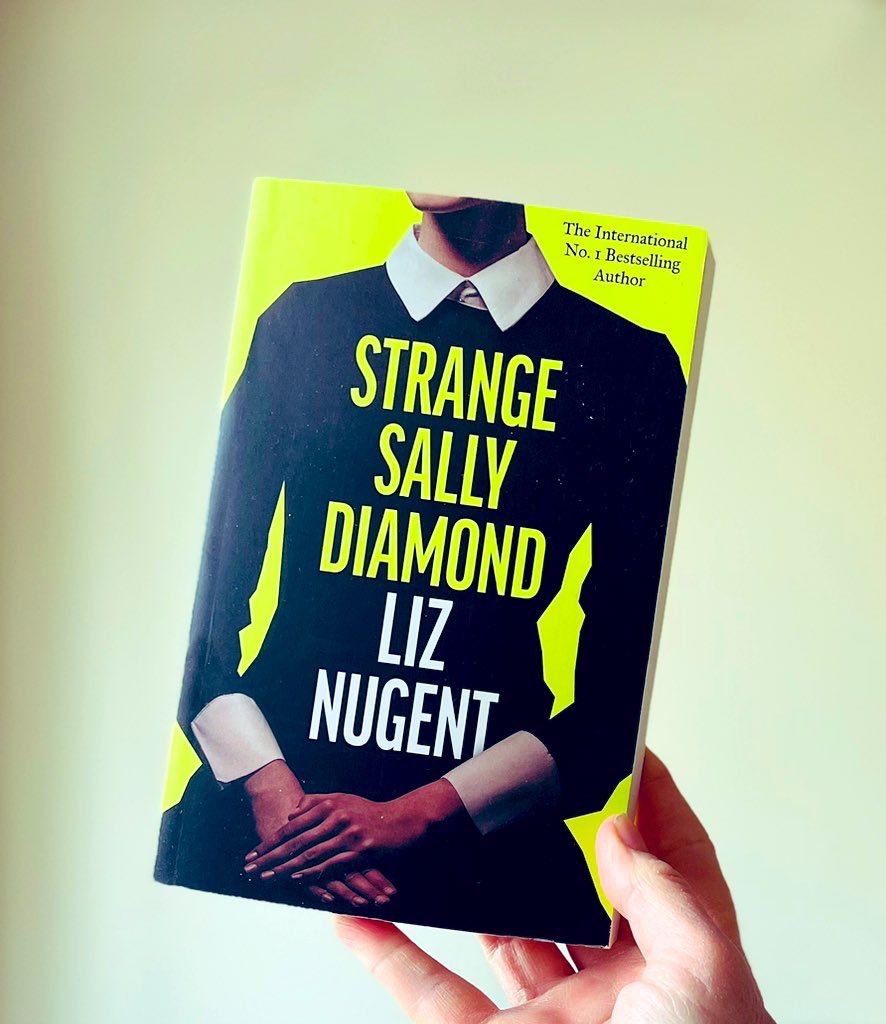
Strange Sally Diamond by Liz Nugent

Strange Sally Diamond by Liz Nugent

Published by Penguin Viking on 2nd March 2023

Available From All Good Bookshops

What They Say

Sally Diamond cannot understand why what she did was so strange. She was only doing what her father told her to do, to put him out with the rubbish when he died.

Now Sally is the centre of attention, not only from the hungry media and police detectives, but also a sinister voice from a past she cannot remember. As she begins to discover the horrors of her childhood, Sally steps into the world for the first time, making new friends and big decisions, and learning that people don’t always mean what they say.

But who is the man observing Sally from the other side of the world? And why does her neighbour seem to be obsessed with her? Sally’s trust issues are about to be severely challenged . . .

What I Say

There are some authors who quite simply are auto read authors. For me Liz Nugent is one of them, because her brilliant writing where the domestic and the macabre are mixed together effortlessly, propel you into a world that is absolute proof of the saying that you never know what goes on behind closed doors.

Strange Sally Diamond starts with Sally throwing out her Dad’s body with the rubbish – because that is what he told her to do. From the opening paragraph, it is obvious to see that Sally is an unconventional protagonist, and that her literal translations of instructions, distance from the world outside and her awkwardness with people and social interactions mean that Sally is very much walking her own path in the world.

When the family doctor Angela discovers what Sally has done, having known Sally and her family for years, she steps in as Sally’s protector, navigating both the legal and personal minefield that Sally now finds herself in. As we fall deeper into Sally’s world, what becomes patently obvious is that from the moment she was born, Sally’s life has been a traumatic and incredible one, which means her own self awareness and understanding of what she has had to navigate leads her to deal with the world around her in a way that she feels she is in control.

Left alone in her family home, Sally starts to unravel her own history, and discovers how she became a member of the Diamond family – and with it, a whole barrage of secrets and things never told start spilling into Sally’s life. When Sally starts to receive mysterious presents, and messages she doesn’t understand, the past that she has no recollection of starts seeping into her present.

Little by little, as the narrative weaves backwards and forwards, and by the introduction of the character of Peter into the text, we are slowly able to see exactly what happened not only to Sally’s mother, but also the awful reality of what their life was like at the hands of her father.

As always, I think it is important to let you know that Strange Sally Diamond has some very dark themes that run through this novel, there is domestic violence, physical and emotional abuse, and a prevalent theme is paedophilia. While this is undoubtedly a very difficult and challenging novel to read, Liz’s incredible skill as a writer means that these are all tackled with extreme sensitivity, and the way in which they are the backbone of the narrative never feels anything other than absolutely integral to the plot and understanding what has brought Sally and Peter to this point in their story.

I thought it was interesting to see how Sally develops as a character as the narrative moves on, and how everything we do so easily and take for granted are huge victories for her. The confidence she gains comes from working with her therapist, and her own motivation to finally embrace the world she has been detached from for such a long time. Liz’s depiction of Sally always feels that it comes from a place of compassion and curiosity, wanting us to understand that this woman has endured so much, but in learning to process her past and know that people can be trusted, that a new world is waiting for her – which can be an amazing thing, or something that brings complications that no one could have envisaged.

Strange Sally Diamond is a novel that perfectly balances the gradual development of Sally’s character once she allows herself to open up to the world around her, set against the incredibly challenging history and life she has lived in a way that feels measured and controlled – much like Sally herself. It is a novel that show us the darkest and most macabre stories of human existence and survival are often so much closer to us than we could ever possibly realise. Liz Nugent brings us into Sally’s world so completely that as we are witness to every small victory and devastating setback she faces, and all the time want only for her to finally be able to embrace the normal life so many of us take for granted every day.

I absolutely loved it.

Thank you so much to Jasmin Lindenmeir and Ellie Hudson at Penguin Viking for my gifted proof copy.

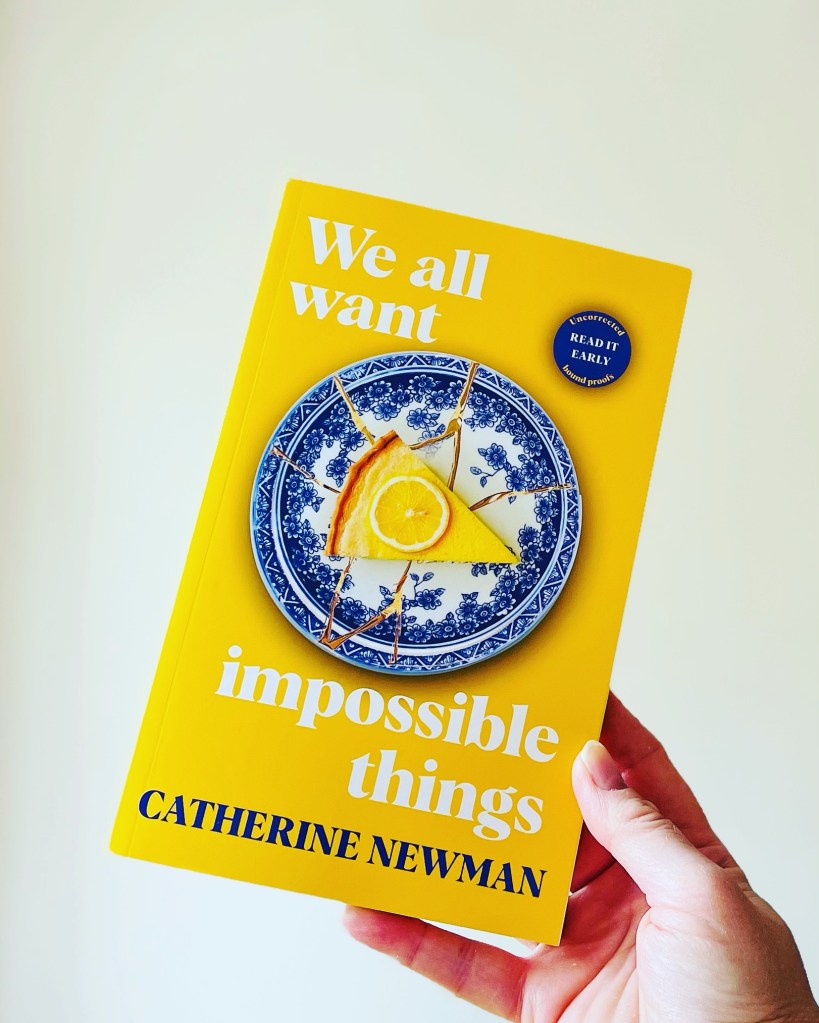
We All Want Impossible Things by Catherine Newman

We All Want Impossible Things

by Catherine Newman

Published by Doubleday Books on January 12th

Available from West End Lane Books and all Good Bookshops

What They Say

Who knows you better than your best friend? Who knows your secrets, your fears, your desires, your strange imperfect self? Edi and Ash have been best friends for over forty years. Since childhood they have seen each other through life’s milestones: stealing vodka from their parents, the Madonna phase, REM concerts, unexpected wakes, marriages, infertility, children. As Ash notes, ‘Edi’s memory is like the back-up hard drive for mine.’

So when Edi is diagnosed with terminal cancer, Ash’s world reshapes around the rhythms of Edi’s care, from chipped ice and watermelon cubes to music therapy; from snack smuggling to impromptu excursions into the frozen winter night. Because life is about squeezing the joy out of every moment, about building a powerhouse of memories, about learning when to hold on, and when to let go.

What I Say

There are novels you read and love, and then there are novels you read and love and nod your head in recognition, that make you laugh and add lots of post it notes so you can go back and reread the passages because they are so wonderful – and We All Want Impossible Things is one of them.

If you are looking for a sweet, subdued book about friendship – then this is not for you. If however like me, you love novels that show friendships in all their glorious, messy and magical forms, then this should absolutely be on your reading list.

Edi and Ash have been friends for longer than they can remember, and have that wonderful connection that comes with a lifetime of shared experiences and moments they only understand.

When Edi is diagnosed with terminal cancer, Edi’s husband Jude decides that to avoid their son Dash having to see his Mum pass away, that Edi will move into a hospice close to Ash, and Ash will provide the daily support she needs.

The power of Catherine’s storytelling is steeped in every single page of this novel. Not only must Edi and Ash now navigate a new and uncharted path through their friendship, but dealing with the day to day unglamorous realities of cancer, the etiquette of grief and dying, and the ever present knowledge that Edi is not going to be here for much longer, makes the women appreciate what they have now and all the things they have ever had together.

Ash seems to be split in two – dealing with Edi and being the present and unshakeable friend in her presence, but at the same time unravelling when she is away from Edi, seemingly separated from her husband and ricocheting from relationship to relationship as she tries to hold everything and everyone together. At times I felt completely frustrated with her, but it also makes you understand that there is no prescriptive way to deal with grief, and while we may not understand why Ash behaves as she does, it is not for us to judge her.

It is also important to say that this novel does not shy away from Edi’s condition, and this is not some airbrushed version of cancer. The day to day realities of what it’s like to have a terminal illness, and the physical, emotional and medical stresses that Edi and her family go through are laid bare. It was at times undoubtedly hard for me to read, having lost a Mum to cancer, but at the same time I was pleased that Catherine told Edi’s story with compassion and candour.

Catherine Freeman also perfectly understands the complicated and awkward nature of dealing with a loved one who is dying, and that there should be no shame in acknowledging the humour too. If Edi’s heart’s desire is to taste the cake from a recipe no one can find, that Ash will do everything she can to get hold of it, whilst at the same time Ash wonders when the most appropriate time would be to ask Edi if she can have the favourite t-shirt back she borrowed! This is what Catherine does so well – her characters are real, relatable and not perfect – and it made me love them even more.

We All Want Impossible Things is a glorious love letter to female friendships in all its unremarkable, remarkable and perfectly imperfect forms. Edi and Ash are characters who not only have the emotional shorthand that so many of us long for in friendships, but also resonate so deeply because they are just like us – not perfect, not always likeable, but they would do anything for each other however difficult that might be, and I completely loved them for it.

Thank you so much to Alison and Doubleday books for my gifted proof copy.