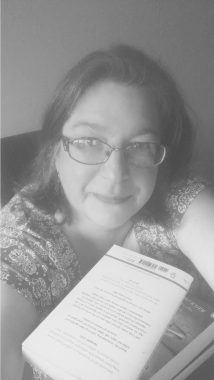
The Final Chapter or The Start of a New One?

The irony of writing a blog post about the difficulties of getting your blog posts and reviews seen is not lost on me at all, and as with every time that I write something personal, as always, please note that what follows are solely my opinions.

2024 has been quite a bit of a year for me personally (you just have to trust me on that one), and also I think it has been the worst “professional”year since I started blogging.

Coupled with this, as I enter my fourth year of full time caring, I can honestly say that I have never felt more lonely and isolated, and one idea I had to combat that was passionately pitched by me and kindly and gently turned down by someone else, so my confidence has really taken a knock this year.

I have hit major reading slumps around three times this year, and like I suspect a lot of bloggers, have been wondering how on earth to keep shouting about books I love when it feels like no one is listening.

I admire the people who are fine with the hope that their writing brings one reader to the book they are talking about, but I find accepting that hard. I want to talk about books, I want conversations that lead to a feeling that someone gets you and that both your reading lists have grown. It all just feels disconnected and I hate it. I also know that I am not the only person feeling like this, judging by the conversations I have had with many other bloggers this year.

Reading and talking about books for me has always been about connections. With readers who you know will love the book too, with the author so that you can tell them how much you love their work, and on a more general level with the world at large, so that you don’t feel so alone – now more than ever.

It is so disheartening to feel that you read a book maybe for publication day, writing a review, telling everyone how brilliant it is, and knowing so strongly that there are so many people who would love it too. When you get absolutely no feedback or interaction – especially on social media, and sometimes from the publisher or author too, I wonder why on earth I bothered. Is it more important that a book is simply ‘seen’ as opposed to being reviewed?

In 2024, I have realised that book blogging isn’t what it used to be, and although everyone will deny it, as a 54 year old woman, I honestly feel less and less visible as a book blogger. I don’t do TikTok or Reels, no longer feel confident doing videos anymore, and what I feel is that my written words are being lost amongst a sea of brilliantly creative and other ways of talking about books that don’t necessarily mean written reviews.

That then makes me think why I am doing this. Is it purely because I want to share my love of books, in which case engagement and likes and being able to have proofs shouldn’t be important, but the book blogging world is a connected one. The more engagement and more that people connect with you, the more likely you are to be able to ask for proofs to shout about books before they are published. Yet that is not how I started book blogging, I didn’t even know what a proof was, which now makes me feel that being so aware of them is not what book blogging should be either.

To take the pressure off myself this year I have tried mixing up reading books from the library, books from my own shelves and proofs that I have been sent, and reviewing when I can. It’s ridiculous to even say that it feels freeing to do this, because at the end of the day, reading should be a joyful thing, not a chore or feel like a bookish test you are trying to pass.

Of course the rational thing to do if I am bothered by all this is to hang my book blogging hat up, and instead let other people carry on, but then what? Being at home as much as I am, without talking to other people for much of my day is honestly really hard – blogging gives me a purpose, something where I can be Clare, not Mum or Mrs Reynolds or a carer. It gives me a purpose, a feeling that there is something I think I am good at and love talking about. Books and blogging have been such an important part of my world for so long that the thought of walking away from this brilliant community is hard.

2025 is very nearly here, and I think I need to make some decisions. Either to carry on and not get upset by the fact that I feel no one is listening anymore, to understand that fighting against the social media algorithms is pointless, and to just think stuff it and give it everything without worrying! Or maybe it’s time for me to step back and appreciate I have had a brilliant time, but that Years Of Reading has run its course.

My love for reading and books hasn’t changed, it just feels like everything else in the book blogging world has. I have to work out how and if I want to fit in, and that’s the part I’m finding difficult.

Love,

Clare

Xx

More than a Mark on a Map

I really thought about whether or not I should post this, which is kind of ridiculous when you think about it, because on my blog I should be able to talk about what I want.

As you may or probably may not know, this week, the 10th-16th June is Carers Week, a week when we draw attention to the fact that there are over 5.7 million unpaid carers in the UK according to the Carers UK Website and to add our names to the map of carers in the U.K.

I have never shied away from sharing the fact that I am a full time unpaid carer for my adult son, but this year has been really draining on me emotionally and physically for a number of reasons which out of respect for my son I am not going to elaborate on.

I started Years Of Caring to shine a light on unpaid carers, to help other people see that they are not on their own, and it has been amazing to hear from so many people. There were many who did not know they were carers because the people they looked after were family members, so they assumed they were just doing what they should have been doing anyway.

The irony isn’t lost on me that I have not had the chance to post in Years of Caring so far this year because I have been too busy caring for my son!

I also felt that there are only so many posts, so many stories you can write which essentially say the same thing – I am a full time carer, and I am exhausted and isolated, and move between loving being able to be with my son and resentful for the fact that I am here, finding myself in a world I didn’t choose to be part of.

I know Carers Week is all about putting Carers on the Map, and while I completely get that, I also feel that it is one of the issues with being a carer – that my own personality and hopes and ambitions have become subsumed by the fact that I am now defined as Eldest Years of Reading’s Carer.

As for many people, when you become a carer, your whole world is focused on the person you care for. You are either looking after them all the time, or sorting out their admin, or trying to get support, or just trying to make it through the day when you are so exhausted that you just want to curl up on the sofa and sleep. As a result, I feel that my world is contained in the care that I provide for my son, and I can’t tell you the number of events and opportunities I have had to turn down because of my caring responsibilities, when I could have for a brief time been Clare again.

It’s also endlessly frustrating when you feel excluded from the world because it is no longer accessible to you. Carers events are sometimes online, but when they run on for too long or at times when you can’t make it because you are helping the person you care for, you can’t make it and miss out again. The online forums are a brilliant way of engaging with people, but I read them and feel that people are dealing with far more incredibly demanding situations than I am, and that in comparison I am lucky with what I am dealing with. Although family and friends are sympathetic, the only people who really get it are those who have gone through or are going through it, but I also don’t want all my conversations to be defined by my being a carer.

Talking about books and blogging has been so important for me, and I have been fortunate to have read numerous wonderful books. Before I was caring full time I was able to take part in events and meet authors whose writing I love, for which I am truly grateful. Yet the book world is changing too, and unless you have the time and creativity to keep up, while gaining more followers on your social media accounts, you have to accept that you just talk about books you love when you can and hope that one person listens.

When Carers Week ends, nothing will have changed for any of us, however many marks we are on a map. We will just get up the next day and keep doing what we do because there is no alternative.

Until there is real money and actual support for those of us who care endlessly and without question, we simply keep being the carer, caring for our loved ones because the alternative is worse. Perhaps looking behind the label of ‘carer’ and facilitating real emotional, physical and financial support for us to try find the person we are and would love to be again is the campaign we really need.

Love

Clare

Xxx

brother do you love me by Manni Coe and Reuben Coe

brother do you love me by Manni Coe and Reuben Coe

Published by Little Toller

Available from Little Toller Website and All Good Bookshops

What They Say

Reuben, aged 38, was living in a home for adults with learning disabilities. He hadn’t established an independent life in the care system and was still struggling to accept that he had Down’s syndrome. Depressed and in a fog of anti-depressants, he hadn’t spoken for over a year. The only way he expressed himself was by writing poems or drawing felt-tip scenes from his favourite West End musicals and Hollywood films. Increasingly isolated, cut off from everyone and everything he loved, Reuben sent a text message: ‘brother. do. you. love. me.’ When Manni received this desperate message from his youngest brother, he knew everything had to change. He immediately left his life in Spain and returned to England, moving Reuben out of the care home and into an old farm cottage in the countryside. In the stillness of winter, they began an extraordinary journey of repair, rediscovering the depths of their brotherhood, one gradual step at a time. Combining Manni’s tender words with Reuben’s powerful illustrations, their story of hope and resilience questions how we care for those we love, and demands that, through troubled times, we learn how to take better care of each other.

What I Say

I have really struggled with writing a review of brother do you love me. The reason being is that I want to share endless paragraphs and pages and chapters with you, to show you how brilliant Manni’s writing is, and how perfectly Reuben’s words and illustrations show us what their relationship means to them. This is a memoir that is quite unlike any I have read, and it moved me deeply.

Manni was living in Spain as a tour guide, and his brother Reuben who has Down’s Syndrome was living in a residential home. Reuben sent Manni a text message that read ‘brother.do.you.love.me’. As soon as he read that message, Manni knew that his brother needed him, and that Reuben had to be out of that care home as soon as possible. When Reuben moved in with Manni in a cottage in the UK, Manni was shocked to see how far his brother had regressed physically and emotionally, and was desperate to get his brother back.

This is a memoir not only of the incredible bond that Manni and Reuben have, and how their love for each other transcends the frustrating limitations that the professionals tried to constrain their world with, but is also a book about the realities of caring for a family member when you know exactly what they need even if those in positions of power disagree.

Their situation is further complicated by the fact that Manni’s partner Jack is in Spain, and the rest of their family are spread throughout the world, so even though everyone is involved and supporting them, Manni is the one dealing with all the day to day decisions and being the support for Reuben on his own. What echoes throughout the book is the fact that on one hand, for Manni, having your brother who is also your best friend, living with you is the best thing, but at the same time caring for Reuben and trying to help him regain his confidence as well as dealing with all the people and teams who are involved is also incredibly exhausting and isolating. I know from my own experience that you spend so much of your time convincing the people making the decisions that honestly, yes, you really do know your family member so much better than the snapshot they have gleaned from all the forms and phone calls you have been forced to repeat time and time again.

One of the elements of the book which I think will resonate with many people, is the way in which Manni describes the realities of the social care system in the U.K. It is one stretched to its limits, with those people who use it often become little more than a set of initials moving from team to team as decisions are made sometimes with the family involved, and sometimes not. One of the worst things (and I am speaking from personal experience) is how often you find someone who absolutely understands the person you are caring for, and what they need to thrive, only to have them move on or leave, and you are left either without no one, or a new person that you have to explain everything to – never quite sure if you have said the right thing, or told them enough, or too much.

As Manni tells their story, he weaves his family’s narrative in effortlessly, as we learn everything about their family, from their childhood in Leeds, to the rift that happens when Manni tells his religious family that he is gay, to their reconciliation – and always at the heart of the story is the love and determination that the family and their friends have to ensure that Reuben is happy and living the life that he wants. In doing this, Manni also subtly shows us the difference between the Reuben of those times, and all the things they did together, and the Reuben who is now a very different man. Manni perfectly articulates not only the all consuming love you feel for the person you care for, but also the ingrained hope and desire you have for them to be accepted by the world and for them to live the life they want, rather than the life that others feel they deserve.

The book is also filled with the art that Reuben has produced, which adds an intensely personal and emotional element to the book, and Reuben also talks about having Down’s Syndrome and what that means to him. We learn how he feels about the world around him, as well his own hopes and dreams for his future. I think it’s one of the most important parts of this book, that Reuben’s voice and identity are so clear and we learn so much about him and his personality, and his relationships with his family and friends.

I wanted to finish my review by saying thank you to Manni and Reuben, who helped me think about my own situation and my own relationship with my son, who has a range of special needs, and I am his full time carer.

I know am guilty of doing too much for him, for sometimes treating him like a child at times even though he is twenty two, and for thinking I know how he feels, and not really trying to make him do any more than I think he can cope with. Hearing how Manni and Reuben talk together, and Reuben talking about himself and his identity have really helped me reassess how I relate to my son, and has opened up a whole new world for us, and for that, I can’t thank them enough.

I don’t often say this, but please try and read this book however you can. #BrotherDoYouLoveMe is not only an incredible testament to the love that Manni and Reuben have for each other, but is also a book that absolutely captures the realities of caring for a family member, and how important it is to ensure that what they want and deserve is always at the front and centre of every decision that is made.

I absolutely loved it.