Exquisite by Sarah Stovell

IMG_6486.jpg


Sarah Stovell: Exquisite

Published By: Orenda Books

Buy it: here


What the Blurb Says: 

Bo Luxton has it all – a loving family, a beautiful home in the Lake District, and a clutch of bestselling books to her name. Enter Alice Dark, an aspiring writer who is drifting through life, with a series of dead-end jobs and a freeloading boyfriend. When they meet at a writers’ retreat, the chemistry is instant, and a sinister relationship develops … Or does it? Breathlessly pacey, taut and terrifying, Exquisite is a startlingly original and unbalancing psychological thriller that will keep you guessing until the very last page.

What I Say:

“It wasn’t my heart, I knew that.  It was everything I was.  It was all of me, derelict.”

I read Exquisite in just a few sittings.  Sarah Stovell has written a brilliantly clever, tightly plotted and thoroughly menacing book.  I have to say that it was not what I was expecting, and like many of the books I have read this year, it captivated me and pushed me to read a genre that last year I would never have considered.

Exquisite tells the story of Bo and Alice, two women who love writing and apparently love each other. The action switches between Bo and Alice’s telling of their story and is interspersed with correspondence from a Yorkshire Women’s prison.

Bo is a novelist and also runs a course for new authors.  Alice is an aspiring writer, who stuck in a dead-end job with a harmless but useless boyfriend, and decides to enrol on one of Bo’s courses.

When Alice arrives, she is entranced by her, and they quickly bond over the difficult relationships they have with their mothers.  It is undeniable that they are drawn to each other from the start.  Alice seems to hero-worship Bo, and Bo recognises herself in Alice.  She says,

“She was like no one I had ever met before. Except perhaps myself when I was that age.”

Bo and Alice realise they have an intense attraction, but already as a reader you are aware that Bo is not as innocent as she seems.  She wants Alice to fall under her spell, she is manipulating Alice from the start and seems to thrive on it.

After the course ends, Alice and Bo correspond via email and Bo, recognising Alice’s talent asks her to come and stay with her in Grasmere so they can work together on her writing.  When Bo emails Alice to tell her she loves her, Alice is completely overwhelmed but admits she feels the same way.  Then Bo suddenly severs their contact, leaving Alice confused and hurt, waiting for any emotional morsel that Bo will throw her.

“It was all so easy in the end.”

It becomes evident that Bo has Alice exactly where she wants her which she does with a chilling lack of compassion  As the women’s lives become intertwined, you feel that their dependence on each other gives their relationship a claustrophobic and intensely inward looking view.  Nothing else matters apart from them being together.

To keep Alice close to her, Bo gives her some short stories which she claims she has written solely for her.  They shockingly reveal that Bo was prostituted by her mother to earn money for her impoverished family.  Bo, Alice discovers, also gave birth to a baby.  Unsurprisingly when Bo is unable to cope with the motherhood that has been forced on her, Bo’s mother arranges for a woman to take away and raise the baby.  Alice feels that Bo loves and trusts her by telling her such intimate details, and again draws her closer to her.

Then Bo simply stops contacting Alice. Not surprisingly, cut off from Bo, Alice feels numb and barely functions, getting through her days on automatic pilot.  It is really powerful to see how Bo is able to control Alice even when she is not geographically close to her – she does it slowly and stealthily, all the while making Alice feel that she is the one with the issues, and that Bo is the stable one in the relationship.

When Alice hears from Bo, she persuades her to give up her flat and life down south and move to Grasmere to be with her.  Alice does exactly that, and catches a train, ready to read a pack of Bo’s writing she requested from Bo’s agent.  As Alice reads through them, she finds the exact same piece of writing that Bo had claimed she had written only for her.  Slowly, the reality of what is happening starts to dawn on Alice, just as she gets a call from Bo telling her it has all been a huge mistake and she shouldn’t come, and that she must delete all the emails they have exchanged…

When she arrives. Bo has left a message at Alice’s flat in Grasmere asking to meet in the local cafe.  On going to the cafe, Alice sees Bo is with her husband and children, and Bo starts screaming at Alice to leave her alone and stop stalking her.  Alice has given up everything for Bo and now she is alone, humiliated and berated by the woman she loves.

So, is this the end of the story? Far from it, Sarah twists the action to show us Bo’s point of view.  Is Bo the victim after all? Is Alice the one who has been taking advantage of her?  This shift in narrative is a brilliant piece of writing – have we as readers been played all along and our view of the story has been the wrong one?

Bo’s version of events seem to show us in fact she is well aware of what she is doing and the effect she has on Alice. She attempts to portray Alice as the guilty party who has made Bo’s life hell.  I did wonder whether Alice was Bo’s long-lost daughter,  but that would have been a far too neat and nice conclusion to Exquisite.

Instead, Bo realises she does love Alice, but that at the same time she cannot allow herself to be with her as it will destroy everything she has.  To make sure that she maintains the status quo in the home, she has to ensure that Alice is seen to be the deranged, possessive lover, whilst she is the victim of someone else’s unrequited love.

From then on, Bo makes it her mission to get rid of Alice from her life.  One of the most revealing parts of the book for me, is as Bo realises her novel sales are falling, she sees that she can use her experience with Alice as material for her next book to attempt to crawl back into the spotlight.

The only problem is that Alice is refusing to conveniently disappear from Bo’s carefully crafted existence, and starts to collate information about what Bo has really been up to, ready to expose her for the liar she is. Like Bo, she too decides to write about what has happened to her, at the same time Alice’s determination to clear her name and expose Bo comes to a dramatic and shocking confrontation.  It is brutal, unexpected and will leave you stunned at how far Bo will go to ensure that she maintains in control of the facade she has worked so hard to construct.

I could tell you how this novel ends, but as a good blogger, I won’t and I will instead tell you to buy the book to see what happens next.  I guarantee you won’t work it out, and when you have recovered from the first twist, the final scenes will make your jaw drop!

Exquisite is a brilliant, fast paced and compulsive novel. Right from the start you are drawn into Bo and Alice’s world, and the sublime plotting and devilish twists and turns will keep you turning the pages faster and faster until you reach the breathtaking conclusion.  I really can’t wait to see what Sarah Stovell writes next, and I hope I don’t have to wait too long.

I loved it.
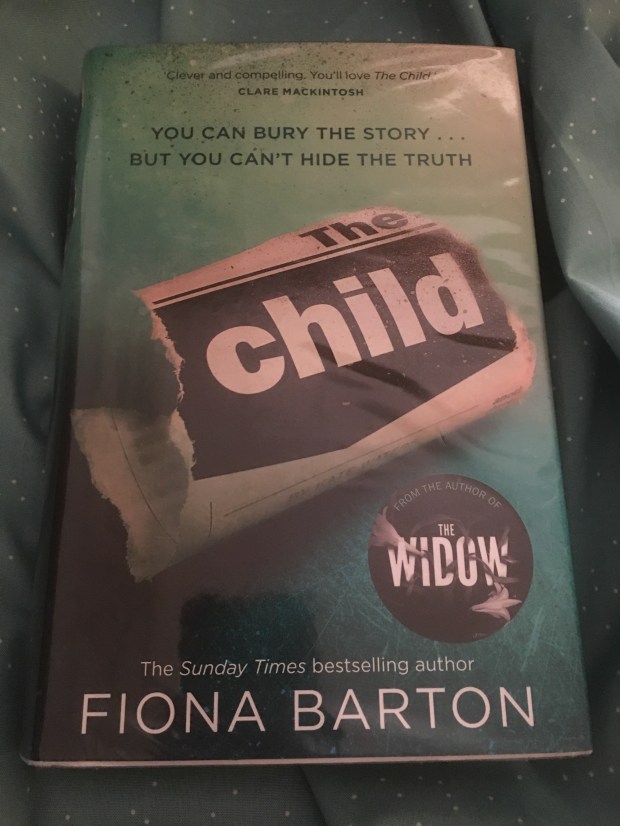


The Child by Fiona Barton

IMG_6679.jpg

Fiona Barton: The Child

Published By: Bantam Press

Buy It: here


What the Blurb Says:

When a paragraph in an evening newspaper reveals a decades-old tragedy, most readers barely give it a glance. But for three strangers it’s impossible to ignore.

For one woman, it’s a reminder of the worst thing that ever happened to her.

For another, it reveals the dangerous possibility that her darkest secret is about to be discovered.

And for the third, a journalist, it’s the first clue in a hunt to uncover the truth.

The Child’s story will be told.

What I say:

“Angela looked at her hollow-eyed, the initial euphoria of getting the news draining away rapidly. “My baby is dead” she said.

I had read Fiona Barton’s previous novel, The Widow and loved it (you can buy it here), as it was a very cleverly plotted and intriguing novel.

When I saw that Fiona had written a second novel called The Child, I wondered whether it could live up to the excellence of The Widow.  It does, and in my opinion is even better.

The Child is a story of three women, and how a seemingly under reported minor story about the discovery of a baby’s body on a building site not only eventually brings them together,  but for two of them, blows apart the seemingly stable lives they have been leading up to this point.

For Emma and Angela, the story has huge personal significance, as it brings up extreme emotions in them both, and a need for them to determine the identity of the child that has been found. Quite simply, they both believe that the body which has been found is their child.  For Kate, a newspaper reporter, it is a chance for her to investigate a substantial and human led story in a world of online celebrity click bait reporting.

Fiona’s writing from the outset is always fast paced, thoughtful and intriguing. One of the many strengths of this novel is that I genuinely could not work out why the discovery of the baby’s body was so important to Emma and Angela.  In my blog notes, I have lots of question marks next to my theories (only one of which was correct!), and I loved the notion that as a reader you are with these women on their journey to discover the truth about the baby and why the body should be where it was.

As the novel progresses, we learn about Emma’s difficult relationship with Jude, her mother, and how the appearance of Will, Jude’s new boyfriend, means that Emma’s home life leaves her feeling increasingly isolated and unhappy.  Emma’s sudden disappearance from her home, means that the complicated relationship she has with Jude reaches breaking point and does not really recover.  Jude refuses to believe that Will could in any way be responsible for Emma leaving, as she is so in love with him and the notion of being in love.  We learn later in the novel. that Emma had faced giving birth alone and in secret, and had not been able to tell her mother anything about her pregnancy, the traumatic birth of her stillborn baby and certainly not who the father was.

As we switch between the women’s stories, we discover that Angela had a baby who went missing from her hospital bedside after she had given birth, and no trace was ever found.  I found it really interesting and quite upsetting to see how Angela is treated in the time after her baby is taken, as if she is almost overreacting to the enormity of her ordeal.  Angela is convinced that the body of the baby who has been found is her missing daughter.

While Angela is looking for closure, to know if the baby at the building site is hers, Kate is more and more driven to be the reporter that solves the case.  I did initially question Kate’s motives for getting so involved, as she is so determined to find out what has happened becoming blinkered to everything else.  I wondered whether she was trying to further her career in the male dominated newspaper world and that her interest in the case is determined by the glory she believes will get for solving it. However, as the novel progresses, we can see the more human side of Kate and how she genuinely wants to help Angela and Emma find the answers they so desperately crave.

Fiona’s depiction of the three main female characters are brilliant and you really care what happens to them.  They are all interesting, three dimensional women to whom you can really relate, and following them on their search for the truth just became more and more intriguing.  Reading this book was always an absolute pleasure, as the plot and dialogue fizzed off the pages.

So, who is The Child and how are Angela and Emma linked to her?  Well, I could tell you, but that would spoil the massive twists in this novel, and being loyal to the author, I am not going to!  Suffice it to say, I had no clue what the twists were going to be – they were very cleverly done, completely plausible and it often made me go back through the book to see how I missed them!  Just when you thought all the secrets had been revealed, another skeleton would slide out of the closet and appear in front of you, and the resolution was never far fetched or ridiculous, it just slotted another piece into the ever growing puzzle of the novel.

The Child is a really remarkable and unforgettable novel, to say it is simply a psychological thriller does not do it justice, but it also raises really relevant issues in a poignant and powerful way.  It addresses what it means to be a mother, how women are regarded in the home and in the workplace, and how when women work together and support each other, they are stronger than they could ever know.

I loved this book, and I hope you do too.

Standard Deviation by Katherine Heiny

IMG_6483.jpg

Katherine Heiny: Standard Deviation

Published By: Fourth Estate

Buy it: here


What the Blurb Says:

A divinely funny novel about the challenges of a good marriage, the delight and heartache of raising children, and the irresistible temptation to wonder about the path not taken.

Graham Cavanaugh’s second wife, Audra, is everything his first wife was not. She considers herself privileged to live in the age of the hair towel, talks non-stop through her epidural, labour and delivery, invites the doorman to move in and the eccentric members of their son’s Origami Club to Thanksgiving. She is charming and spontaneous and fun but life with her can be exhausting.

In the midst of the day-to-day difficulties and delights of marriage and raising a child with Asperger’s, his first wife, Elspeth, re-enters Graham’s life. Former spouses are hard to categorize – are they friends, enemies, old flames, or just people who know you really, really well? Graham starts to wonder: How can anyone love two such different women? Did he make the right choice? Is there a right choice?

What I Say:

“And who’s to say that there isn’t a standard deviation from the standard deviation.”

Standard Deviation is one of the novels that you might have heard of, but like me have believed (wrongly) that it was something to do with the scary world of mathematics!  I had heard a lot about Katherine’s book via Twitter and as so many people were falling in love with it, I was intrigued.

Something I have learned since starting this blog is that taking a chance on books can be a revelation.  Sure, sometimes you realise that a book is just not working for you, and even though hordes of other people may love it, having the courage to say well I don’t can be hugely liberating.  After all, who really cares if you don’t finish a book?

That is why my reading philosophy – life is too short to read books you don’t love has been a big turning point for me.

Let me say this now, Standard Deviation is 320 pages of pure unadulterated joy.

If you don’t fall in love with the character of Audra, then I really doubt whether we can truly be book friends!

Audra is Graham’s second wife, and they live with their son Matthew who has Aspergers.  Audra is poles apart from his first wife, the ice maiden Elspeth, and Audra lives her life in a complete whirl, talking to anyone who will listen.   She has no filter when it comes to saying the right thing and her verve for life and passion springs off the pages, and I must admit it is the only book I have read recently that has made me laugh out loud.  There is a scene early on in the book at a wedding where Audra says something completely scandalous about the bride (I won’t spoil it by telling you – read the book), but it made me spit my coffee out laughing!

This I think sums up Audra in a nutshell;

You had to pretend you were talking to someone in the time before society had formed and social boundaries had been invented.”

We start to see Graham’s struggle with his marriage, as he wonders whether he did the right thing by marrying Audra, or if should he have stayed with Elspeth instead.  When Elspeth and Graham have to attend a lawyer’s meeting together, Audra suggests that they all go on a double date with Elspeth’s new partner Bentrup.  As the four of them start to spend more time together, Katherine is wonderful at writing about the complexities of marriage and the way in which families are no longer constrained by the idea of a traditional nuclear family.

However, when Elspeth ends her relationship, Graham edges ever closer to her, comparing the calm and ordered environment she inhabits, to the passionate, chaotic home life he shares with Audra and an ever-changing rota of house guests.  He is also blindsided by his suspicions that Audra is having an affair and he sets about trying to find out what Audra has been doing.  Eventually, Audra confesses to an ‘almost affair’ with Jasper, and as Graham tries to process what has happened, Audra wants his forgiveness.

Nevertheless, Graham still sees Elspeth, and he admits that it is:

…just like an affair, except without the sex or love or excitement, or other good parts”.

I felt that Graham’s relationship with Elspeth gave him the tranquility and escape he feels he needs, as if he needs confirmation that there is a world where he could have peace and calm.  As the book progresses, I felt it was as if Graham has to get Elspeth out of his system to wake up and realise that this existence would also lack the excitement and joy that Audra brings him.

In fact, after realising that he cannot go through with spending the night with Elspeth, he returns home and sees Audra and realises:

She was an absolute certainty in an uncertain world”.

When Elspeth dies, Graham is bequeathed one item from her apartment, and Audra, as many people would, uses this opportunity for a good snoop around.  Graham reminisces about his relationship with Elspeth, but also finally gets a chance to put this behind him and be thankful for the marriage that he has.

Something else that really resonated with me was the challenges and compromises that Audra and her husband Graham face in raising Matthew.  My eldest son has a range of special needs, and I cannot tell you how refreshing it is to read a novel which pulls so sharply into focus the daily challenges you face as a parent of a child with special needs.  The conversations that you have as a couple as you try to determine the right thing to do for your child, the ache you feel as you realise that your child is not doing what everyone else’s child is doing, and the realisation that the simplest tasks cannot be achieved without a mountain of planning and a whole lot of stress.

“Graham, like all parents of special needs children, had a range of stock phrases that he used when talking about Matthew to other people”.  

I cheered when I read this sentence!  Yes, this is someone who really understands what our life is like!  Katherine writes with the knowledge and compassion of someone who knows what we go through, and for that, I would buy this book for every person who has asked us or made a stupid statement about the reality of our life with our eldest.

Matthew’s fascination with origami and his willingness to join a club with a group of people who accept him for who he is, is so well written.  There is a brilliant scene where Audra has to cater for Matthew’s origami group, including one young man who will only eat white things, and when Audra realises she hasn’t got any white handled cutlery, she obviously panics. The young man then chastises Audra for thinking he is fussy!

After a number of setbacks, Matthew finally finds the confidence to go to a summer camp that caters for him, ditches the boy who has routinely been horrible to him, and finds a new friendship.  I loved the way this whole plot line was central to Standard Deviation, but that it was not the focus.  Matthew was not a character written to illicit our sympathy and pity, but rather as a way of cleverly depicting the day-to-day reality of living with a child with special needs. We as parents don’t want awards, a slap on the back, praise or recognition, we just want our children to be accepted and have the best life they can.

We leave Standard Deviation as Audra and Graham head out on a date, as if we have merely been eavesdropping on their daily life, as they move on with life, so must we.  It is a wonderful, funny and clever book, filled with love, laughter and a big dose of real life.

I loved it.

My Absolute Darling by Gabriel Tallent

img_6621-1815951408.jpg

Gabriel Tallent: My Absolute Darling

Published By: Fourth Estate

Buy it here

What the Blurb Says:

‘You think you’re invincible. You think you won’t ever miss. We need to put the fear on you. You need to surrender yourself to death before you ever begin, and accept your life as a state of grace, and then and only then will you be good enough.’

At 14, Turtle Alveston knows the use of every gun on her wall;
That chaos is coming and only the strong will survive it;
That her daddy loves her more than anything else in this world.
And he’ll do whatever it takes to keep her with him.

She doesn’t know why she feels so different from the other girls at school;
Why the line between love and pain can be so hard to see;
Why making a friend may be the bravest and most terrifying thing she has ever done
And what her daddy will do when he finds out …

Sometimes strength is not the same as courage.
Sometimes leaving is not the only way to escape.
Sometimes surviving isn’t enough.

What I say:

I picked up My Absolute Darling on one of those ‘Why the Hell not?’ days, where you are suffering from being overwhelmed by the previous book you read (see my post on Tin Man and you will understand why).  I looked at so many different books and put them back down again- I couldn’t decide on anything and just got more and more frustrated with every title I looked at.

So, then I saw My Absolute Darling, loved the cover, read the blurb and put it back down. I honestly did, because I thought that it was too much, that I really am trying to push myself out of my usual book shop choices, but that I couldn’t face something that potentially could be so upsetting.

Then I thought, do you know what, what is the worst that could happen?  I don’t love it, I put it down and choose something else – which is of course my whole reading philosophy, hence the blog!

I knew from reading the first few pages that this would be a book that would require all my concentration, the language is beautiful, but there is a lot of description and a lot of scenes where philosophy and complex issues come into play.  I usually do my blog by reading a bit and writing about what I have read, and thinking about what I am getting out of it.  I felt that whatever I wrote about this book would not do it justice, that it is so big, so compelling and for me, too difficult to adequately review.  What I have written is just my thoughts, as oppose to my usual in-depth blog post.

The story of Turtle Alveston and the relationship with her father Martin is extremely brutal, and it is not by any means an easy read.  This is made even more difficult by the deep love that Turtle feels for her father.  Martin does not want anyone else to have Turtle, hence the title of the book.  For me, some of the most distressing scenes come from their twisted and co-dependent relationship.  Martin possesses Turtle so completely, that all she knows and wants is her father. He has ensured she has all the survival skills she could need, and their solitary and survivalist existence is based on isolation, secrecy and fear of the outside world. Martin has no intention of letting Turtle be anything other than there for him.

When she meets Jacob and Brett in the woods one day, realising that they are lost and at risk, she helps rescue them, and is drawn into their world.  Martin leaves after a particularly violent incident, and she is free for the first time to be the 14 year old she so desperately wants to be.  Jacob and Turtle grow closer, and when Martin finally returns, Turtle realises that Jacob is in grave danger from Martin and that to save him, she has to stop all contact with him.  Having tasted life away from the possessive grip of Martin’s tyranny, Turtle starts to question everything she has taken for granted.

Martin senses the change in his daughter and becomes even more driven in his desire to ensure that Turtle is his possession and his alone.  For me, Martin takes an even more sinister turn, when it transpires he has picked up a 10-year-old girl called Cheyenne, allegedly saving her from someone who was going to do her harm.

Turtle realises that as she is growing up, Cheyenne will be his next target. Although she is reluctant to allow herself to feel anything, to allow anyone in, she takes the decision after a particularly brutal attack to get herself and Cheyenne away from Martin for good.

Martin comes after them and hunts them down to Jacob’s house.  To say any more will spoil the ending, but there are not many books I have read where my heart was beating fast as I tried to read as fast as I could without missing anything.  Seriously, it is that tense.

For me, this quote sums up Turtle, her resilience, and the whole essence of the book.

“She sits looking out at the beach, and she thinks, I want to survive this”.

My Absolute Darling will not be for everyone.  It is tough, heart breaking, and at times genuinely upsetting.  A couple of times I had to put the book down and give myself some time away from it.  However, it is so breathtakingly good, written with precision and clarity. From the first time you meet her, Turtle will get under your skin and you will hope that she will finally find the courage and conviction to believe that the life she deserves is within her reach.

Tin Man by Sarah Winman

Sarah Winman: Tin Man

Published By: Tinder Press

Buy it here

What The Blurb Says:

It begins with a painting won in a raffle: fifteen sunflowers, hung on the wall by a woman who believes that men and boys are capable of beautiful things.

And then there are two boys, Ellis and Michael,
who are inseparable.
And the boys become men,
and then Annie walks into their lives,
and it changes nothing and everything.

Tin Man sees Sarah Winman follow the acclaimed success of When God Was A Rabbit and A Year Of Marvellous Ways with a love letter to human kindness and friendship, loss and living.

What I Say:

“We love who we love don’t we?”

Tin Man was one of those books that I first heard about on the internet, that everyone seems to be raving about, and honestly, sometimes that does nothing but put me off reading it. Why? Well for me, there is nothing worse than picking up a book the whole world is raving about, and I just don’t get it (step forward Captain Correlli’s Mandolin!).

Tin Man may be a short book, but it holds so much within its pages.  It is a novel about love, about loss, and about living the life you have to lead rather than the life you want.

The story centres around three people, Ellis, Michael and Annie.  We first hear Ellis’ life story, and the second part of the book is Michael’s voice.

Dora, who is Ellis’ mum, is not treated well by Ellis’ father, and when she wins a copy of Van Gogh’s Sunflowers in a raffle, her insistence in hanging the picture in her home, brings her a sense of peace and calm as she becomes absorbed by the painting and Van Gogh.  The painting becomes extremely important to her, and she stands up to her husband when he threatens to move it.  Ellis, an aspiring artist, understands Dora’s love of the painting, as he too suffers at the hands of his bullying father.

When Ellis is introduced to Michael, the grandson of Mabel, the local shopkeeper, they have an immediate and intense connection, spending all their spare time together.  Dora and Michael also bond over their love of Dora’s sunflower painting.  Ellis and Michael, tentatively edge towards a relationship, which is brought to an abrupt halt when Ellis’ father sees them sitting too close together.

Knowing how much Ellis loves his art, and wants to pursue his passion, his father tells him that he will be leaving school and working in the local car factory as a panel beater. His life is shattered when Dora is taken ill and passes away, believing that her son will finish school and follow his dream of becoming an artist.  Ellis believes he has no choice, and is forced to live an ordinary and mundane life to appease his father.

Ellis was married to Annie, whom he met while he and Michael were delivering Christmas trees, he is now a widower, half living his uninspiring repetitive life as he deals with his grief.  One snowy night on the way to work, Ellis gets knocked off his bike, and he is forced to take time off which gives him a chance to re-evaluate his life and what he truly wants for himself.

For me, one of the most poignant pieces in the book is when Ellis is so worried that he will forget about Annie, he rings different people and asks them questions about her to keep her alive in his memory.  Annie understood the deep relationship that Ellis and Michael had, and never questioned it.  Ellis truly loves her, and Michael, although deeply in love with Ellis, understands that Annie has Ellis’ heart.

Tin Man is also Michael’s story, and he fills in the blanks of the relationship he has with Ellis, and also with Annie. Sarah Winman’s exquisite writing deftly shows us the constant pain of Michael’s almost unrequited love.

Michael and Ellis, prior to Ellis meeting Annie, have a holiday in France and can finally embrace the passionate relationship Michael has been dreaming of.  To Michael, it is everything.  He can imagine them having a future, believing that the love they have for each other is all they need to face an unaccepting and hostile society.  However, Ellis changes his mind and without saying anything, ends their relationship by packing his luggage, ready to return home and acting as if nothing has happened.

Michael says; “I’d already accepted I wasn’t the key to unlock him,  She’d come later”.

Annie, the love of Ellis’ life, does indeed come later, and she, Ellis and Michael become three sides of the triangle.  Michael even goes wedding dress shopping with her. Michael understands that Annie has Ellis’ heart in a way he never could, and he has to deal with the pain and grief this realisation brings him.  He has to physically and emotionally distance himself from Ellis and Annie, and he ends up working on a mas in France.  It is there that he seems to finally find the peace he has craved, and it is a clever nod to Dora that his lodgings are on the edge of a field of sunflowers, the picture that he and Dora loved so much.

Although never said out loud, it is implied that Annie completely understands the depth of the relationship between Ellis and Michael, and when they drift apart, it is Annie who helps bring them back together, which makes it even more upsetting when we realise both Annie and Michael have passed away.

As the novel concludes, Ellis makes a trip to France to see where Michael lived and worked.   The scene at the end of the book sees Ellis walk into the middle of the sunflower field and facing the sun.

And he feels right.  And he knows he’ll be all right.  And that is enough.”

Why did I love Tin Man?  It was seemingly a deceptively simple story, about Ellis, Michael and Annie, but Sarah Winman makes it so much more.  It was about how love is at the centre of every choice we make, how it is part of our daily existence and how it makes us who we are.

Sarah Winman deftly shows us the beauty and pain of love as we have to carry on with our daily lives.  It brings into focus the nature of our love, grief and how we really do have the power to change our lives.  Tin Man is for me, about how our younger selves sees love in its simplest terms, the innocence of love and the strength of our belief in it.  Quite simply, the love you feel for someone can be both the most exquisite and most painful feeling you can ever experience.


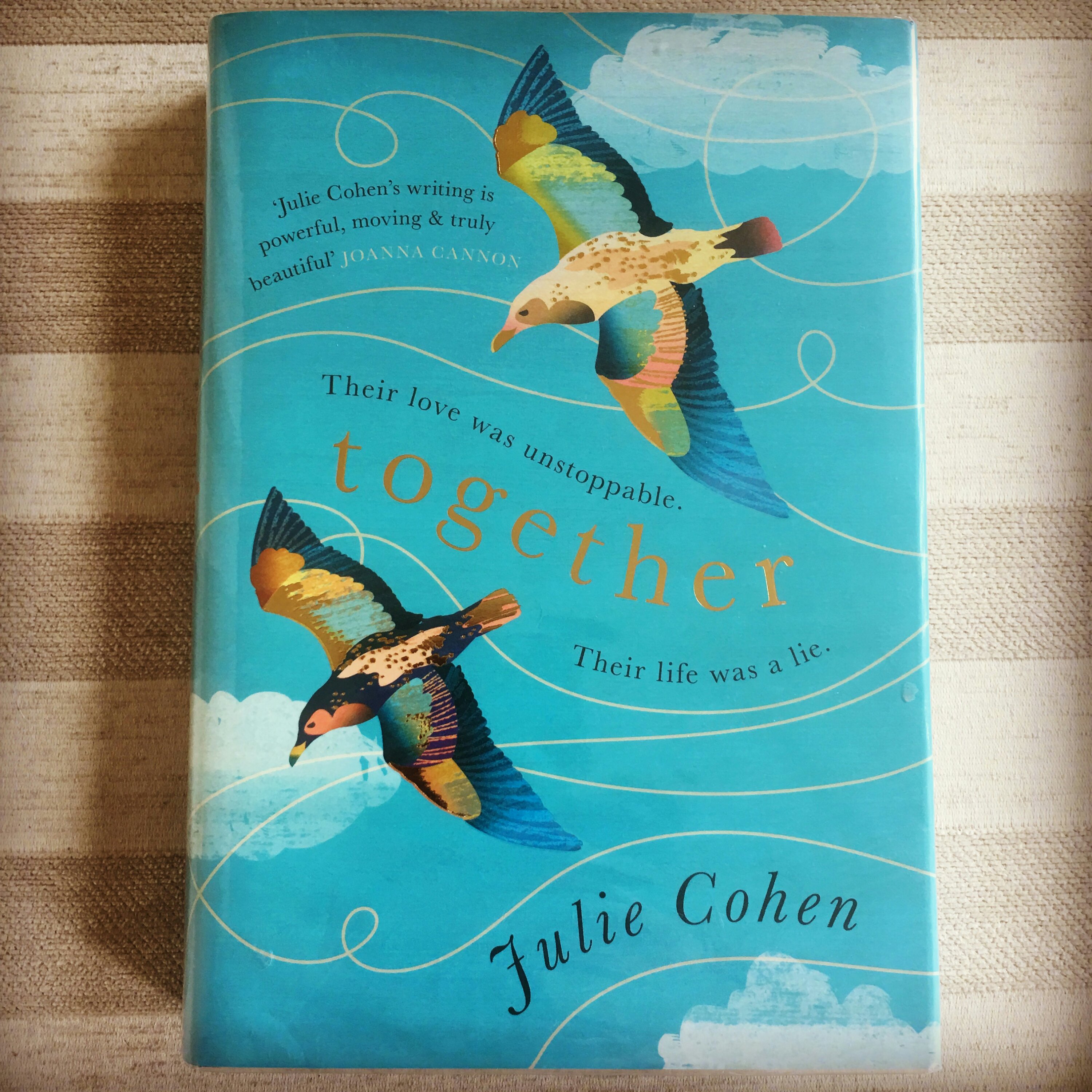
Together by Julie Cohen

Julie Cohen: Together

Published By: Orion

Buy it here

What the Blurb Says:

Is this a great love story?  Or a story about great love?   You decide. On a morning that seems just like any other, Robbie wakes in his bed, his wife Emily asleep beside him, as always. He rises and dresses, makes his coffee, feeds his dogs, just as he usually would. But then he leaves Emily a letter and does something that will break her heart. As the years go back all the way to 1962, Robbie’s actions become clearer as we discover the story of a couple with a terrible secret – one they will do absolutely anything to protect.

‘Julie Cohen’s writing is powerful, moving and truly beautiful’ Joanna Cannon, author of The Trouble with Goats and Sheep

‘It takes a lot to tempt me from crime, but this is one of the most beautiful and heartbreaking stories I’ve read’ Emma Flint, author of Little Deaths ‘

Complex, compelling and beautiful, Together is the kind of novel that will stay with you forever’ Rowan Coleman, author of We Are All Made of Stars.

What I Say:

It occurred to me as I started to review Together, that all the blog posts I have done so far all have one thing in common. Each novel features love as a central theme.

Is it because I have decided to blog about the books that I am more aware of it, or is it more to do with the fact that love is such a powerful, unstoppable force that it is at the centre of our worlds whether we are aware of it or not?  All the books I have reviewed so far show how love, simply, is love, irrespective of sexuality, age, our past, present or future.

Together is such a beautiful book, and like all the books I have reviewed, it will make you stop and think, and it will be in your thoughts long after you have read it.

It also flips novel conventions on its head, as it starts at the end of Robbie and Emily’s story and winds its way back through their shared history right to the first time they met. It sounds confusing, and at first it threw me slightly,  but it is such a clever and accomplished way to not only get to the heart of this story, but when the secret is revealed, it knocks you sideways and has you flicking back through the pages for some sign that you missed something.

I promise you, you won’t find it, which makes Julie’s clever use of the reverse timeline even more powerful.  You know there is a secret at the heart of this novel, you will NEVER work out what it is!

Together is the love story of Robbie and Emily.  At the start of the novel, Robbie gets up, writes a note for Emily, and leaves the house and walks into the sea to his death. What we learn early on, is that Robbie has Alzheimers and is slowly realising he can no longer be the vibrant, loving partner, father and grandfather he once was.

We see how they desperately wanted children, and because they were unmarried, that they had to engage the services of Honeywell, a lawyer with dubious connections. Robbie and Emily adopt a baby called Adam, but they have to flee as Honeywell is exposed for stealing babies to order.  They settle far away from prying eyes and are slowly welcomed into the community, Robbie as a shipbuilder, and Emily pursues her medical career.  We also learn about Robbie’s other son, William, whom he had to abandon.  Robbie had never giving up hope of finding him and being the father he wanted to be.  Their relationship is painful and fractured, and their moves towards each other is not a simplistic fairy tale, but a truthful observation of how time does not always heal our wounds.

As we move backwards through their story, Emily, we discovered, was married to someone else, but that on seeing Robbie in an American airport, she realises that she cannot live without him.  Christopher, her husband, knows that Emily and Robbie have a love that goes way beyond the passive affection Emily feels for him.  He can see that Emily’s logic and rationale leaves her as soon as she sees Robbie, and that the only way he can deal with it is by giving Emily permission to see him until they have to return to England.

During their short time together, Robbie and Emily realise that the love they feel transcends everything, and the reality of facing a life separated is something they cannot bear.  Robbie is knocked overboard when they go out sailing, and as she struggles to get him back, Emily realises she cannot live without him. Quite simply, she will do whatever it takes, whatever the cost, to be with him.

“I can’t lose you again.  It’s all hollow in the centre of things without you.”

Julie’s writing seamlessly moves you back through their story, which is such an accomplished thing to do, as there are so many threads to the different parts of the story. At each turn, we see how future plot lines are gently placed in front of us and decisions that characters make become clear.  Throughout the novel, the one constant, unwavering truth is the love that Emily and Robbie have for each other.  The attraction they feel towards one another excludes everyone and everything else.  Rational thought and society’s expectations take second place to the need they have to be together.

Together works so well because by the time the secret (which I am not going to reveal – read the book instead!) is finally revealed, you understand how entwined Robbie and Emily are, and you cannot imagine them not being together. At the same time, everything you have read clicks into place, and you understand the heartbreaking decisions and constant fear they must have felt throughout their lives.

I loved Together. It was engrossing, clever and different.  Starting at the end of a story and working backwards is a unique way to draw you into the characters, I feel that it made me concentrate more and in turn connected me to them more deeply.

Together is about the power and strength of love, and nothing I can write says it better than this;

“I love you.  You’re my beginning and my ending Emily, and every day in between”

Find out more about Julie Cohen on Twitter or visit Julie’s Website


The Party by Elizabeth Day

wp-image--733982243

Elizabeth Day: The Party

Published By: Fourth Estate

Buy it here

What the Blurb Says:

‘As the train pressed on, I realised that my life was in the process of taking a different direction, plotted according to a new constellation. Because, although I didn’t know it yet, I was about to meet Ben and nothing would ever be the same again.’

Martin Gilmour is an outsider. When he wins a scholarship to Burtonbury School, he doesn’t wear the right clothes or speak with the right kind of accent. But then he meets the dazzling, popular and wealthy Ben Fitzmaurice, and gains admission to an exclusive world. Soon Martin is enjoying tennis parties and Easter egg hunts at the Fitzmaurice family’s estate, as Ben becomes the brother he never had.

But Martin has a secret. He knows something about Ben, something he will never tell. It is a secret that will bind the two of them together for the best part of 25 years.

At Ben’s 40th birthday party, the great and the good of British society are gathering to celebrate in a haze of champagne, drugs and glamour. Amid the hundreds of guests – the politicians, the celebrities, the old-money and newly rich – Martin once again feels that disturbing pang of not-quite belonging. His wife, Lucy, has her reservations too. There is disquiet in the air. But Ben wouldn’t do anything to damage their friendship.

Would he?

What I Say:

This Summer, I have been lucky enough to read a stack of brilliant books, all of them captivating, all consuming and ones that you want to read over and over.

The Party is one of those books.

I honestly read it in two days (much to the consternation of my two boys who had to make do with sandwiches ‘It’s Summer, call it another picnic boys’!).

Martin and Ben have been unlikely friends since they met at school.  Martin knows a secret about Ben and as a result, even though their friendship has become strained over the years, Ben is aware that Martin needs to be kept close to avoid any damage to his reputation and his burgeoning political ambitions.

The action in the novel centres around the events on Ben’s 40th birthday party.  We first meet Martin being interviewed by the police, as they attempt to determine what happened on the night in question.  We learn that he is married to Lucy, that they met whilst working on a newspaper, and she is well aware of the intense relationship between Martin and Ben.  She seems to understand that Martin is in love with Ben, and although he may be fond of her, he does not love her.

The novel seamlessly moves between Martin’s police interview, Lucy’s journal and the day of the party.  We learn about Martin’s personal life as we move forward through the police interview – how he had a strained relationship with his mother and that he didn’t really fit into school.  Martin’s standing in the school is only due to his friendship with the popular Ben, something he is well aware of and uses to his advantage.

We believe that Martin is the quiet loner, and I genuinely felt sorry for him as the underdog in the relationship as he struggles to keep up with Ben, who easily moves through life with the boys wanting to be him and the girls wanting to be near him.

Suddenly, Elizabeth’s powerful writing shifts our pity for Martin to disbelief as she chillingly describes his extremely unsettling behaviour, which quietly sets the sinister undertone for Martin’s personality as the novel progresses.  His school adopts an injured bird which they decide to nurse it back to health.  Martin is well aware of the effect the bird has had on bringing the school together, but calmly, methodically and with an eerie rationale, he takes the bird into the woods and kills it.  His rationale is that the bird cannot be saved and does not understand the childrens empathy towards it.

Running parallel with Martin’s police interview, we also learn about Lucy and her life before Martin and their marriage. Through Lucy’s personal journals, we learn how her previous unhappy relationships have shaped how she sees herself and how she has set her expectations for love accordingly.  As Martin continues to be interviewed by the police, he comes to realise although he has not been in love with Lucy, she has unwaveringly loved him.

It is at that point he decides to tell them the truth about the devastating secret he has over Ben.

The gratitude would bind us together,  I would save him from himself.  It will be our secret and he would spend the rest of his life paying for it”.

Martin’s longstanding devotion to Ben and the Fitzmaurice family ensures that he does not divulge the devastating secret to anyone as he clings desperately to any sign of recogntion from Ben,  As the years pass, Ben starts to distance himself from Martin, an act that Martin struggles to understand.  As the reader, we are well aware that the power has shifted, that Martin is now the person who has to be kept in Ben’s favour to maintain the privileged existence he has so long enjoyed.

As the novel speeds towards The Party of the title, the gulf between Ben and Martin seems to be ever wider and more precarious, existing only on social niceties and small talk.  We are made aware of the sneering disdain that Serena, Ben’s wife has for Martin and Lucy, and that she merely tolerates them, keeping them sweet to maintain her comfortable status quo.

As the two couples uncomfortably circle each other, Ben and Serena reveal that they feel for Ben to move forward into politics that they need to distance themselves from undesirable relationships – such as Martin and Lucy.  This revelation leads to an act of violence which adds a further twist to the entangled lives of Martin and Ben, and one from which no one escapes unscathed.

The chilling end of the novel, with all the main characters still coming to terms with the events of the party is one which resonates and unsettles. After the night has passed and the characters move through the rest of their lives, we see Martin writing about his life.

Just when we think we are going to leave Martin to his memoirs, it is implied that he does something without thinking and conscience that made me stop, flick back through the pages, and re read the last chapter.

The Party is without a doubt a fast paced, thrilling read, that picks the reader up and catapults us along with Martin, Ben and all the secrets and lies that ultimately fracture their lives forever.  The characterisation of Martin is a subtle and unsettling portrayal of a man on the edge, with a disturbing undertone of menace that chills you to the bone.

Elizabeth Day’s novel is not only an engaging, witty and a powerful study of love and friendship, but is also an astute depiction of the lengths a person will go to to live the life they believe they deserve.

I really loved it and hope that you will too.

Find out more about Elizabeth Day on Twitter or Elizabeth Day’s Website


The Haunting of Henry Twist by Rebecca F. John

wp-image--1258000092

Rebecca F.John: The Haunting of Henry Twist

Published By: Serpent’s Tail

Buy It: here

What The Blurb Says:

London, 1926: Henry Twist’s heavily pregnant wife leaves home to meet a friend. On the way, she is hit by a bus and killed, though miraculously the baby survives. Henry is left with nothing but his new daughter – a single father in a world without single fathers. He hurries the baby home, terrified that she’ll be taken from him. Racked with guilt and fear, he stays away from prying eyes, walking her through the streets at night, under cover of darkness.

But one evening, a strange man steps out of the shadows and addresses Henry by name. The man says that he has lost his memory, but that his name is Jack. Henry is both afraid of and drawn to Jack, and the more time they spend together, the more Henry sees that this man has echoes of his dead wife. His mannerisms, some things he says … And so Henry wonders, has his wife returned to him? Has he conjured Jack himself from thin air? Or is he in the grip of a sophisticated con man? Who really sent him?

Set in a postwar London where the Bright Young Things dance into dawn at garden parties hosted by generous old Monty, The Haunting of Henry Twist is a novel about the limits and potential of love and of grief. It is about the lengths we will go to to hold on to what is precious to us, what we will forgive of those we love, and what we will sacrifice for the sake of our own happiness.

What I Say:

From the start of this novel, you have a sense of foreboding, that the vivid and detailed descriptions of Ruby making her way through the streets of London are not going to end well.  Ruby, who is pregnant, is knocked down by a bus, but her baby, Libby is delivered and survives.

After the shock of Ruby’s death, her husband Henry comes to terms with not only losing the wife he loved so much, but facing the overwhelming prospect of raising his child alone.  A child that they both wanted so badly.  As a widower and a single father, Henry finds himself struggling to cope, whilst determined to ensure Libby stays with him.

One night he sees a man standing outside his flat, staring up at him. As the days merge into nights, and he has to keep going for the sake of his daughter, Henry finds himself becoming intrigued by the stranger outside.  One night, the man introduces himself to Henry as Jack Turner, and confesses he only knows his name, and that he knows Henry.

Henry immediately feels a real connection to Jack that he can’t explain, and invites Jack to stay with him.  From a reader’s perspective, I felt that Henry was searching for something to fill the void left by Ruby, and that you are aware Henry feels himself pulled inextricably towards Jack.  It is as if Jack somehow embodies the spirit of Ruby, something that is brought even more into focus as Henry sees Jack has bruises in the same place Ruby would have where she was struck by the bus.  Henry cannot explain what draws him so fiercely to Jack, but as they spend more time together, it is as if there is an unstoppable force that propels them towards each other.

As the novel progresses, Ruby’s best friend, Matilda, it transpires also has an interest in Henry, and not a platonic one.  Matilda is married to Grayson, but their marriage seems to be very dull and simply plods along in a day-to-day co-existence as she desperately searches for the passion and desire she feels is lacking.  As Matilda discovers that Henry has decided to raise Libby on his own, her own desires to have a child, which has not happened in her marriage, means that she considers the possibility of offering to take Libby from Henry to raise with Grayson.

Jack and Henry move ever closer together, and Henry asks Jack to move in with him. The men become lovers, relishing in the force of love and passion that they feel.  However at the same time, they understand that this love is not acceptable to many and they try to keep their love hidden confined to Henry’s flat.  They contentedly exist for a while in their secluded bubble, enjoying the seclusion and happiness that new lovers feel.  They are unwittingly discovered entwined around each other when Matilda sees them through the curtains of the flat, just as she has gathered enough courage to declare her love for Henry.

Played against a vibrant background of London in the 1920’s with the emergence of the Bright Young Things, they all love their gregarious friend called Monty, who is the epicentre of the London party scene.  Monty is aware of the relationships between Henry and Jack, and tries to discourage Matilda from causing them harm.

Matilda’s anger blinds her to understanding that Henry is again truly happy, and she is determined to destroy Jack for taking Henry away from her.  To say more would give away the plot, but Matilda is unwavering in her desire to expose Jack for everything she believes he is.  When this fails, she is left to face the reality of her empty marriage, and to realise that the love Henry and Jack have for each other is not constrained by their pasts, or what is considered the ‘right’ thing to do in society.  Love is love.

The Haunting of Henry Twist is not a classic ghost story, the ‘haunting’ is more to do with Henry’s emotions and the massive life changing events he has to deal with and reconcile himself to.  Henry struggles to allow himself to love Jack, but when he finally does, the reader is only aware of how all-consuming and powerful a force that is.

For me, this novel was about so many things; love, death, grief, hope and the idea that love is love, no matter what it is, or what barriers one has to overcome to truly feel it.

Greatest Hits by Laura Barnett

wp-image--737171535

Laura Barnett: Greatest Hits

Published By: W &N

Buy it here

What the Blurb Says:

Alone in her studio, Cass Wheeler is taking a journey back into her past. After a silence of ten years, the singer-songwriter is picking the sixteen tracks that have defined her – sixteen key moments in her life – for a uniquely personal Greatest Hits album. In the course of this one day, both ordinary and extraordinary, the story of Cass’s life emerges – a story of highs and lows, of music, friendship and ambition, of great love and great loss. But what prompted her to retreat all those years ago, and is there a way for her to make peace with her past?

What I Say:

I had heard so many good things about this book before I had even had the chance to read it, and was looking forward to finally getting my hands on it!

I picked up my copy from Wendover Library (there are some of the loveliest librarians I have ever met there!), but at first they looked for a CD I have reserved until I had to explain it really was a book I was expecting!

The premise of Greatest Hits seems very simple.  Cass Wheeler, a renowned singer-songwriter has taken a career break after a life changing event.  Cass, and those around her, decide that the time is right for her comeback, so over one day, she decides to pick sixteen tracks that define her and her life.  These tracks will then form the basis of her comeback album, and will premiere at the party she is holiding at her home that evening.

However, Greatest Hits is so much more than that too.

As we move through the day, this opens up the chapters in Cass’ life too. Cass remembers how her mother left her and her father for another man, how Cass’ father who is a vicar gradually descends into pain and despair, although his love for her is never in doubt.  He recedes into his own private pain, leaving Cass left to her own devices as she looks for someone to guide her through her childhood.

Realising he is unable to cope, Cass’ father decides to send her to live with her Aunt Lily and Uncle John. As well as giving Cass the stability and creative environment she yearns for, they also nurture her musical talent on the guitar.

Ivor, who is a friend of Lily and John walks in to Cass’ life, and from that moment on their lives are inextricably linked, as their passion for music and each other draws them together.  Ivor and Cass decide to start playing together professionally in a group and soon Cass is spotted by a record label scout.  It becomes apparent that Cass is seen as the major talent, and the record label want Cass to be the main focus of the deal.

As Cass selects the songs that define her life, we are drawn further into her world.  The tempestuous relationship she has with Ivor is both her strength and her weakness.  They love each other completely and absolutely, but their relationship is marred by Ivor’s increasing dependence on alcohol.  Cass and Ivor have a daughter called Anna, who starts to witness the ever growing hostility between her parents, and after a violent incident, Cass makes the monumentous decision to leave Ivor.

Anna shuttles between her parents as they eventually divorce, and her health declines as she tries to come to terms with the state of her parents relationship.  Anna tries to communicate her pain to her parents, and her love for art becomes the medium through which she tries to articulate her emotions.  There is a particularly succinct but beautiful scene which takes place at Anna’s art installation, as her parents experience her life through their eyes, it is sparsely described, but yet expresses everything Anna feels about her place in their world in one short snapshot.

Soon after, an event happens that sends Ivor into freefall, and although Cass attempts to carry on with her life as before, it soon becomes clear that she is barely functioning and spirals into her own decline.  As Cass moves through her tracks, her day and her life, we see how she finally discovers the courage to have the belief in her creativity again and she starts to heal.  Slowly she discovers her own voice, one not influenced by Ivor or her own self induced limitations.  Cass allows herself to fall in love again with an artist called Larry, but she tests his love and pushes him away as he attempts to move forward with their relationship.

I found this book impossible to put down, Cass’ story will draw you in and keep you enthralled right until the last page.  I loved this book because I feel at the heart of the book is a woman searching for a sense of self and and a place of peace.  The idea that in spite of everything Cass has endured, she can put her past to rest, and learn to love life, music and performing once again.

Greatest Hits is so much more than a fictional biography of Cass Wheeler.  It encompasses life, love, death, grief and the always present power of music.  The novel is wide ranging and encompasses different decades and attitudes.  It is also a novel of relationships – between men and women, mothers and daughters, parents and children and of how women are perceived in society.

Ultimately Greatest Hits is a novel which will resonate with you long after you have read it, and is one I will be endlessly recommending.

Find more out about Laura Barnett on Twitter or Laura’s Website


Right here, right now..

So, here I am, ready to make a mark on the world of book blogging, and I did probably the worst thing I could have done.

I Googled ‘How to do a book blog’.  Just like a Doctor tells you never to google your symptoms, I was convinced after ten minutes that this was all a waste of time and that I could never do it.

However, having a chance to sit back and look at other peoples blogs, I decided something.

I can do it.

I read all the time, I love recommending books to my friends and hearing how much they loved (or hated them!).

Bear in mind, that all the books featured on this blog will be reviewed positively, as life is too short to struggle with a book I am not enjoying!

However, here are some of the books I have read and loved already this year, before the idea of book blogging even crossed my mind!


wp-image--1226919246

Celia Fremlin: The Hours Before Dawn

Published by: Faber & Faber

Buy It here

What The Blurb Says:

Louise would give anything – anything – for a good night’s sleep. Forget the girls running errant in the garden and bothering the neighbours. Forget her husband who seems oblivious to it all. If the baby would just stop crying, everything would be fine.
Or would it? What if Louise’s growing fears about the family’s new lodger, who seems to share all of her husband’s interests, are real? What could she do, and would anyone even believe her? Maybe, if she could get just get some rest, she’d be able to think straight.

In a new edition of this lost classic, The Hours Before Dawn proves – scarily – as relevant to readers today as it was when Celia Fremlin first wrote it in the 1950s.

What I Say:

Celia Fremlin has often been overlooked as she was a forerunner of the psychological thriller which populates many of our bookshelves (including mine!) today.
The Hours Before Dawn is about Louise, a woman who is at home with her three young children, of whom, the youngest, Michael, is unable to sleep through the night.  As Louise struggles to cope with the demands of being a mother and wife with no sleep and no time to call her own, a woman called Vera Brandon answers her advert looking for a lodger.
Louise attempts to function in a world where her well being is sacrificed for the needs and demands of everyone else, and a number of unsettling incidents lead her to think that her lodger may not be as innocent as she seems…
I loved this book, as I found it fascinating to see how many issues around a woman’s place in the home, and our expectations of what being a woman in society should be is still sharply in focus today.
Louise’s unrelenting sleep deprivation blurs the line between fantasy and reality seamlessly, and Celia Fremlin’s evocative language meant that I, as a reader start to question what is real and what is imagined. Louise is an engaging and likeable character, and you really feel for her plight as Vera Brandon manipulates and lies her way into the household.
This book is full of tension and twists, and an ending that will knock you off your feet and have you re-reading it.

I really recommend it and I will certainly be looking out for Celia Fremlin novels in the future .


wp-image-862519757

Rowan Coleman – The Summer of Impossible Things

Published by: Ebury Press (Fiction)

Buy it: here

What The Blurb Says:

If you could change the past, would you? This summer, get ready to believe in Impossible Things with the brand new book from international bestseller, Rowan Coleman. Available to pre-order now! How far would you go to save the person you love? Luna is about to do everything she can to save her mother’s life. Even if it means sacrificing her own.

What I say:

I had kept this book on my ever growing TBR pile for a few weeks, because I knew it would be one of those books I would not want to end, and I was right.

To simply say it is a book about a young woman called Luna who discovers she can travel back through time to 1977, does not do Rowan’s book justice.  Luna realises her ability to time travel means that she holds the power to prevent an awful event taking place, but that it might ultimately change her whole world and everything she has ever known.

This warm, eloquent and stunning novel deals with so much more, so many themes and ideas that to say too much would be to give the essence of this book away.

It considers ideas such as; what makes us who we are? How can we be sure that time only exists as a linear concept? Faced with an impossible choice, would you risk your own existence and everyone you know to save someone you love?

Rowan has written a book which not only discusses what true love means, but that also, sometimes, the most powerful love you have within, enables you to overcome obstacles you never dreamed you could conquer.

The novel has such evocative descriptions of Bay Ridge in Brooklyn, and also what it mean to be a young woman growing up in 1977.  Your heart often had to come second place to the expectations of your famly and the community.

I have loved many of Rowan’s books, (The Memory Book is one of my favourites) but the passion, intelligence and empathy she creates for the characters faced with life changing decisions, elevated this novel to an entirely new level.

I loved it.