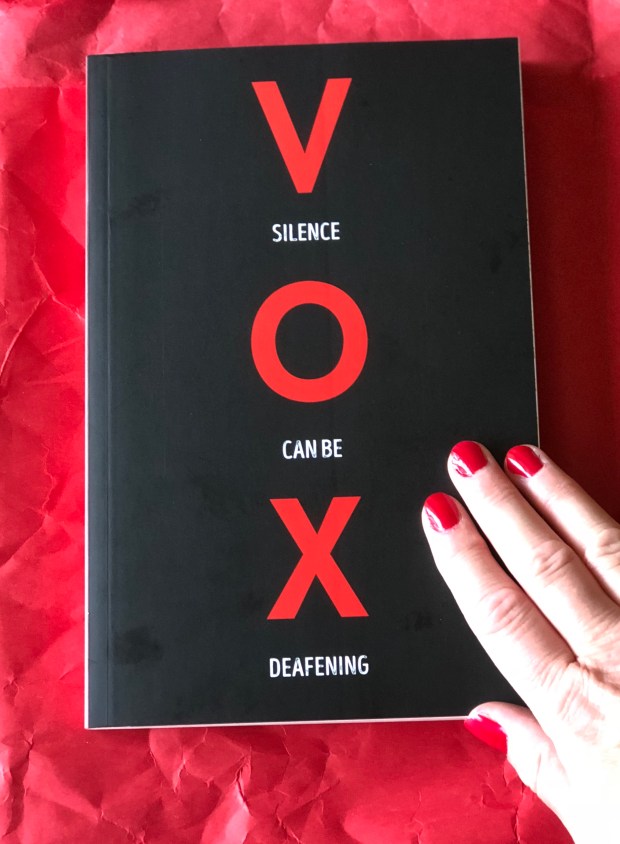
VOX by C V Dalcher

img_1586

VOX by C V Dalcher

Published By: HQ

Buy It: here

What The Blurb Says:

Silence can be deafening.

Jean McClellan spends her time in almost complete silence, limited to just one hundred words a day. Any more, and a thousand volts of electricity will course through her veins.

Now the new government is in power, everything has changed. But only if you’re a woman.

Almost overnight, bank accounts are frozen, passports are taken away and seventy million women lose their jobs. Even more terrifyingly, young girls are no longer taught to read or write.

For herself, her daughter, and for every woman silenced, Jean will reclaim her voice. This is only the beginning…

[100 WORD LIMIT REACHED]

What I Say:

Every day we are assaulted by a cacophony of words and sounds from the moment we wake up until the moment we go to sleep.  We chat, laugh, text, post comments and in my case, settle down with a book and talk some more.

Now imagine a world where women are limited to 100 words a day.  If you go over your limit, a bracelet on your arm will administer an electric shock.  If you go further over the 100 word limit, the intensity of the electric shock will increase until you inevitably die.

This law includes all females, so girls from a very young age also have a bracelet fitted which ensures that they too cannot use more than 100 words too.

So, VOX must be set way in the future, in an alien world far removed from ours?

Guess again.

Welcome to modern day America, ruled by a megalomaniacal President and his brother, assisted by a power hungry Reverend who is the head of the Pure Movement.  A Presidential Election has facilitated the infiltration of this Movement throughout America, which believes that not only is a woman’s place is in the home, under the complete control of her husband, but that she should be seen and absolutely not heard, which is why the bracelet has been introduced into American Society.

Single women are given the laughable ‘choice’ of marrying someone, anyone, or are made to work in brothels.  Anyone who is not heterosexual is criminalised and forced to work in camps where they are ‘re-educated’ to become straight again.

Jean McClellan is a doctor of neurolinguistics, who, like millions of other women is a virtual wordless prisoner in her own home. She is not permitted a bank account or a credit card, and has had to give up her career.  She is trying to ensure that she not only does not flout the rules, but that her young daughter Sonia never goes over the 100 word limit too. Sonia and her brothers attend school, but as a girl, Sonia is not allowed to learn to read or write, and chillingly, her greatest achievement is receiving a certificate for speaking the least number of words (just 3) in a day.

Little by little, the government ensure that women are becoming nothing more than silent, passive bodies, ghosts who glide through their lives absolutely controlled by the men who rule the White House and the men who share their homes.  Even more chillingly, Jean’s eldest son Steven, is being indoctrinated into this state controlled misogyny through school, as the curriculum is changed to reflect the teachings of the Pure Movement, so as soon as the boys start their education, they learn about the place of women in their world.

The scene is set as Jean and her family attempt to live within the horrific misogynistic confines of their world, as she is unable to do anything to protest against the President, because quite simply, to vocalise her anger means she will die and her family will be put in danger. Added to this, Steven is now falling under the spell of the Pure Movement, and has started to treat his mother appallingly, quite simply because that is what he is meant to do in this world.

So far, so depressing.  Until one day, the men from the White House arrive at Jean’s house offering her the chance to remove her bracelet and resume her academic career.  Ironically she is asked to give the power of speech back to the person who was responsible for taking hers away, as the President’s brother is unable to speak following a brain injury.  Jean is placed in an awful dilemma  – should she take the offer and be able to speak and use words (even if it is only until the cure is found) while helping the man who has inflicted this situation on America, or should she morally refuse and stay imprisoned in her silent world instead.

After much soul searching, Jean decides to research a cure for the President’s Brother. She also demands that Sonia has her bracelet removed too.  The fact that Sonia is bewildered and scared by her freedom, unsure and unwilling to use her words because she has never had that opportunity makes VOX a difficult read at times. I cannot imagine how heartbreaking it would be, to live your life in fear of your child attempting to express themselves, for them to have to quell every creative thought in them so that they do not risk injury or more appallingly, their own death.

From this moment on, Jean is pulled into a presidential world filled with intrigue and lies, where she and her research team discover that what people say are not always what they mean, and that their intelligence and determination has the potential to change their world – but not always for the best.

For me, Jean is a completely relateable protagonist.  You feel her pain and sense of frustration that she is forced to live in this way. Her drive to succeed is powered by her desire to ensure that her daughter and all women in America no longer has to live under this chilling and barbaric regime.  VOX shows us how when we are faced with impossible and life changing choices, sometimes we have the greatest power within ourselves to do what it takes to succeed.

VOX is a novel that deserves to be read, discussed and shared with everyone.  If you feel nothing while reading it, if it doesn’t make you rage and feel angry, or make you want to ask how this could possibly happen, then I am not sure we can really be bookish friends!

C V Dalcher has written a novel that works so brilliantly because in today’s world, with the recent political events that have happened, women losing their ability to use words is scarily not something that seems so truly far fetched any more.  Setting the action in modern day America means that we can easily visualize the day to day world, which makes it even more chilling.  The awful idea that something like this could happen in our lifetime makes this a timely and absolutely relevant read for all of us.

In creating a world that is so scared of giving women a voice, it seems that the men in charge of VOX’s world are fearful. Maybe they subconsciously realise that when women come together to stand up against something they believe in, nothing, not even a deadly bracelet can stop women being the ultimate force for change for the world we deserve.

I loved it.
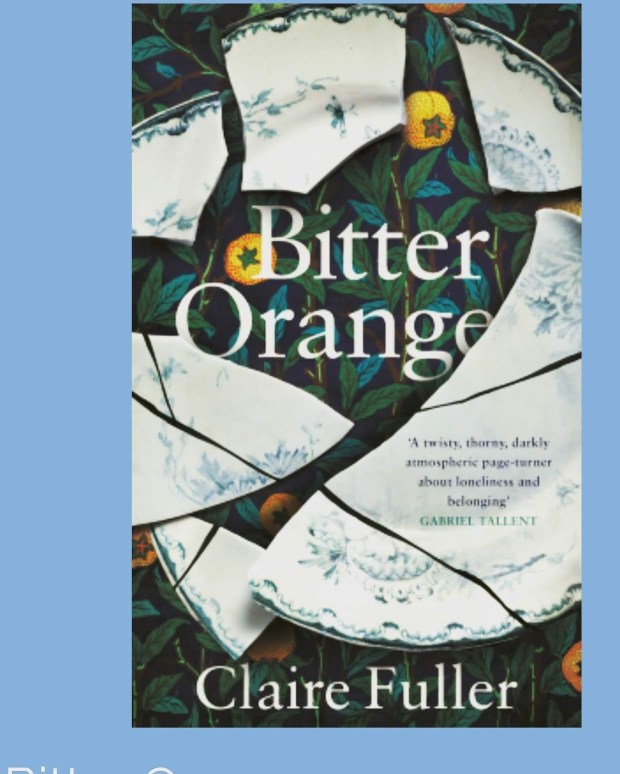
Bitter Orange by Claire Fuller

img_11552

Claire Fuller: Bitter Orange

Published By: Fig Tree

Buy It: here

What The Blurb Says:

From the attic of a dilapidated English country house, she sees them – Cara first: dark and beautiful, clinging to a marble fountain of Cupid, and Peter, an Apollo. It is 1969 and they are spending the summer in the rooms below hers while Frances writes a report on the follies in the garden for the absent American owner. But she is distracted. Beneath a floorboard in her bathroom, she discovers a peephole which gives her access to her neighbours’ private lives.

To Frances’ surprise, Cara and Peter are keen to spend time with her. It is the first occasion that she has had anybody to call a friend, and before long they are spending every day together: eating lavish dinners, drinking bottle after bottle of wine, and smoking cigarettes till the ash piles up on the crumbling furniture. Frances is dazzled.

But as the hot summer rolls lazily on, it becomes clear that not everything is right between Cara and Peter. The stories that Cara tells don’t quite add up – and as Frances becomes increasingly entangled in the lives of the glamorous, hedonistic couple, the boundaries between truth and lies, right and wrong, begin to blur.

Amid the decadence of that summer, a small crime brings on a bigger one: a crime so terrible that it will brand all their lives forever.

What I Say:

Thank you to NetGalley for an advance e-copy of Bitter Orange in exchange for an honest review.

I kept seeing bookish people on Twitter raving about Claire’s new novel Bitter Orange.  After valiantly failing to get a printed proof via various competitions and offering to sell my children and dog, I was absolutely ecstatic to be able to access Bitter Orange via Netgalley.

So, what did I think?  Quite simply, Bitter Orange is one of those few novels that pulls you in from the first page, keeps you close throughout, and then leaves you feeling bereft when you realise you have finished it. I can honestly say that it is one of the few e-novels I have read, that I need to own a physical copy of as I want to read it again to really savour every page.

We first meet Frances Jellico as she lies on her deathbed, talking to Victor who is a vicar and her long standing friend.  As she meanders in and out of consciousness, she remembers her life, especially the hot and claustrophobic summer of 1969.

Frances has been commissioned to write a report about the follies which are in the gardens of the majestic Lyntons House.  She has left the drab and lonely existence she has in London, and is now facing a summer in an isolated and somewhat dilapidated country house as she undertakes her seemingly overwhelming task.

It is as she moves into her sparse attic room, that she meets the charismatic Peter and Cara, who are staying in the rooms below her.  Like Frances, Peter has been commissioned to write a report for the buyer of Lyntons House, and from the first time she meets the two intoxicating strangers, Frances falls immediately under their spell.

As she settles in to her attic rooms, Frances stumbles upon a telescope, embedded in the floor, which looks directly down into the bathroom that Peter and Cara share, which gives her an illicit view of the couple that she knows is wrong to look at, but can’t draw her eyes away – especially from their most private moments.

As the three strangers start to talk to each other, Frances notices that Cara seems to be evasive about her life before arriving at Lyntons, but is vocal of her love of Italy and its language, and Peter seems to be the stabilising influence she needs. Frances is a sometimes unwilling participant in their alcohol fuelled arguments, but is ultimately bewitched by her passionate and worldly wise neighbours.

The heat of the summer and the geographical isolation of Lyntons House mean that Peter, Cara and Frances start to gravitate towards each other, sharing food and free time and they begin to confide as to the paths which have brought them here.  One of the many wonderful things about Bitter Orange, (and believe me, there are many), is that Claire’s writing eloquently conveys the sense of them being almost out of step with the real world, living day to day, as they wish, with no routine or timetable, against the backdrop of a languid and all encompassing landscape that in reality seems to be closing in on them.

Life at Lyntons initially seems to suit all three of them, and very gradually, Frances starts to unwind and lose her staid and rigid routines.  She realises that she is becoming increasingly attracted to Peter, and as they get closer, he tells Frances in confidence that she shouldn’t always believe what Cara says, and that her mental state and recollection of events is at times precarious.

The balance of their relationships start to shift- Cara is now being watched by both Peter and Frances, Frances and Cara both love Peter, and Cara is becoming wary of Frances and her obvious attachment to Peter. One day, they stumble upon a door in the house which contains everything that the Lyntons owned – including furniture, crockery, china, jewellery and exquisite paintings.

Frances, Cara and Peter then make a moral choice about their discovery which will not only change everything, but will seep into the already tenuous cracks of their now brittle relationships.

Not one of them is innocent, and from this point onwards in Bitter Orange, the spell of their idyllic summer is irrevocably broken.

Day by day they start to turn on each other, uneasy and untrusting, loyalties are tested and secrets are revealed. This is what makes the characters in Bitter Orange so engaging – that Frances, Cara and Peter are flawed in their different ways, but ultimately they are just three young people, trying to find love and their place in the ever changing world that they will have to return to eventually.

Bitter Orange culminates in a truly shocking and unexpected ending, which is absolutely perfectly executed – and Frances’ deathbed confessions will, believe me, take your breath away.

Emma Healey, another of my favourite authors, has said that on reading Bitter Orange that she had to keep reminding herself that she wasn’t reading a forgotten classic. I would absolutely agree, and also add, that in writing the haunting and elegiac Bitter Orange, Claire Fuller has written a brilliant future classic novel that should be lauded and read as widely as possible.

I loved it.

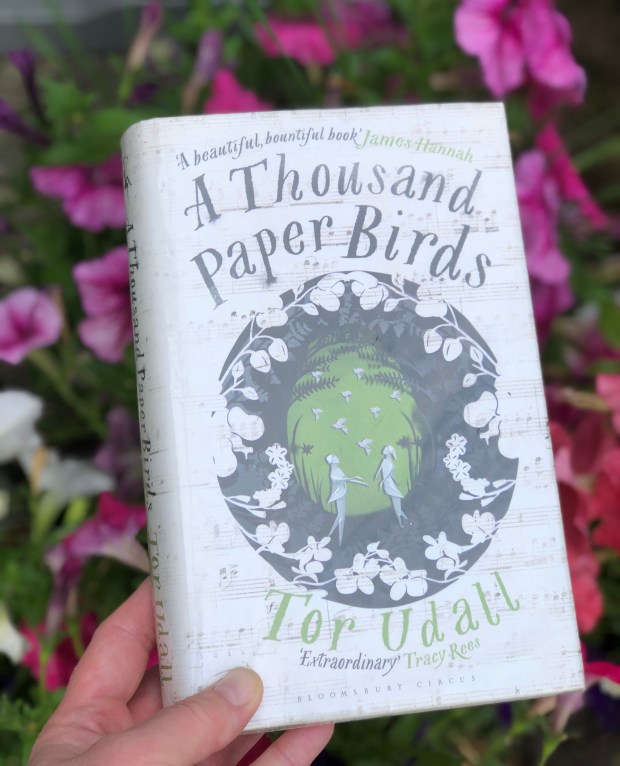
A Thousand Paper Birds by Tor Udall

img_1403

Tor Udall: A Thousand Paper Birds

Published By: Bloomsbury Circus

Buy Ithere


What The Blurb Says:

Jonah roams Kew Gardens trying to reassemble the shattered pieces of his life after the death of his wife, Audrey. Weathering the seasons and learning to love again, he meets Chloe, an enigmatic origami artist who is hesitant to let down her own walls.

In the gardens he also meets ten-year-old Milly, and Harry, a gardener, both of whom have secrets of their own to keep – and mysteries to solve.

What I Say:

“Perhaps,” says Jonah, ‘love is when you hold on to something and fall through the air.  You don’t know if you’re flying or falling – ‘

‘Until you crash,’ she says.

I have to tell you straight away that I had no intention of blogging about A Thousand Paper Birds.  I had it on my Reading Pile, one that is just for me, so I don’t put myself under any pressure by promising reviews when sometimes all I want to do is read.

The thing is, when you start reading a novel like A Thousand Paper Birds, it needs to be shouted about, recommended and pushed into the hands of anyone who has ever known what it is to love or be loved.

Jonah’s wife Audrey has passed away.  He understands how important Kew Gardens was to her, and so as well as arranging for a bench dedicated to her to be installed, Jonah spends many hours roaming the gardens in an attempt to feel closer to her.  While he is there, he meets Chloe, a young artist who is passionate about origami, and as they start to form a connection, Jonah finds himself feeling conflicted about opening his heart to someone else whilst the presence of Audrey is everywhere.

Harry has dedicated his life to working in Kew Gardens, and works tirelessly to ensure that it stays as beautiful as he can make it.  Milly is a typical ten-year old, energetic, inquisitive and seemingly fearless.  Jonah encounters them on his trips to Kew, and as he starts to try to get over his devastating loss, Chloe, Henry and Milly all provide him with different things he needs to help him move forward.

So far so straightforward? Sounds like a feel good novel that will have Jonah, Chloe, Harry and Milly living happily ever after?

A Thousand Paper Birds will not give you a formulaic feel good, tick box neat story.  It is so much more than that. It is a complex and passionate novel about what love is, what it means, and the lengths we will go to in that elusive search for happiness.  It tackles many different issues, such as death, grief, what it means to be a parent, and what dying means for those who are left behind.

One of the many things I loved about the novel are the characters who inhabit Kew Gardens. Jonah is a grieving husband, but he is not a model of decorum and mourning.  He attempts to forget about Audrey by sleeping with numerous women, trying to find a way back to some sort of normality that will start him living his life again.  Chloe is the same, brittle and wary of forming any connection that will make her confront her past and what she has witnessed.  For me, that made the novel even better – I want real, relatable people, who react in ways that I can understand, and make me want to see them find the resolution they need.

Harry and Milly initially seem always to be just on the edge of Jonah and Chloe’s world, but they in fact are so pivotal to their lives, that without them, they will not be able to move past the grief they both hold inside.  Page by page, chapter by chapter, Harry and Milly move from the background of Kew, into the centre of the plot, and we start to understand exactly why they are there, and so interested in Jonah and Chloe.

All the time, the magnificent and stately Kew Gardens weaves its way through the story.  Most of the novel takes place here, and like an all-seeing and all-knowing entity, it holds the key to why all the characters are drawn here.  The ethereal quality that Kew has, provides the perfect backdrop, as the novel progresses and we start to understand that all is not what it seems.  All the time, Kew is there, bringing people in to its heart and holding them there until they are ready to move on.

Audrey is the link between all these characters, and like them, before she died, she too was dealing with her own grief.  Unable to carry a child to full term, she and Jonah move further apart as they bluster through their daily lives, never really talking about their marriage, or how sad they feel.  Like all the people in A Thousand Paper Birds, Audrey is not held up as a paragon of virtue.  She is increasingly drawn to Harry, wondering whether their shared love of nature and gardening is a solid enough foundation to risk her ending her marriage to Jonah.

However, as we know, Audrey dies, and leaves behind her four people who are trying to make sense of what has happened.  When Chloe stumbles on Audrey’s diary, explaining her feelings towards Jonah and her growing attraction to Harry, she knows she has stumbled on something which will blow apart their lives and ultimately risk her own growing relationship with Jonah.

As the novel moves seamlessly towards its conclusion, there are subtle clues, which become more and more blatant, and finally reveal to us who Harry and Milly are, and Audrey’s involvement in their lives.   I could tell you what it means, but as you know by now, I am not going to ruin it for you.

All I will say is that A Thousand Paper Birds is a beautifully poignant, poetic and courageous novel.  Tor eloquently deals with many themes in a unique, almost magical way.  It is a book that I didn’t want to finish, and had to think about how on earth I was going to be able to articulate this review to convey its power and tenderness about love, life and death.

If you haven’t read A Thousand Paper Birds yet, I would urge you to add it to your reading list immediately.  Savour it, fall in love with Tor Udall’s wonderful writing and the Kew Gardens inhabitants, and appreciate your loved ones and the time you spend with them.

I loved it.

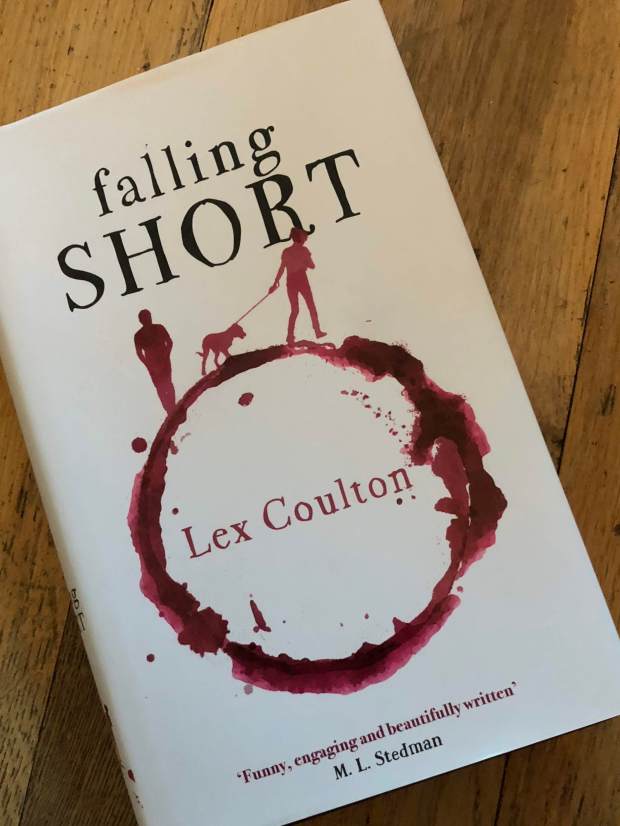
Falling Short by Lex Coulton

img_1184

Lex Coulton: Falling Short

Published By: John Murray

Buy It: here

What The Blurb Says: 

Review

A remarkable book: warm, moving and very funny (Jess Kidd)

Taking up the mantle of acute, humane observation from Muriel Spark, Falling Short is funny, engaging and beautifully written. A really refreshing read (M. L. Stedman)

A remarkable book: warm, moving and very funny

Taking up the mantle of acute, humane observation from Muriel Spark, Falling Short is funny, engaging and beautifully written. A really refreshing read

Book Description

A witty, charming and moving novel about finding things where you least expect them

About the Author

Lex Coulton studied English and later creative writing at Oxford. She spent fourteen years teaching English in secondary schools before taking a sabbatical year in Paris, to focus on her writing. Lex grew up in Herefordshire, and has recently returned to live there with her husband, John, and their dogs Bazil and Sadie.

What I Say:

Thank you to John Murray who sent me a copy of Lex’s novel, and it was so good, that I decided I had to write this blog post to tell everyone about it!

I had seen Falling Short talked about a lot on social media, and knew that it would be the sort of book that I would really enjoy – and I was right!

Frances Pilgrim is thirty-nine, teaching Shakespeare to sixth formers and has fallen out with her best friend, Jackson, who also teaches at the school.  As well as having to deal with the daily grind of being an adult in a world where you have to keep going because you can’t stop, Frances’ Mum is behaving in an increasingly erratic way as she battles Alzheimer’s.

Frances is an only child, and has always believed that her father disappeared at sea when she was five years old, and she is now having to juggle her professional life with the increasing demands of her personal one.

Falling Short eloquently shows how the cared for becomes the carer, an issue so many of us can relate to, and like Frances, we don’t just live around the corner from our parents.  Frances’ days are filled with numerous demands and pressures, trying to ensure she can maintain her professional reputation at school, whilst at the same time shuttling back and forth between her flat and her mother’s home as her mental health deteriorates.

Jackson is back in the UK, after having spent some time away in South Africa – the country where he grew up.  As the novel progresses, we learn exactly why Jackson had to leave the country so quickly, and why he is now sliding towards retirement in a school which seems to irritate him in every way.  His relationship history is, to be diplomatic, a rather colourful one, and he still has a reluctance to settle down.  Jackson seems at odds with the world, around him and simply wants an easy life.  He attends training sessions with the weary resignation of someone who has seen it all before and knows that fancy ideology does not work when you are at the coalface on a day-to-day basis.

Frances and Jackson have been great friends, but one night when the line is crossed, and they spend the night together, everything changes.  Frances distances herself from Jackson, and as she spurns his attempts to contact her, the friendship lies in tatters. What Lex does in an understated way throughout Falling Short is to make it obvious to us that Frances and Jackson are in love, and that they are the only ones who cannot see it.

All through the novel, I was willing one of them to make the first move, as they circle around each other, never quite getting close enough to say the right thing.  As they have to work together at school, you can really feel the unease and awkwardness between them as they try to professionally co-exist in an environment which throws them together constantly.

What elevates Falling Short for me, is the revelation that sends Frances off on a road trip like no other.  Her mum lets slip that her father did not pass away, and Jean, the neighbour who treats Frances like one of her own, confirms it.


Everything Frances has ever believed about her father and mother has been turned on its head, and now she has to decide whether she wants to take a chance and make contact with him.  Frances and her dog (brilliantly called Dog!) embark on a road trip to Yorkshire to discover the truth, to find her Dad, and Frances’ place in the world.  When Jackson and her friend Silv, discover what she is up to, and are unable to contact her, they too make the rash decision to follow her and for Jackson, he slowly realises what we knew all along, that he is in love with Frances.

I am of course, not going to give away what happens when Frances arrives at her father’s house, but the way in which the closing chapters of the novel use of the harshness and energy of the landscape are all-encompassing and powerful, as they seep out of the pages and into our desire to see Frances finally find the happiness and resolution she craves.

Falling Short is a stunning debut novel full of flawed, relatable characters, who flail around trying to make sense of each other and the world around them.  However, this is one of the many brilliant and endearing things about the novel – that for a change, our heroine and hero are not perfect, tee total, whip smart, organic vegetable eating, clean living yoga buddies.  They are just like us  – getting through every day in the best way they can, and I loved them all the more for it.

I loved it.


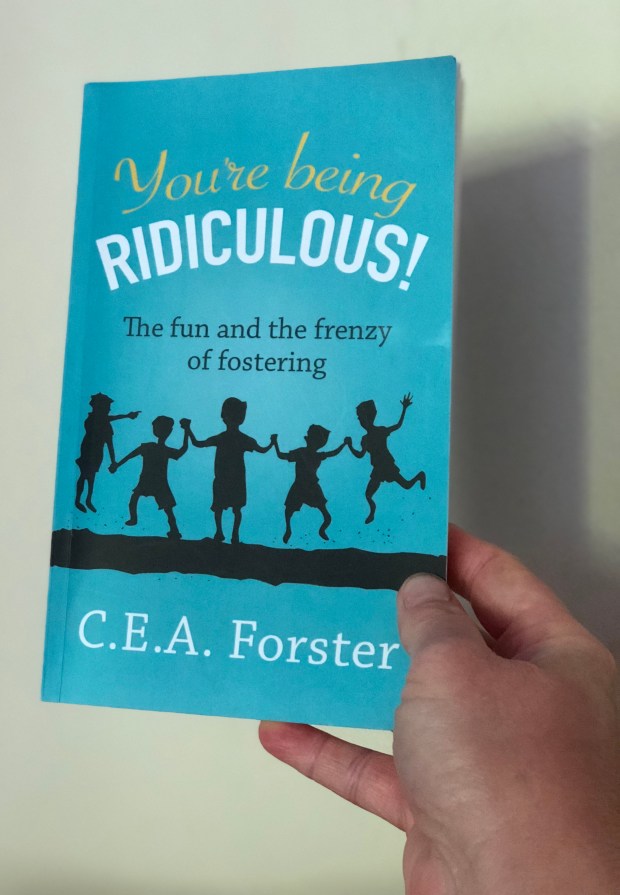
You’re Being Ridiculous by C.E.A. Forster

img_1119

C.E.A. Forster: You’re Being Ridiculous

Published By: C.E.A. Forster

Buy it: here


What the Blurb Says: 

A new authorial voice relaying true stories that are likely to both horrify you and make you laugh out loud. Events and conversations are told with pace, humour and humanity as the author shares with you her memories of the situations she has lovingly endured while at the mercy of her numerous foster boys.

It is heart warming, heart breaking and heartfelt in equal measures. It is a memoir of sorts but it is definitely not a misery memoir. C.E.A. Forster is youngish, conceivably pushing middle age, although she would argue as to where that line is drawn, and she is just wanting to share with you the trials, tribulations and sheer joy of her time as a foster carer.

She writes of the sounds of bystanders that she can still to this day hear ringing in her ears, tutting at her apparent inability to control the children in her care and of the mayhem that follows them everywhere, along with her repeated admonition to them of “you’re being ridiculous!” .

Claire has experienced those awful questions in the most public of places concerning the differences between boys and girls and has been informed by a six year old on the habits of mating Turtles. Have you ever heard of pee wars? Have you ever crash landed in a World War II plane and lived to tell the tale? Not to mention some of the topics discussed at the dinner table that would make even the most bold of us blush.

Claire won’t mind you laughing at her or with her and she will leave you knowing, in no uncertain terms, just how much she grew to love these boys and how they will always have a special place in her heart. She hopes that maybe one day they will come back into her life to remind her of their own memories.

What I Say:

Thank you very much to C.E.A. Forster for supplying me with a copy of her book in exchange for an honest review.

I have to admit that I wanted to review this book because I was curious about the world of fostering, having had no experience of it whatsoever.  I naively assumed that because I am a parent, I would understand what it takes to be a foster carer  – I could not have been more wrong!

You’re Being Ridiculous is the story of how Claire started fostering children and how she dealt with the everyday and not so everyday situations she found herself in!

What I found really refreshing about this book is that Claire does not claim to be any sort of foster carer expert, instead we see each situation as she deals with it, and the questions she has to ask herself as to how she should react appropriately.

As a mum, you can pretty much react in any way you want, and say whatever gets you through the tricky situation – as a foster carer, there is an added layer of responsibility and set of guidelines you are expected to follow which only adds to Claire’s dilemmas as she deals with the children in her care.

The situations that Claire and her foster children find themselves in are at times simply hilarious, and the scene in Aldi (you have to read it to believe it!), made me really laugh out loud. That is undoubtedly down to the no nonsense,  relatable way in which Claire writes.

It was also interesting to see how other people in the big wide world react to the sometimes unpredictable behaviour of the children, and that tutting is definitely the universal language of misunderstanding!  As a parent of a child with special needs that really resonated with me, as I have lost count of the number of times I have had to deal with stares and exaggerated tutting when my son doesn’t behave in a certain way.  I always think it would be very interesting to see how people would behave if they had to walk a mile in my shoes, and am sure that Claire must feel the same!

This is not to say that the book is just about the funny things that happen as Claire ventures into the world of fostering.  It is also balanced by the reality of what the young people in Claire’s care are going through.  We don’t know what place they are in their lives, and what they have seen or heard, and cannot begin to comprehend what they are thinking about as they find themselves in the house of a stranger for the first time.  Some of the most poignant scenes are where the children are trying to process what is happening to them, and how they deal with having been placed in Claire’s house.

For me, this is the strength of You’re Being Ridiculous – it could have been a flippant book filled with funny stories, but you can really feel the passion and love that Claire has for what she is doing.  As she gains experience (and that you need to have spares of everything just in case!), she learns how to adapt to each child, and that though one child may be really introverted and another is a non-stop dynamo, the most important thing you can do is just be there for the child when they need you.

You’re Being Ridiculous is not a long book – it comes in at two hundred pages, but it is full of emotion, laughter and compassion, something that jumps out at you from every page.  Claire has clearly found her vocation in foster caring, and her ability to tell her story so well and with so much love for the children who are lucky enough to come into her care, is a joy to read.

I hope that she is going to keep writing it all down for us, and hopefully we will see a sequel to You’re Being Ridiculous soon!


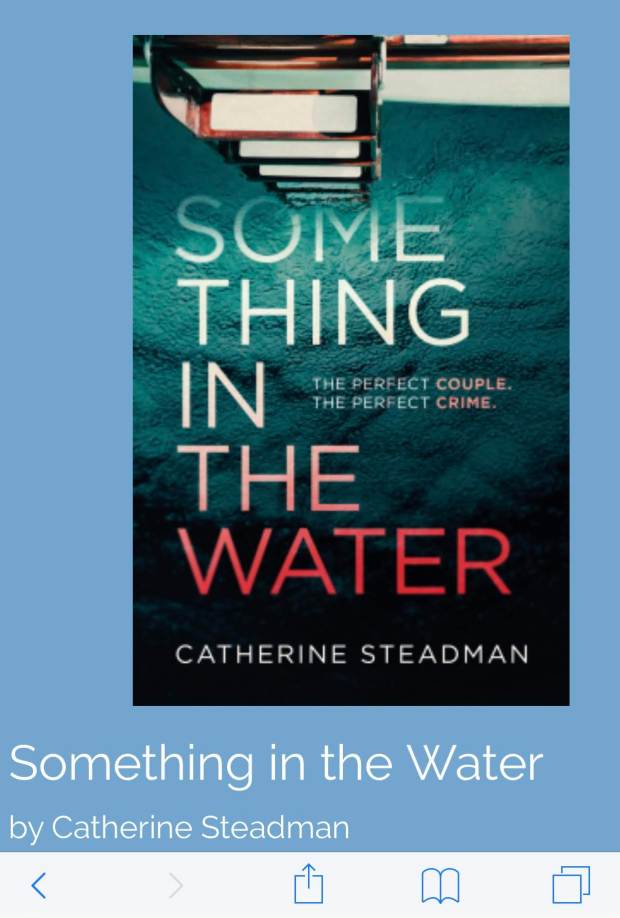
Something In The Water by Catherine Steadman

img_1114


Catherine Steadman: Something In The Water

Published By: Simon & Schuster UK (26 July 2018)

Buy It: here


What The Blurb Says:

Erin is a documentary filmmaker on the brink of a professional breakthrough; Mark a handsome investment banker with a bright future. They seem to have it all, until Mark loses his job and cracks start to appear in their perfect life.

But they’re determined to make it work. They book their dream honeymoon and trust that things will work out – after all, they have each other.

On the tropical island of Bora Bora Mark takes Erin scuba diving. Mark is with her – she knows he’ll keep her safe. Everything will be fine. Until they find something in the water.

Erin and Mark decide to keep their discovery a secret — after all, if no one else knows, who would be hurt? Their decision will trigger a devastating chain of events…  which will endanger everything they hold dear.

What I Say:

Thanks to NetGalley and Simon & Schuster UK for an advance e-copy of Something In The Water, in advance for an honest review.

There has been so much buzz about this novel already, and at the time of reading and writing my blog, Reese Witherspoon has selected Something In The Water as her June Book Club Selection, so with credentials like that, you know that this is going to be something special!

The other issue, is that the opening chapter sets the scene for the whole novel, and without giving away any massive plot spoilers, suffice it to say, it’s one of the best first chapters I have ever read.  That unsettling start, sets the tone for the entire novel – nothing is as it seems, and everyone is out for something.

To make sure we understand how we have got to that point, we move back to the very start of the story – when Erin and Mark met and fell in love.

Erin Locke and Mark Roberts seem like the couple who have it all – she is a film maker about to make a career changing documentary, and he is an investment banker who is on a career high.  Life for the two of them is perfect – until Mark loses his job, and the reality of him not being able to find a new one suddenly starts to hit home.

They are supposed to be getting married, but both realise that the expense of a wedding, coupled with an expensive mortgage and no immediate job offer for Mark, their once Instagram Perfect life looks like it could be snatched away from them.

Erin is making a documentary about the lives of three prison inmates – Holli – a young woman who committed arson during the London Riots, Alexa – who assisted in her terminally ill mother’s suicide and Eddie – who has mob connections and a sentence for money laundering.  It also seems that Eddie appears to have numerous connections to the criminal underworld and has an intense interest in what Erin is doing – in her personal life as well as in her career..

In an attempt to try and reconnect and decide how they can move forward with Mark out of work, they decide to go on their honeymoon to Bora Bora.  After a horrendous storm, Mark and Erin go scuba diving.  On the way back, something hits the side of the boat, and they decide to bring the seemingly innocuous duffel bag on board.

After an agonising should they, shouldn’t they debate, Erin and Mark open the bag, and realise that the four packs of contents inside, have the power to change their lives forever.

From that moment on, Something In The Water shifts up another gear as Erin and Mark’s life changes irrevocably.  The seemingly stable and perhaps smug world they have inhabited is shattered, and the question that dominates the novel is – when your life is on the line, who can you really trust?

Mark and Erin are forced to make a number of decisions – some measured, many rash,  and are becoming increasingly out of their depth, in a world of silent voicemail messages and evil people. They start to question not only what they have got into,  but also the strength they have within themselves to ensure that they can survive.

Of course, I could tell you what was in the duffel bag, and what happens to Erin and Mark, but as any good book blogger knows, that is not how I operate!  So, all I can say, is you need to get a copy of this book – because I guarantee that everyone will be talking about it this Summer.

Something In The Water is a sumptuous read, packed with numerous cinematic scenes and a plot that will make your head spin.  It is brilliantly written, the characters are flawed but relatable, and it is truly ambitious in its scope and premise.  Catherine Steadman has achieved that rare thing in a novel, where you care deeply what happens to Erin, but also understand at how in times of crisis, people will do whatever it takes to protect what really matters to them – whatever the cost…

I loved it.


The Trick To Time by Kit de Waal

img_10081


Kit de Waal: The Trick to Time

Published By: Viking

Buy It: here

What The Blurb Says:

Mona is a young Irish girl in the big city, with the thrill of a new job and a room of her own in a busy boarding house. On her first night out in 1970’s Birmingham, she meets William, a charming Irish boy with an easy smile and an open face. They embark upon a passionate affair, a whirlwind marriage – before a sudden tragedy tears them apart.

Decades later, Mona pieces together the memories of the years that separate them. But can she ever learn to love again?

The Trick to Time is an unforgettable tale of grief, longing, and a love that lasts a lifetime.

What I Say:

This is not a planned blog post, where usually I will have taken notes, written out poignant quotations, and analysed the themes and narrative.

I have consciously been taking a break from blogging these past few weeks for a number of reasons.

Firstly, I have a LOT of books to read and review over the next few months and wanted to concentrate.  Secondly, I have been finding that keeping up with social media and liking and retweeting, and following (and in some cases unfollowing), meant one simple thing was getting overlooked.

I had stopped reading selfishly, for myself, and was in danger of going against everything Years of Reading is about.

I knew that I just wanted to read The Trick To Time without distraction.  I loved Kit’s previous novel, the astounding My Name Is Leon, and the premise of this one, ” If you lost the love of your life, what would you do to live again” sounded perfect for me.

Quite simply,  I loved The Trick to Time so much, I needed to tell everyone about it.

The Trick to Time is the story of Mona and William.  Mona, a young Irish woman on moving to Birmingham in the 1970’s, meets and falls in love with William, a young Irish man.  Together they live and love, decide to get married and tentatively navigate their way through their new life together.  Mona has had a good relationship with her father, after having lost her mother to cancer as a young girl, and William, initially evasive about his family, is determined that he will be a better father than his alcoholic Dad was to him. Kit masterfully details the day-to-day realities of life for a young married couple in the 1970’s, where three day working weeks were a reality, and there always had to be a supply of coins to feed the gas meter. As Mona and William’s story develops, we also see how the world around them is becoming increasingly hostile to Irish people following a spate of bombings.

The narrative switches between Mona’s younger life, and where she finds herself now.  Mona is alone, living in a block of flats in a nondescript seaside town in Kent.  Her days, and often nights, are filled with making dolls and their outfits for a shop she has in the town.  She thrives on imaginatively sourcing and creating outfits for the dolls she makes.  Aside from her bespoke dolls, Mona has also created a place where women who have lost babies come, to ask for the baby they have lost to be made for them.  Mona works with a local carpenter to create the dolls which weigh and feel like the children they have lost.  The dolls are given to the bereaved women, who tell Mona the story of what their children would have become, and with Mona’s guidance, they learn to accept what has happened.

How has Mona arrived at this point in her life, no longer with William or living in Birmingham?  The novel moves backwards and forwards, filling in the missing chapters of their life, revealing the twists and turns and overwhelming tragedy that has led Mona to this place.

Mona is now approaching 60, and she starts to question herself and the choices she has made – we see her struggling to decide whether she should finally move on from William.  Mona makes tentative steps to get to know a seemingly sophisticated neighbour called Karl, but her heart never really seems to be in it. As Mona decides whether or not she should get to know Karl better, she discovers that appearances can be deceptive.  It is apparent that we all have our frailties and faults, our fears and resentments as we attempt to determine our place in the ever-changing and unfamiliar world.

The novel is so exquisitely written, often very understated, but is filled with an overwhelming emotional power that draws you in and absorbs you completely.  Mona is a woman of immense strength, tenderness and resilience which means she spends the majority of her time ensuring everyone else is looked after, whilst constantly suppressing her own emotions. She has had no other choice but to keep soldiering on, and has never had the luxury of time to herself to be able to process and recover from what she has had to endure.

Mona comes to the realisation that she is tired of always having to survive, of living a life she has not chosen, and the final chapters of The Trick To Time show how she starts to take charge of her future.  She longs to return to Ireland, to finally go home, and her choice means that she also has to decide if she has the strength to find William and bring him back with her.

The Trick to Time is a beautiful, haunting and elegiac novel.  It shows us that although love is what we all need and strive for, that grief is just as important and needs to have a voice for us to be able to deal with it.

This novel will stay with you long after you have read it, as will Mona and William, whose story is testament to the compelling power of love.


Entanglement by Katy Mahood

IMG_0790.jpg

Katy Mahood: Entanglement

Published By: The Borough Press

Buy It: here

What The Blurb Says:

2007: at the end of a momentous day, Charlie, Stella and John cross paths under the arches of Paddington Station. As Charlie locks eyes with Stella across the platform, a brief, powerful spark of recognition flashes between them. But they are strangers … aren’t they?

Plunging back thirty years we watch as, unknown to them all, the lives of Stella and John, and Charlie and his girlfriend Beth, are pulled ever closer, an invisible thread connecting them across the decades and through London’s busy streets.

For Stella, becoming a young mother in the 1970s puts an end to her bright academic career in a way John can’t seem to understand. Meanwhile Charlie gambles all future happiness with Beth when his inner demons threaten to defeat him.

In rhythmic and captivating prose, Katy Mahood effortlessly interweaves the stories of these two families who increasingly come to define one another in the most vital and astounding ways. With this soaring debut, she explores the choices and encounters that make up a lifetime, reminding us just how closely we are all connected.

What I Say:

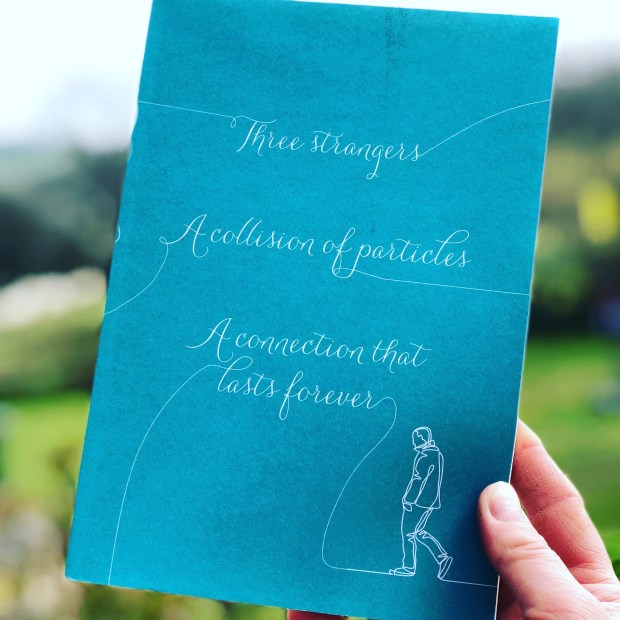
“A collision of particles, a change that lasts forever, so that even far apart they respond to one another.”

I was lucky enough to receive a proof copy of Entanglement from Harper Insider, and loved it so much I just had to write a blog post about it. However, this is not an easy novel to blog about, because it is so richly layered and complex. I was genuinely concerned about how I could possibly do it justice!

Entanglement tells the story of Charlie, Beth, Stella and John. The city of London, glorious and imposing, provides the ever present backdrop to their lives. It is throughout the book in landmarks, in street names, in the routes the characters take to different places and it is under London’s watchful eye that the novel unfolds.

However, it would be too simplistic to say that this is just a novel about the lives of four characters. Entanglement is so much more. Katy Mahood asks the question; are we really as separate as we believe? Isn’t there a chance that our lives may intersect with many more people than we realise and that our range of human interactions is far wider than we can comprehend.

The novel moves us through the lives of the four main characters. The narrative shifts between the relationship timelines of the two couples and we are party to the very different lives that they lead. Stella and John marry after Stella finds out she is pregnant. Charlie is in love with Beth, and despite being not exactly what her parents want in a future son in law, they marry too.

One of the many themes that is present throughout the novel is one which was very pertinent for me; that of the role of women in marriage and society. Stella is a creative and intelligent woman, whose academic and professional ambitions are sidelined while she at times, reluctantly fulfills the role of wife and mother. Ironically, her passion is writing about female writers whose voices need to be heard. She has to put her own hopes and dreams on hold while she supports John, a quantum physicist as his own academic career (a clever plot device that he is studying the field of entanglement) soars, culminating in him winning the coveted Fitzpatrick Medal for Physics.

Katy describes Stella’s frustrations at the limitations she faces, and deftly brings them to the surface of the novel. As a reader in 2018, I completely sympathised with the internal struggles she faces, as she longs for some sort of recognition as Stella, as oppose to a wife or mother. Unfortunately, Stella’s situation was commonplace then, and even more frustratingly, in 2018, this is still an issue which is relevant to many, many women.

Charlie meanwhile, has to deal with the aftermath of his sister’s death and his own injuries after the pub they were in is bombed. From the start of the novel, there is a charm and vulnerability to Charlie, who seems to be always working to create the stable family unit he lacked in his childhood. This is not to say he is perfect, but his mother’s alcoholism and the fact he has lost his sister, means that Charlie has experienced so much in his life already. He always seems to be just on the edge of losing his grip on the world around him. When Beth loses the baby they are both desperate for, Charlie starts to drink and stray from Beth.

As time goes on, Beth starts to correctly suspect that Charlie is having an affair. After she discovers she is finally pregnant, and gives birth to a daughter, she and Charlie decide to reconcile and try to raise Effie. Interestingly, as Charlie remains sober, Beth feels increasingly trapped in her marriage, frustrated by her teaching career and wanting to her academic potential.

Her desire to become a psychotherapist sees Charlie now in a position where he is unsure about his wife’s love and commitment to their marriage. All the time, Katy shifts the narrative focus between the characters, but it is always natural, and the dynamics flow easily between the different people, couples and world around them.

What distinguishes and makes Entanglement a must read novel, is the intricate plotting of the fleeting connections the characters make without ever truly knowing each other. Stella and John see Charlie in the aftermath of the bombing, Charlie sees Stella and John with their daughter, and in one scene, all the characters are at the same carnival. This is such a clever premise, that permeates the whole novel, but never seems staged or forced. They all interact and at points acknowledge each other, making snap judgements about the people they see in front of them, without knowing the reality of their lives.

Stella and John’s marriage is also tested, by a devastating illness that John suffers, and again we see how hard Stella works to ensure that everything stays intact, in spite of how unfulfilled she feels. For Stella, she finds her release in music, which also brings her finally emotionally back to John, as Charlie and Beth move further apart, connected only by Effie. As the novel progresses, and the characters age, we see how their lives shift and change, moving in ways that no one could have predicted.

Hope and Effie, the daughters of Stella and John and Charlie and Beth, move the novel towards its eloquent and hopeful conclusion, proving how powerful the theory of Entanglement is.

“Quantum entanglement, it turns out, is a good way in which to talk about marriage..because when two particles become entangled they remain connected even when they are far away from one another.”

Entanglement is one of those rare novels, which defies easy categorisation and is a fiercely intelligent and beautiful story of love, loss, the power of women, and the fleeting moments when we unwittingly connect with strangers. It is unlike anything I have ever read, and I was so entranced by it, that not only have I recommended it to everyone, I also went and bought a published copy!

I truly loved Entanglement, and hope you do too.

Larchfield by Polly Clark


IMG_0763.jpg

Polly Clark: Larchfield

Published By: riverrun

Buy It: here


What The Blurb Says:

It’s early summer when a young poet, Dora Fielding, moves to Helensburgh on the west coast of Scotland and her hopes are first challenged. Newly married, pregnant, she’s excited by the prospect of a life that combines family and creativity. She thinks she knows what being a person, a wife, a mother, means. She is soon shown that she is wrong. As the battle begins for her very sense of self, Dora comes to find the realities of small town life suffocating, and, eventually, terrifying; until she finds a way to escape reality altogether.

Another poet, she discovers, lived in Helensburgh once. Wystan H. Auden, brilliant and awkward at 24, with his first book of poetry published, should be embarking on success and society in London. Instead, in 1930, fleeing a broken engagement, he takes a teaching post at Larchfield School for boys where he is mocked for his Englishness and suspected – rightly – of homosexuality. Yet in this repressed limbo Wystan will fall in love for the first time, even as he fights his deepest fears.

The need for human connection compels these two vulnerable outsiders to find each other and make a reality of their own that will save them both. Echoing the depths of Possession, the elegance of The Stranger’s Child and the ingenuity of Longbourn, Larchfield is a beautiful and haunting novel about heroism – the unusual bravery that allows unusual people to go on living; to transcend banality and suffering with the power of their imagination.


What I Say:

There is a price to pay for hiding from the truth,

One can love, but never be loved. 

One can describe freedom, but never be free“.

Larchfield is a novel unlike any other I have read for a long time.  It is massive in its scope, ambitious in its creativity and tackles issues which would seem contrived in the hands of some authors.  It is also a novel where I read the first few pages and knew I was going to love it immediately.

This is the story of Wystan H Auden, the poet, who takes up a teaching post in Larchfield school,  Helensburgh in 1930 and Dora, who moves there with her husband Kit in the present day.  The narrative shifts between Dora and Wystan, and we uncover more about what each of them feels thinks and wants in their lives.

Dora and Kit move to a seemingly idyllic flat, with picture perfect gardens and a belief that this will be the new start they need as they prepare for the birth of their first baby.  From the outset, it is very apparent that Dora feels unnerved by the isolation and scrutiny her arrival in Helensburgh will bring.  Dora is not like other women in the village, who are entrenched in the teachings of the church and the intricacies of the tight knit community.  She is a creative and intelligent woman who wants to ensure that she forges her own identity and gains recognition for her academic work.  As she tentatively settles in to her new home, the occupants of the flat upstairs start to make it very clear that Dora is not welcome, as their son was allegedly promised the flat.

Wystan has retreated to Larchfield after a failed engagement, and is aware that his arrival at the school is preceded by his reputation as an enigmatic and mysterious poet.  He knows that his homosexuality is a facet of himself that he has to hide, and he is isolated from the world around him as he realises any admission of his sexuality could result in serious repercussions.

Dora and Wystan exist in two different decades, but are united in the loneliness and isolation they feel. Polly’s beautifully eloquent writing links these two similar souls, both poets, and at odds with the world around them.  When Dora is confined to bed after nearly losing her baby, her sense of estrangement and isolation from Kit and the world  becomes more and more resonant.   When their baby daughter is born prematurely, she is thrust into a world of motherhood she could never have envisaged.

Recognising a fellow unhappy outsider, Wystan becomes the protector of Jamie Taylor, a young boy at Larchfield who is subjected to bullying by his fellow pupils, and unwanted sexual attention from one of the teachers. Wystan is also increasingly aware of how at odds he is with the heterosexual, patriarchal ideologies and practices of the boarding school – he is expected to participate in a rugby match that causes him to comment:

This is the space that heroes occupy, that men understand.  Why does he not feel pride?  Why does he feel so lost?”

Wystan articulates in that single statement the very essence of his battle and the source of his unhappiness.  Wystan is hiding who he truly is in order to fit in, and is allowing his identity to be shaped by what others believe a man should be, increasingly to the detriment of his happiness.  He finds solace in visiting the beach, where briefly he can be at peace, and one day he launches a bottle with a message inside into the sea, asking for contact.

Polly Clark constantly asks us to question what is identity? How is it formed and by whom? For me, the poignant issue that ran throughout this novel was whether it was better to live the life you want, or the one that society thinks you should have?

Dora is thrown into motherhood and is dealing with it as best as she can.  She is on her own in a new town, with an increasingly distant husband.  Dora is having to deal with scrutiny from social services who have been called in after a tip off from Mo and Terrence, her neighbours upstairs.  Like Wystan, she is feeling isolated and overwhelmed, and her identity is being slowly eroded as she is identified solely as a mother or a a wife.  This is sharply brought into focus when Dora is visited by her friends, who refer to her as RJ, which is the name she wrote under, as she is forced to confront the fact that she is no longer that person.

 “Her existence, her visibility was uncertain even to her husband”.

As the pressure of caring for a premature baby, as well as her concerns about her husband encroach on Dora’s thoughts, she starts to hear a voice saying ‘I can win this’, but has no idea what this means.  Like Wystan, she finds comfort in visiting the beach, and finds a bottle with a message inside, and a phone number.  Dora calls it, and someone at Larchfield answers.  Dora has found Wystan, and he has found her.

This is the beauty of Polly’s writing.  The interaction between Dora and Wystan feels natural and totally believable.  They co-exist in each other’s worlds and the narrative shifts again to one where as the reader, you are not sure whether this is a an actual physical connection or a depiction of Dora’s deteriorating mental state.  As the lines between fiction and reality become blurred, we see Wystan finding love with Gregory and they escape for a holiday where they can truly be happy.

After a number of events, culminating in leaving her daughter in a car for a short period of time, Dora is removed from her family and given medical help,  In a beautiful and elegiac dream like sequence, Dora and Wystan step closer to a life together, but then she makes a choice about what direction she wants her future to take.

Larchfield is an exceptional novel, that captivates the reader from the first page and does a very rare thing. Not only does it sensitively and intelligently address many themes such as motherhood, identity and societal expectations, but Polly’s writing ensures you  completely empathise with Dora and Wystan and the challenges they face.  All you wish is for Dora and Wystan to find the happiness and contentment they truly deserve.

The Lido by Libby Page

IMG_0438.jpg

Libby Page: The Lido

Published By: Orion

The Lido is due to be published by Orion Books in the UK on 19th April 2018

What the Blurb Says:

Rosemary has lived in Brixton all her life, but everything she knows is changing. Only the local lido, where she swims every day, remains a constant reminder of the past and her beloved husband George.

Kate has just moved and feels adrift in a city that is too big for her. She’s on the bottom rung of her career as a local journalist, and is determined to make something of it.

So when the lido is threatened with closure, Kate knows this story could be her chance to shine. But for Rosemary, it could be the end of everything. Together they are determined to make a stand, and to prove that the pool is more than just a place to swim – it is the heart of the community.

The Lido is an uplifting novel about the importance of friendship, the value of community, and how ordinary people can protect the things they love.

What I Say: 

I have to admit, lately I had fallen a little bit out of love with reading.  I had tried tackling books that people have recommended, and picked up novels that I was told were worthy and should be read.  Nothing connected with me or had me wanting to keep turning the pages.

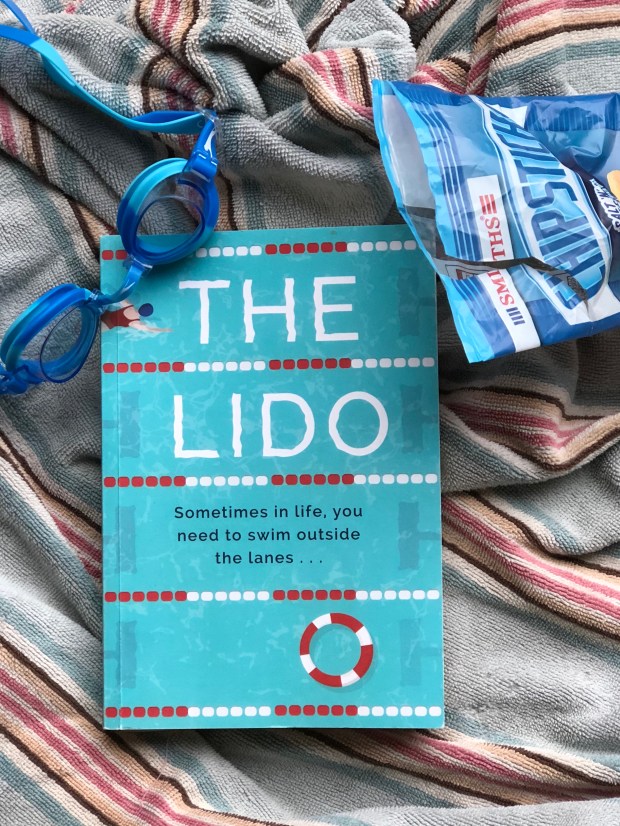
Then I was sent a copy of The Lido.

The Lido tells the story of Kate and Rosemary, two women who live in Brixton.  Kate has recently moved there, and in spite of having a job and a place to live, she feels utterly alone.  Like Kate, I moved to a big city after my graduation, and Libby absolutely describes the reality of being a young single person trying to find your way while everyone else seems to be so together and confident.  Everything for Kate is overwhelming, and she is having panic attacks too which start to make her wonder whether she has made the right decision.  People assume that for Kate, she should be at this point, living her best life, but really at the start of The Lido, she is struggling to work out what that is.

Rosemary, a fiery and determined 86 year old, on the other hand, has always lived in Brixton.  Although she is very much a part of the local community, she has lost George, her husband and love of her life.  Rosemary is now alone, and facing overwhelming loneliness for the first time.

Rosemary’s day is punctuated by her daily visits to the local Brockwell Lido, a place of calm and serenity in a bustling, loud and chaotic Brixton.  Libby’s writing astutely shows how when Rosemary swims there, everything slots back into place, and gives her back a sense of order and reconnection with the world and the people at the Lido.

After discovering that the Council intend to sell it off to a property development company, Rosemary knows instinctively that she must campaign to keep the Lido open for her and for the community.  Kate, a junior reporter at the Brixton Chronicle, is given the task of interviewing Rosemary after her flyers come to the attention of the editor.

Rosemary tells Kate that she will only agree to an interview if Kate swims there first.  It was interesting to see how although Kate was so uncomfortable at the thought of pushing herself out of her comfort zone, when she does, she understands the effect that Rosemary’s daily swim has on her and why the Lido is so important.  We are all different, with our own experiences, hopes and dreams, but when we are swimming, at our most basic and vulnerable, we are all the same, looking for that moment of peace.  The meeting between the two women starts not only a campaign to ensure that the Lido remains open, but also a powerful and uplifting friendship that is life changing for both of them.

As the novel develops, we learn about Kate and Rosemary’s lives, and how their past experiences have brought them to this point.  Kate remembers her connection with her elder sister Erin, and how when she learnt to swim, her parent’s marriage was crumbling around them.  For Rosemary, the Lido is utterly intertwined with the very essence of who she is and how she and George lived and loved.  To lose the Lido, would mean that Rosemary would lose her place in the world, and she would also lose her last physical connection to George.

However, The Lido is not just the story of Rosemary and Kate.  Libby Page makes sure that the story of the community around Brixton is heard too.   Her writing of the world around Kate and Rosemary is vibrant, evocative and is filled with descriptions that fill all your senses as you turn the pages.  The characters around Rosemary and Kate add to the power and momentum of the story and their willingness to help them campaign against the closure of the Lido shows how when a community comes together, amazing and unexpected things can happen.

By going out and about with Rosemary, Kate also starts to realise that she now has a chance to really start living, understanding that she can truly make her way in the world and be the person she wants to be.  Reporting the Lido campaign leads to Kate getting more stories and embracing the career she loves.  She also meets Jay, a photographer, and as they work with Rosemary to save the Lido, they realise that they have an attraction to each other too.

The story of Kate and Rosemary are entwined with the stories of those who use the Lido every day, and provides a far deeper and more interesting narrative than just two women taking on a property development company.  By telling the stories of those who use the pool, we understand not only how important the Lido is to the whole community, but that everyone has a story and only by talking to each other can we learn about them, forge friendships and keep our communities alive.

The Lido is simply an absolute joy to read.

In a frantic world where we are constantly bombarded with bad news, sad news and fake news, it is so refreshing to read a novel that has love, hope and compassion at its core. The Lido is about believing in yourself and understanding that the notion of family today is far wider than ever before, and that we all ultimately want to feel is that someone cares and is listening to us.  The story of Rosemary and Kate and the Brixton community who love the Lido will stay with me for a long time, and I hope when you read Libby Page’s stunning debut, that it stays with you too.

I was given a proof copy of The Lido, in exchange for an honest review of the book.

Thank you to @RebeccaGray at Orion Books for my proof copy and a chance to take part on my first ever blog tour.

You can follow Libby Page on Twitter here

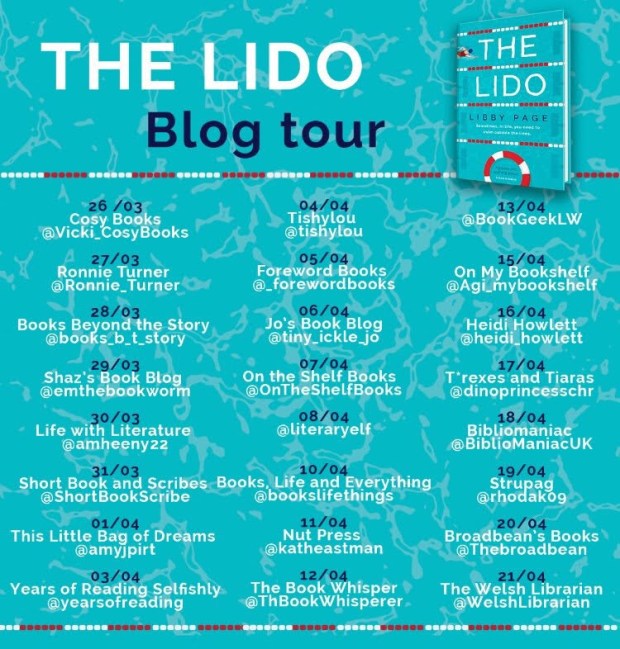
#LoveTheLido Blog Tour continues with these brilliant bloggers below:

IMG_0361.jpg