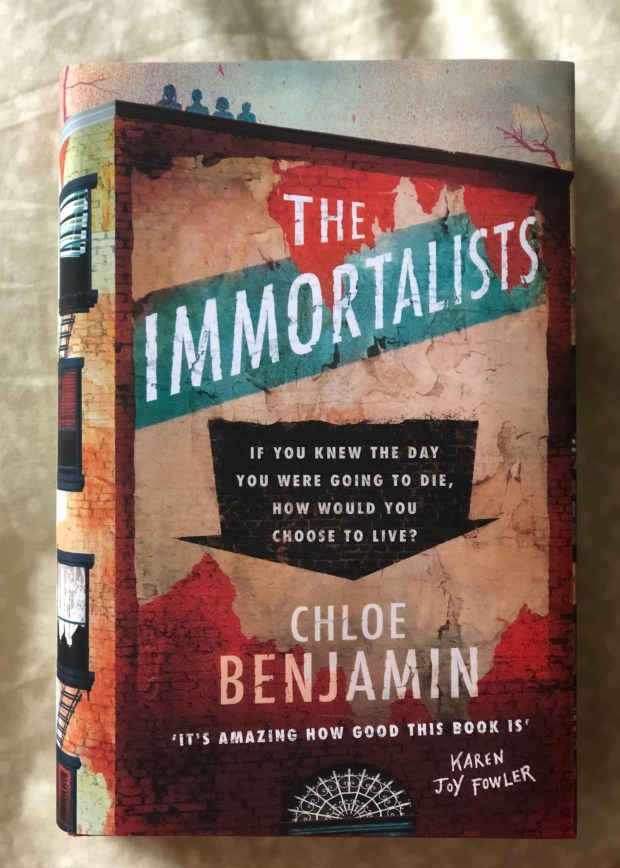
The Immortalists by Chloe Benjamin

IMG_0380.jpg

Chloe Benjamin: The Immortalists

Published By: Tinder Press

Buy It: here

What The Blurb Says:

It’s 1969, and holed up in a grimy tenement building in New York’s Lower East Side is a travelling psychic who claims to be able to tell anyone the date they will die. The four Gold children, too young for what they’re about to hear, sneak out to learn their fortunes.

Such prophecies could be dismissed as trickery and nonsense, yet the Golds bury theirs deep. Over the years that follow they attempt to ignore, embrace, cheat and defy the ‘knowledge’ given to them that day – but it will shape the course of their lives forever.

What I Say:

So this is how it started: as a secret, a challenge, a fire escape they used to dodge the hulking mass of their mother..” 

In 1969, the four Gold children, Varya, Daniel, Klara and Simon hear of a mysterious psychic woman who can tell you the date on which you will die.  Intrigued and perhaps needing some distraction from the endless summer days, they decide to seek her out.

One by one, the children are called in to hear the date on which they will die.  From that point on, we as readers watch what happens in each of their lives until the day of their death.  Chloe asks us all an important question.  If you knew the date of your death, how would you choose to live?

The four sections of The Immortalists follow each child – we live their lives with them, and see how the psychic’s revelation has impacted the decisions they make.

Simon, aware that he is expected to take over his father’s tailoring business, realises that he now has a chance to explore who he really is.  In finding the courage to move away from New York to San Francisco, he can finally embrace his sexuality and creativity.

“In New York, he would live for them, but in San Francisco, he could live for himself”.

Klara and Simon decide to leave New York together, and while Klara temps by day and practises her magic by night, Simon starts dancing professionally.  He takes classes at the San Francisco Ballet Academy, and it is there he meets Robert, another dancer, and they start a relationship and fall in love.  Acutely aware of his mortality, and that the date of his death is fast approaching, Simon becomes increasingly hedonistic and cheats on Robert numerous times.

As we know each character has been told the date of their death, I found that there was an extra dimension to the book.  We are as much in the dark as the characters as to how they will die, but we know it is going to happen. It made me turn the pages even faster, wanting to know, but not wanting to read how the Gold children pass away.

Throughout The Immortalists, Chloe cleverly weaves American history through the lives of our protagonists.  For Simon, he lives in a time of the AIDS epidemic, and eventually he falls ill and is hospitalized.  The first date the psychic has predicted comes true, and the Gold family loses their youngest son.

Klara won’t be a woman who is sawed in half or tied in chains -nor will she be rescued or liberated.  She’ll save herself, she’ll be the saw”.

Klara, who had been in San Francisco with Simon is distraught at his death, as she chillingly realises that the first prediction was right.  She now has to navigate her way through her life, aware that an imminent death sentence is hanging over her head.

Her passion has always been magic, and attempting to gain recognition in a heavily male dominated world takes all her energy and determination.  When she meets Raj, they go into business together, she can concentrate on refining her magic, he attempts to further her career by booking different venues and assisting her off stage.

What becomes clear even as they fall in love and have a baby called Ruby, is that Klara is frustrated by Raj’s attempts to determine her life.  Perhaps she is already aware that she has a time limit set on her existence, and she wants to be in control of the time she has left. Raj pushes Klara to work in Las Vegas, a situation she is clearly uncomfortable with, and she realises her daughter will have to live without her, and grieves all the milestones she will miss.  As the date of her death approaches, she is convinced she hears Simon trying to communicate with her.  Klara decides to remove herself from her family and again the psychic’s next prediction proves to be true.

Klara and Simon left their siblings Varya and Daniel back in New York, and they have had to change their lives in order to be around to care for their mother.  I wonder if they hadn’t visited the psychic, would this be where the remaining Gold children found themselves – tied to the family home and resentful of Klara and Simon’s freedom.

As the novel moves on, we learn that Daniel is in contact with Raj and Ruby, and that they have continued Klara’s act and are now millionaires.  Daniel struggles with his relationship with them, he does not trust Raj, and is jolted by how much Ruby reminds him of Klara.  He has been demoted at work, and as the day of his death approaches, he becomes consumed with the idea of finding the psychic who put the whole chain of events into motion.

Daniel works with Eddie O’Donoghue, a police officer known to Klara and Simon, who tells him that the woman was part of a team of con artists, but they are unable to trace her.  Feeling he has nothing to lose, Daniel decides to try to find her, to find an answer as to whether she really can predict their deaths.  If she truly is a con artist, than maybe her predictions are baseless and he has a chance to change his life and its ending.

As he searches desperately to find the woman, called Bruna, we feel his anguish and mounting exasperation as he attempts to get the answers he wants to find before his death.  Eddie and Daniel’s wife Mira find him, holding a gun to Bruna as she chants;

“Akana mukav tut le Devlesa”

“I now leave you to God”

The final Gold child, Varya, has decided that her life is going to be very different from that of her siblings.  Instead of living, Varya merely exists.  She works at the Drake Institute for Research on Ageing, which is invested in researching conditions such as Parkinsons, heart disease and cancer.  The Institute’s aim is to increase human longevity, something we recognise as very poignant for Varya, especially considering how her siblings passed away (and no I am not going to tell you..!).

Varya has sealed herself off from the world around her, only interacting with her mother.  She does not have friendships or relationships, her whole life is planned and organised with meticulous detail, her apartment is sparse and sterile, devoid of any personality.

Fear that she had no control, that life slipped through one’s fingers no matter what”.

A young journalist called Luke arrives at The Institute and Varya finds herself inexplicably drawn to him, confiding in and talking to him about herself and her life.  As she talks, she starts to examine the choices she has made in light of the date the psychic gave her, and wonders whether she is really doing the right thing.  A devastating revelation from Luke, sends Varya completely off course, questioning everything she believed to be her safe compartmentalised reality.

Varya is responsible for a high-profile twenty year study at the Institute, which looks at the effect of dietary choices on monkeys.  Against all her professional judgement, she finds herself empathising with Frida, one of the monkeys in the controlled diet group and releases her with disastrous results.

Fired from her job, and reeling from Luke’s story, Varya now has a choice.  To retreat from her life and the family she has left, or to take a leap of faith, embrace her mortality and truly live.

Simon, Klara, Daniel and Varya are by no means perfect.  They have their faults, their foibles and their issues, but they are human.  Chloe’s skilful writing portrays a family that we can empathise with, people we can understand and a dilemma we can all relate to.

The Immortalists is a novel that picks you up from the first page and hurtles you along with the life of the Gold children.  The writing is tender, eloquent and achingly poignant. It provokes not only intense reactions to the story, but made me re-examine the way I live my life too.  It made me realise that I would rather look back on my life and know that I have given it my all, instead of wondering “what if?”.

Simon, Klara, Daniel and Varya are three-dimensional, living, loving and wonderful characters.  Every single one of them made me want to reach into the novel, bring them close and tell them that we understand the choices they have made and the lives they have lived, and that we love them for it.

The Immortalists is already one of my favourite books of 2018, and I truly loved it.
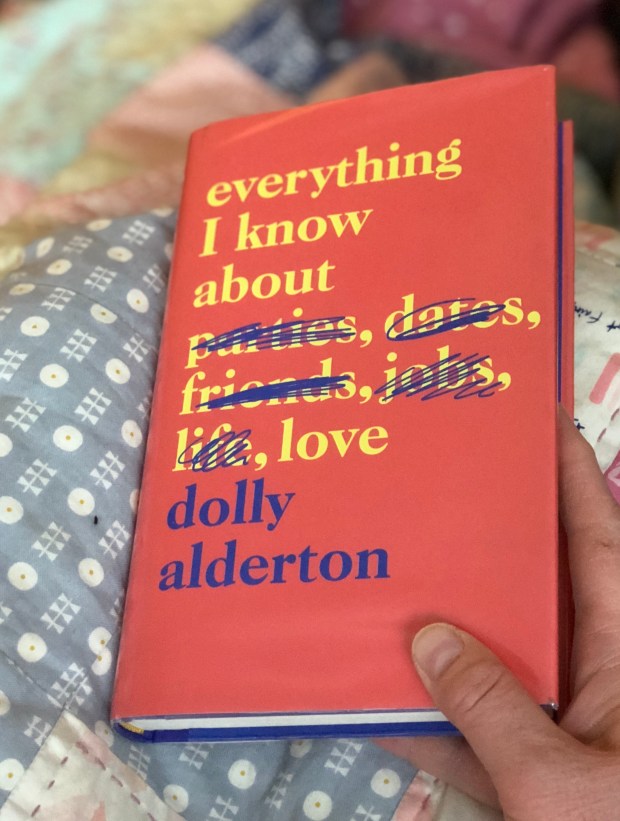
everything I know about love by Dolly Alderton

IMG_0257.jpg

Dolly Alderton: Everything I Know About Love

Published By: Fig Tree

Buy It: here

What They Say:

When it comes to the trials and triumphs of becoming a grown up, journalist and former Sunday Times dating columnist Dolly Alderton has seen and tried it all. In her memoir, she vividly recounts falling in love, wrestling with self-sabotage, finding a job, throwing a socially disastrous Rod-Stewart themed house party, getting drunk, getting dumped, realising that Ivan from the corner shop is the only man you’ve ever been able to rely on, and finding that your mates are always there at the end of every messy night out. It’s a book about bad dates, good friends and – above all else – about recognising that you and you alone are enough.

Glittering with wit and insight, heart and humour, Dolly Alderton’s powerful début weaves together personal stories, satirical observations, a series of lists, recipes, and other vignettes that will strike a chord of recognition with women of every age – while making you laugh until you fall over. Everything I know About Love is about the struggles of early adulthood in all its grubby, hopeful uncertainty.


What I Say:

“Because I am enough.  My heart is enough. 

The stories and the sentences twisting around my mind are enough.”

Let me say from the start, because I am always upfront about my reviews, that I don’t know why I chose to pick up this book other than I had heard lots about it on Twitter, and it was on the ‘New Books’ Shelf in my local library.

I didn’t think that I was in any way the target demographic.  I am a 47 year old Mum of two, who has been married to the same man since 1996, and have been with Mr Reynolds since 1992. Even writing that down surprises me!  Dolly is 29 and as she explains in her book, has not been in a relationship for longer than two years.

So, I thought, we have nothing in common.  I was sure I would read a couple of pages and disregard it as another self-indulgent memoir that was only on my radar due to the power of social media.

If I tell you that I started this book at six thirty this morning, and finished it by midday,  then you can probably guess that I completely misjudged everything about this book.

Dolly Alderton, if by any chance you ever read this blog post.  I humbly apologise to you and have only one thing to say to you.  Thank you – this book resonated with me on every level.

Everything I Know About Love is Dolly’s memoir, explaining what she has learned through her experiences and what knowledge from different points in her life she can share with us.  What makes this book stand out, and I think relatable for every woman, is that this is not some gloating, Instaperfect look at a privileged life that we really couldn’t care about.

Dolly’s writing and her narrative tone reminded me very much of Jilly Cooper’s style, but this is meant as a huge compliment as I love the deftness of touch and humour that both women have in their writing.  The addition of recipes and the asides such as the excruciating baby shower and hen do emails, serve to lift this book way above the usual memoirs with a horrifying realisation that we have all been party to something like this.

Dolly, and her wonderful friends that we meet – (I guarantee you will especially love  Farly, Dolly’s best friend) are normal human beings.  They make mistakes, they drink too much, they sometimes make bad life choices, worry about paying their bills and get themselves into situations that made me wince a few times, but ultimately they embrace life.   Dolly and her friends love each other without question.

As many of us now realise, your family are not always those related to you by blood, they are the ones who are there to listen to your latest relationship disaster, to make sure you have food in your fridge, to be there when life seems to be overwhelming and to sometimes say nothing at all.

Dolly is unflinchingly honest in her memoir.  No topic is off-limits, she is brutally frank as she tells us of her love of alcohol, her online dating disasters and her route to therapy as she struggled to find her way in today’s increasingly pressured society.  Make no mistake, she is not looking for our pity or attention, instead she is saying to us, it is ok for us not to be perfect.  Just because someone might seem to have it all, and appear to be leading the life we wished we had, it doesn’t mean they are any happier than we are.

Everything I Know About Love is the book I wish I had when I was in my twenties.  I too tried to navigate my way through the complexities of being a young woman, but my time was in the early nineties.  I had done the expected thing of A levels and then Leeds University, but nothing prepared me for real life afterwards.

I realised then, and more so now that like Dolly, my friends were truly everything, and together we believed we were invincible and would have done anything for each other. Dolly’s book is a love letter to female friendship, to understanding that you may be in and out of each other’s lives as time goes on, but that you will always be bound by the love, laughter and tears you have shared.

Everything I Know About Love is a beautifully written, razor-sharp and stunning memoir.  I will be pressing a copy in to my nieces’ hands as soon as they are old enough, and will tell them that they should appreciate the women around them, relish the friendships that will endure, and know that they are always enough.

I loved it.


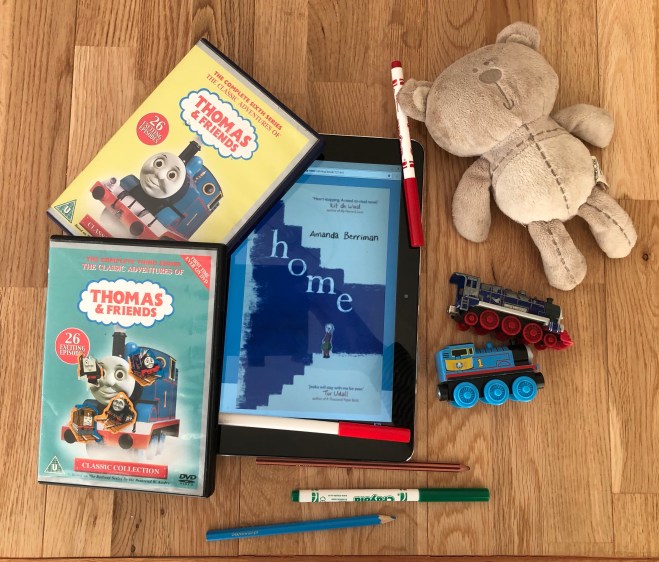
Home by Amanda Berriman

IMG_0008.jpg

Amanda Berriman: Home

Published By: Doubleday

Buy It: here

What The Blurb Says:

Jesika is four and a half.

She lives in a flat with her mother and baby brother and she knows a lot. She knows their flat is high up and the stairs are smelly. She knows she shouldn’t draw on the peeling wallpaper or touch the broken window. And she knows she loves her mummy and baby brother Toby.

She does not know that their landlord is threatening to evict them and that Toby’s cough is going to get much worse. Or that Paige, her new best friend, has a secret that will explode their world.

Thank you to Netgalley for providing me with an e-book preview copy of Home in return for an honest review.

What I Say:

From the very first sentence, you know Home is going to be different to any novel you have read before. Our narrator is a four and a half-year old girl called Jesika, and we are seeing the world through her eyes, misunderstandings and innocent narrative. The written language with the spelling mistakes and misheard words, means that this is a unique viewpoint and an intriguing narrator that we are party to.

As I realised that I was reading the thoughts and feelings of a four-year old, I was lulled into a false sense of security that the Home of the title was going to be a warm and friendly place and an Instaperfect existence.

Jesika is making her four-year old way in the world. Her naivety and lack of experience means that she tells us about her day-to-day life in a very matter of fact way, whilst we as grown ups are able to fill in the blanks of her understanding with the knowledge and experience we have gained. We can understand the things that Jesika is unable to comprehend, and it makes it very uncomfortable reading as we gradually realise what Jesika can see happening.

What works so consistently well in Home is how as the reader it makes you remember what it was like to be four years old.  How your parents and home life was your world.  That they were everything to you, and all you wanted was for them to know how much you love them. Without them you feel rootless. How you love it when you laugh together, and you can make them laugh, but the thing you hate the most is when your parent is shouting and you don’t know why and you would do anything to make it stop.

Home is not by any means an easy read. It brings us face to face with the uncomfortable reality that life in Britain for a young single mother and her family on the breadline is far from idyllic. Jesika, her mother Tina, and her baby brother Toby live in a flat which is full of mold, a boiler that doesn’t work and a landlord who cares nothing for them or the state of the flat he has rented them.

The disrepair of the flat causes Tina and more especially Toby to be constantly unwell, and unable to work, Tina and her two children are living day-to-day, hand to mouth. Her husband has left her to return to his native Poland, and she is alone, navigating life, dealing with an inquisitive four-year old and a young toddler who constantly make demands on her. Tina gets through the grind and stresses of every day purely because she has no choice. She, like so many people in the United Kingdom today is caught in a benefits system which cannot operate outside the parameters of a heavily bureaucratic script. It does not see a young woman who desperately needs help, it sees her as a statistic to be counted and a case to be closed.

For Jesika, her session at preschool is everything. For a brief period of time, she can simply be a four-year old and live in the moment and forget everything else.  She is desperate for a friend, and when she meets Paige, she realises that she has finally found someone to play with.  Even though Paige blows hot and cold with the friendship, and at times is downright hostile to Jesika, Jesika sees nothing but the good in someone, and longs to make a connection.  When it transpires that Paige’s Mum and Uncle are Tina’s former school friends, it seems that Jesika finally has a new world of friendships to explore.

This is where Home starts to lead us into much darker territory.  As the events unfold, we are drawn into a story which is extremely harrowing for us as adults to read, but we are also aware that an innocent four year old child is the one going through this. Amanda Berriman’s superb writing means that we are totally consumed by Jesika’s story, and we feel that we have to read this, to be present alongside Jesika to ensure that everything will be okay for her in the end.

A particularly poignant section in the novel for me, is when Tina and Toby are admitted to hospital, and faced with no family to help, Tina has to make the decision for her daughter to be taken into temporary foster care.  It was absolutely heartbreaking to read, the sense of powerlessness that Tina felt and the bewilderment that Jesika has as the person she loves the most is choosing tho send her away.

Jesika may be an unusual narrator, but she is also a brave and fearless one, who wants to protect those around her and keep her family intact. Her reluctance to tell Tina what is happening to her and Paige for fear of what could happen to them is heartbreaking to read, as you understand how overwhelming this must be for a four year old to deal with.

Home does not shy away from making us face many difficult issues, but it is also a novel filled with love and a sense of community.  For so many of us today, we don’t have our family on our doorstep. Today, more than ever, we understand that family is not necessarily blood relations, but it is often our friends who understand what we are going through and by supporting us with time, love and little gestures, it can make all the difference to how we view the world around us.

I wish this novel could be pushed into the hands of all the professionals who work with families like Tina, Jesika and Toby.  Home would help them truly understand what life is like for so many people through no fault of their own.

The resounding message I took from this astounding novel is one we can all relate to. Jesika simply wants to live happily with her Mum and Toby in a place she can truly call Home.

I loved it.

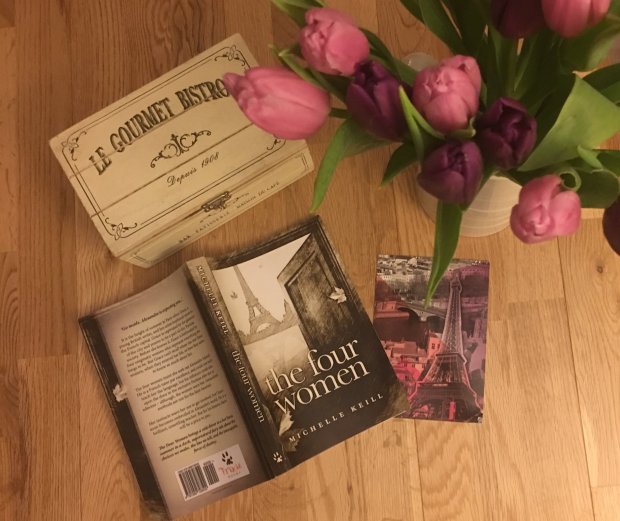
The Four Women by Michelle Keill

IMG_7211.jpg


Michelle Keill: The Four Women

Published By: Trixie Books

Buy It: here


What The Blurb Says:

‘Go inside, Alexandre is expecting you…’

It is the height of summer in Paris when Grace, a young British writer, and her artist boyfriend move to the French capital. Grace is captivated by the glamour of the city and yearns to be part of chic Parisian society. Before she knows it, Grace is befriended by four enigmatic women who represent everything she longs to be. But Grace can’t recall where she met these women, when they entered her life, or how they seem to know so much about her.

The four women insist she seek out Alexandre Martel. He is a French tutor par excellence, and could not only teach her the language, but his influence could also open the door to the exclusive Parisian elite she so admires – although, the women warn her, Alexandre’s methods are not for the faint-hearted.

Her instincts warn her not to get involved, but Grace soon becomes embroiled in Alexandre’s world. He is a brilliant, unsettling teacher. But for his lessons there will be a price to pay…

The Four Women brings a cold shiver to a hot Paris summer in a dark, supernatural fairy tale about the choices we make, the lies we tell, and the inescapable force of destiny.

What I Say:

I was given a free copy of The Four Women by Michelle Keill in exchange for an honest review.

As regular readers of my blog know, I am always honest about the books I review, and when Michelle asked me if I would like to review her novel I have to admit I was slightly nervous.  What if I didn’t enjoy the book, or found it difficult to review?

Fortunately, this was not the case!  The Four Women is a unique novel which brings to the fore a number of interwoven themes, such as love, passion, relationships and confidence, in an intriguing and layered read.

I stared at the name on the card.  Alexandre Martel.  The name I will never forget.”

Grace and Mats have decided to stay in Paris for as Mats follows his passion of painting, and Grace attempts to write a novel.  Although Grace enjoys being in Paris, she finds not being able to speak the language a source of frustration and longs to feel the same sense of belonging that Mats so obviously does.  Mats finds Paris a source of inspiration, and his output of paintings becomes prolific, whilst Grace cannot put a word on the page.  Almost from the start, the reader can sense there is some sort of disconnect between Grace and Mats, and that the different experiences they are having in Paris, is serving to pull them further apart.

One day, while Grace is in a restaurant, she notices four women who start talking to her and seem to pity her for her inability to master their language.  The way that they were introduced added to the air of mystery, I felt that Michelle’s writing immediately added a sense of unease – they seemed to appear out of nowhere, and the slightly distanced air they have makes them seem other worldly almost.

They encourage Grace to approach the mysterious Alexandre Martel, a French teacher who is renowned for his unconventional teaching methods and the exclusivity of his lessons.  If you receive lessons from Martel, you are immediately given access to the exclusive Parisian social circle that so many people long to be part of.

Mats tells Grace that he has been commissioned by a benefactor, Madame Dumas to paint for her, but he refuses to tell Grace the details, and asks that she does not look at his work. As Grace says;

It was his first secret, and my last promise”.  

As Grace finally finds the courage to go and find Martel, she is faced with an imposing and unwelcoming building, that adds only to the mystery surrounding him.   The first lesson she attends is far from conventional.  Martel’s method of learning French is to dance with Grace, spinning her round the room as he speaks to her.  In that moment, she feels almost as if she is having an out-of-body experience, and she is aware of the presence of the Four Women in the room with them.  It is as if she is starting to lose her grip on reality.  From that moment, Martel has a connection with Grace, and that whether she knows it or not, he will start to consume her day-to-day life.

The really interesting idea is that Martel, Dumas and the Four Women are inextricably linked, and that is something that is both a central theme and is present throughout the whole book.  When Grace voices her reservations to the ever-present Four Women, they hint that her refusal to work with Martel could lead to Mats losing his commission.

Mats and Grace are trying to maintain their relationship as Martel and the Four Women are in the background of their life in Paris.  The Four Women always seem to be around wherever they are, and Grace’s thoughts are filled with the mysterious French teacher whose methods and behaviour are affecting her in more ways than she can admit to.  She loves Mats, and wants a future with him, but is aware that she is under the spell of Martel, and that he has forced her to confront something within herself that she does not want to.  The Four Women seem to act as Grace’s conscience, articulating the thoughts that she does not want to face.  They know that Martel has a hold on her, and it feels as if they are circling Mats and Grace, ready for the inevitable collapse of their relationship.

In the meantime, Grace’s neighbour, Brigitte, tells her that she is sure she has heard crying in their apartment, and Grace is obviously concerned for Mats’ welfare and whether the commission is as innocent as he would have her believe.

Alexandre invites Grace and Mats to his party, which is an honour not afforded to many, and something that they are far from comfortable with, but feel that they should be seen to be there.

Ironically, although Grace senses that she and Mats are far from secure in their relationship, it is at this point that Mats decides to propose.  As they arrive at the party, Mats feels unable to go in with Grace, and although she initially refuses to go without him, Mats persuades her that it is the right thing to do.  He walks away from her and we know that it is forever.

The party feels claustrophobic and has a sense of foreboding as soon as Grace enters, and the Four Women have also played a cruel trick on Grace by convincing her that she has to wear a green dress, when of course the dress code is black dresses for the women.  She already feels self-conscious and out-of-place but inexplicably she has to keep walking through the rooms to find Martel.

When Grace does find him, it unleashes a dramatic chain of events which Grace could never have predicted, and spins the novel in another direction that I never saw coming, but serves to cleverly slot all the events of the book into place.  Grace has been drawn into a world which has left her battered and bruised, but the overriding feeling is that she is not Martel’s first victim and she certainly won’t be the last.

The Four Women is a sharp, crisp and unsettling novel, which pulled me in from the first chapter, and made me want to find out the disturbing connection behind the Four Women and Alexandre Martel.  It is a credit to Michelle’s clever writing that I could not predict what was going to happen, and that I really enjoyed reading The Four Women to find out.


Little Fires Everywhere by Celeste Ng

IMG_7083.jpg

Celeste Ng: Little Fires Everywhere

Published By: Little, Brown

Buy It: here

What The Blurb Says:

Everyone in Shaker Heights was talking about it that summer: how Isabelle, the last of the Richardson children, had finally gone around the bend and burned the house down.

In the placid, progressive suburb of Shaker Heights everything is meticulously planned – from the layout of the winding roads, to the colours of the houses, to the successful lives its residents will go on to lead. And no one embodies this spirit more than Elena Richardson, whose guiding principle is playing by the rules.

Mia Warren, an enigmatic artist and single mother, arrives in this idyllic bubble with her teenage daughter Pearl, and rents a house from the Richardsons. Soon Mia and Pearl become more than just tenants: all four Richardson children are drawn to the alluring mother-daughter pair. But Mia carries with her a mysterious past, and a disregard for the rules that threatens to upend this carefully ordered community.

When the Richardsons’ friends attempt to adopt a Chinese-American baby, a custody battle erupts that dramatically divides the town and puts Mia and Mrs. Richardson on opposing sides. Suspicious of Mia and her motives, Mrs. Richardson becomes determined to uncover the secrets in Mia’s past. But her obsession will come at unexpected and devastating costs to her own family – and Mia’s.

What I Say:

” …sometimes you need to scorch everything to the ground and start over.  “

Little Fires Everywhere was never a planned blog post. Quite often, I read a lot of books ‘behind’ my blog. I just want to read books without the pressure of trying to write down pertinent points and punchy quotes to put into a post.

However, sometimes, a novel comes along that knocks you sideways, and the only way you can get over not being able to read it anymore is to tell everyone else how wonderful it is!

From the first chapter, where the family house of the Richardsons is burnt to the ground, seemingly by their youngest daughter, Little Fires Everywhere drew me in and kept me there.

It is at first glance a book about two families – the Richardson and the Warrens.

The Richardsons, who live in the quaintly named Shaker Heights have it all. Two successful parents, a brood of children who are over achieving in every nauseating Round Robin Christmas Newsletter way possible, and an ordered, chocolate box existence that most of us can only dream of.

Mia Warren, a free-spirited, nomadic artist and her daughter Pearl, arrive in Shaker Heights to take up the rental of the Richardsons’ second house.  From that moment on, the two families become intertwined in a way that neither could have foreseen – perhaps the first little fire of the title has been lit.

Elena Richardson is initially welcoming to Mia, seeing her as a charitable cause to take under her wing.  Pearl becomes great friends with the Richardson children and relishes the stability and apparent normality that she longs to have in her own home.  There is no doubt that she loves her mother and has accepted that they move when and where her mother decides, but it is evident that Pearl longs for something more traditional, a secure base for her to develop and mature.

Similarly, Elena’s youngest daughter, Izzy, seems at odds with her family.  Constantly restless, she seems confined by the rigidity and conventionality of Shaker Heights, and her family’s reputation and place in it.  Izzy strikes up a close friendship with Mia, and as Pearl becomes more a part of the Richardsons family, Izzy falls into Pearl’s place with an ease that surprises even herself.

The stifling conformity of Shaker Heights is threatened when Elena’s friends, the McCulloughs have to go to court to keep their baby Mirabelle or May Ling Chow, that they wish to adopt.  Mirabelle was found abandoned outside a fire station, and given to the McCulloughs who were looking to adopt.  Bebe, May Ling’s biological mother and a friend of Mia, wants to take her baby home. This shocking turn of events reveals that Shaker Heights is not used to having to confront something this inflammatory in their perfect world and no one seems quite sure how to handle it.

Should Mirabelle stay with the McCulloughs who can offer her everything she needs in this privileged, monied life, or should she be handed back to her biological mother who can give May Ling the cultural and emotional roots she needs?

We see the emotions, background and daily realities of both the birth and adoptive mothers, and feel enormous empathy for both.  At the heart of it all, Celeste portrays them purely and simply as women fighting for the child they feel is rightly theirs.

“To a parent, your child wasn’t just a person: your child was a place, a kind of Narnia, a vast eternal place where the present you were living and the past you remembered and the future you longed for all existed at once.”

The volatile custody battle is perhaps the next spark of the little fires everywhere –  an incendiary moment that sets Elena against Mia, and Izzy against Elena as they face each other on opposite sides of the custody battle.  Elena feels increasingly frustrated that she cannot ultimately control the outcome of the trial, and sets about trying to find out as much as she can about Mia.  It becomes her mission to ensure that Mia is humiliated and shamed into leaving Shaker Heights. As Elena investigates Mia’s past, revelation after revelation comes tumbling out, which show us why Mia is who she is today, and why she and Pearl live the lifestyle they do.  It also means that Elena has to confront some unpleasant realities about her family and her own behaviour too, which is something she perhaps had never really faced.

Little Fires Everywhere is an epic contemporary novel about so many different things.  It is about family, race, motherhood and the choices we are forced to make in times of crisis.  Every character in the novel has important decisions to make which have far-reaching impact and will change the world they inhabit forever.

Celeste never forces an opinion on us, she presents us with the characters and their dilemmas, and as we live through them with them, we learn more and more about why they do what they do, and we are made to understand that things in life are not always black and white for any of us.

Little Fires Everywhere is a brilliant and thought-provoking novel to be savoured, read slowly and recommended to everyone.

I loved it.

Elmet by Fiona Mozley

IMG_6959.jpg

Fiona Mozley: Elmet

Published by: J M Originals

Buy It: Here


What The Blurb Says:

Daniel is heading north. He is looking for someone. The simplicity of his early life with Daddy and Cathy has turned menacing and fearful. They lived apart in the house that Daddy built for them in the woods with his bare hands. They foraged and hunted.

Cathy was more like their father: fierce and full of simmering anger. Daniel was more like their mother: gentle and kind. Sometimes, their father disappeared, and would return with a rage in his eyes. But when he was at home, he was at peace. He told them that the little copse in Elmet was theirs alone. But that wasn’t true. Local men, greedy and watchful, began to circle like vultures. All the while, the terrible violence in Daddy grew.

Brutal and beautiful in equal measure, Elmet is a compelling portrayal of a family living on the fringes of contemporary society, as well as a gripping exploration of the disturbing actions people are capable of when pushed to their limits.

What I Say:

“I still smell embers.  The charred outline of a sinuous wreck.  I hear those voices again..”

Elmet had been on my ‘Must Read’ Pile for a long time.  I was entranced by the premise, of a family living outside society, whilst living within their own rural idyll.  After having read it in a weekend, I am asking myself why it took me so long to pick it up and read it!

Quite simply, Elmet is one of those books that once you start reading, you start bargaining with yourself – ‘Just one more chapter, one more page, five more minutes’, because it is absolutely impossible to put down.

Beautifully written,  it has the juxtaposition of the family  – Daddy, Cathy and Daniel, living contentedly in a house they have built, pitched against the underlying menace of the brutality their father can inflict on others when pushed to protect those he loves, and a world that doesn’t understand the choices they have made.

The family spend their days looking after the land where they live, farming and maintaining their property and generally existing in peace.  Daddy makes money for the family by taking part in fights, a violent side of him they are aware of but do not see, as he attempts to keep the two sides of his life separate.

Cathy is not constrained by what society expects of her – she lives her life as she wishes, free from the ties of school life, choosing her own path at a pace that suits her and always has that element of unpredictability and wildness at her core.

Danny on the other hand, quieter and more reticent than Cathy, takes on the majority of the domestic tasks, and seems to find his happiness in providing for and caring for his sister and Daddy.

Fiona’s detailed description of the rural idyll that the family find themselves in, almost lulls the reader into a sense of calm and peace.  Although it is a hard life, it seems a simple, uncomplicated one, and I have to admit I was at times jealous of them, and their ability to live without the constant need to be part of the overwhelming society we live in.

This false sense of security is testament to Fiona’s talent as a writer, as the arrival of the Price family into the landscape immediately creates a sense of unease and foreboding.  You know that things are never going to be the same again, and with that, comes the realisation that the Prices will be the catalyst to destroy the life the family have so carefully created.

Mr Price arrives with his two sons, claiming that he is the landlord and that they are his tenants. Daddy is aware that Price has the police and the council in his pocket, and that he is facing a huge battle against this powerful family to maintain the status quo he has fought so hard to create.

Cathy and Danny are now faced with people intruding on their landscape, but instead of fearing them, they find them intriguing, a side of life from which they have been shielded.

..though I loved watching birds and beetles, watching human beings was the thing

I loved the best.”

Realising that their peace is threatened, Daddy comes up with a plan to exact revenge on Price, and persuades Cathy and Danny to infiltrate the teams that Price uses to farm the lands, and to get the workers to come forward and tell their stories.  In doing so, there is a new community that forms, a group of people who have been treated badly by Price, and Cathy, Danny and Daddy find themselves part of that.

What I also found really interesting was the way in which Danny explores his sexuality.  He is free from the confines of a narrow-minded world, where he can truly express himself.  He has no knowledge or constraints on how he should behave and I thought that was really liberating and a clever way to make us realise how defined we are by what society expects.

As Danny says,

Nor did I have any understanding that there were parts of the body

that held a different worth”.

The tension in the novel starts to build as Price realises that his hold on his world is being threatened.  The final chapters are unflinchingly brutal and are at times difficult to read, but this is never gratuitous violence.  The actions of the characters caught in this world are reactions to the fact that their existences are being threatened, that what they thought they knew will be forever changed.

Fiona Mozley has written a quietly brilliant masterpiece which deserves every piece of praise which has rightly been heaped on it.

Elmet is a superb, thought provoking novel, filled with both the beauty and unrelenting harshness of the natural world. It shows us if we are determined, how easily we can live contentedly outside the confines of society, and that it is those that wish us to conform who are the biggest threat to our happiness.

I loved it.


The Other Woman by Laura Wilson

IMG_6805.jpg


Laura Wilson: The Other Woman

Published By: Quercus

Buy It Here: here


What The Blurb Says:

Shortly after Christmas, a message arrives at Sophie’s house, scrawled across her own round robin newsletter: HE’S GOING TO LEAVE YOU. LET’S SEE HOW SMUG YOU ARE THEN, YOU STUPID BITCH. Perhaps she should ignore it, but she ignored the last one. And the one before that. Now it’s time to take action.

But when a simple plan to identify and confront the other woman goes drastically and violently wrong, Sophie must go to extreme lengths to keep her life and her family together – while never letting on her devastating secret.

What I Say:

Trying to decide what to read next can sometimes be overwhelming.  Should you read a book you have had on your shelves for ages, or maybe look online to find out what everyone else is reading.  Sometimes, it is just as simple that your next read jumps off the shelf and into your hands.

The Other Woman was one of those books.

Sophie Hamilton, and her husband Leo, live the lives that most of us can only dream about.  They have a gorgeous house, wonderfully perfect children, a yacht and successful careers.

Sophie sends out an annual Round Robin family newsletter, only this time one is returned with the message:

He’s going to leave you. Let’s see how smug you are then, you stupid bitch.”

I have to say, initially I didn’t warm to Sophie – her life seemed just a little too perfect and she was one of those Instaperfect People who annoy you, but you can’t help but scroll through all their photos!

The very fact that she had a round robin newsletter was enough to make me wonder whether I could warm to her and read this book!  However, this makes Laura’s novel even more beguiling, as in a strange sort of way, I revelled in the fact that Sophie found herself in a situation that was so out of her comfort zone.

What also confused me was that Sophie hid the letter from her husband, Leo.  Why didn’t she show him straight away?  Why not be upfront about it?  Sophie knows that if she shows him, she opens up a whole Pandora’s box of ‘What If’s?”.

If she is right, he could choose to leave her to be with the Other Woman and the comfortable and enviable lifestyle she leads will come crashing down around her ears.  If she is wrong, Leo could be so upset with her that he could leave her anyway and she will be in the same predicament.

Plagued by doubts, Sophie sets out to search Leo’s office to try to find some trace of evidence.  She finds a tissue with some lipstick on it, but the lipstick is not hers…

To add further suspicion, Sophie’s cleaning lady finds a camisole in the family’s washing that doesn’t belong to anyone.  Leo has a flat in London, so Sophie heads there to see if she can find anything else, and is unable to get in as the locks have been changed.

This is why Laura’s novel is so good, because the evidence starts to stack up against Leo so early on.  You are convinced that the Other Woman exists, and that Sophie’s desire to uncover Leo’s betrayal is something that we all would do when faced with the prospect of losing the comfort and safety of our home life. Sophie’s dilemma is also more acute because we learn about her unsettled childhood and perhaps her desire to maintain the status quo is a consequence of an unstable upbringing.

As a reader, you really feel Sophie’s sense of bewilderment and sense of disbelief that something like this could possibly happen to her.  However, don’t think for one minute that Sophie is to be pitied.  She continues living her life as normally as possible, all the time wondering what the hell her husband has been up to.  As she says;

“A perfectly ordinary Saturday morning.  Except it wasn’t”.

When Sophie makes a second visit to Leo’s flat, a woman emerges, but it is someone who she knows.  Her worst fears have been realised, threatening the life she holds dear and the social standing she desperately wants to cling onto.

“Pain, like a block of ice, lodged in her chest.  The world slowed, stopped.”

Faced with the prospect of losing everything, Sophie cleverly manipulates the woman she believes to be guilty into coming to meet her.  Sophie is clearly the woman with everything to lose, but with a sense of power over her rival, she aims to overwhelm her with her staunch belief in her right to continue to hold onto her husband.

What happens next?  As a blogger loyal to her authors, as always, I will simply say, you need to read this book!

I guarantee that you will never be able to guess the chain of events that spiral away from Sophie.  She desperately attempts to protect the hilariously awful secret she now has to keep to ensure that everything she holds dear stays the same.

The utter brilliance of this novel is that we see Sophie go into auto pilot, navigating her way through the mundane trivialities of every day life, cooking dinners, dealing with the children and the husband and the dog, all the time knowing exactly what has happened.

As the novel progresses, we watch in horror as Sophie’s life starts to unfurl in front of her, but there was also a part of me that recognised myself!  Faced with the dilemmas that Sophie has, I think I would have reacted in much the same way!

The awful truth is that irrespective of what has happened,  daily life still goes on, and Sophie has to keep up the facade of fabulousness she has so carefully crafted to ensure that no one suspects anything, even though she might have fallen apart inside.

However, just when you think that you understand everything, Laura plants a massive twist that will knock you sideways and adds a whole other layer to The Other Woman.  It at once makes lots of events click into place, but at the same time, like Sophie, realise how many catastrophic choices have been made because of it.

The Other Woman is a fast-paced, clever and refreshingly different novel.  It is also at times hilarious, as Sophie struggles to cope to maintain her precious facade.  The brilliant twists and turns keeps you on your toes and the genuine horror of the situation pushes you out of your reading comfort zone and you are with Sophie every step of the way.  Her nightmare becomes yours, as you do not know what life is going to throw at her next!

I loved it.


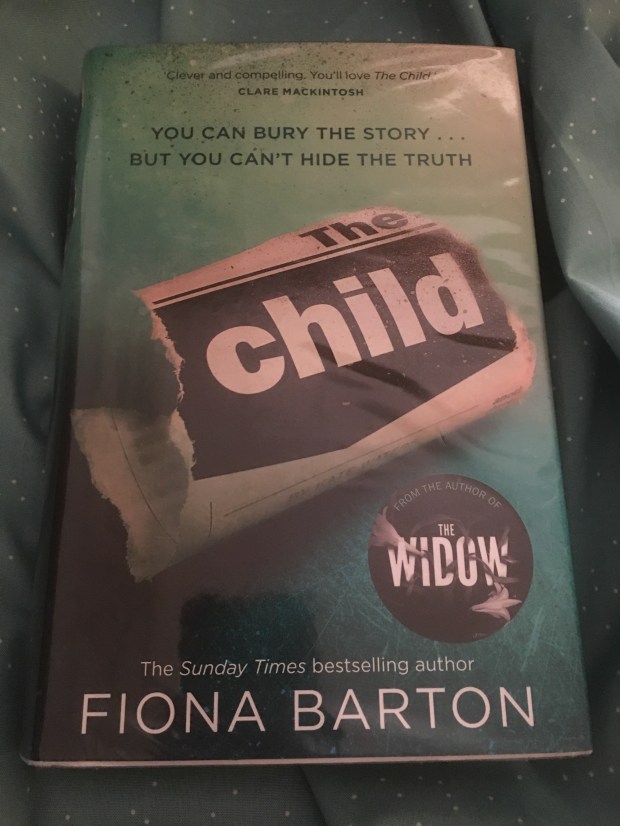
The Child by Fiona Barton

IMG_6679.jpg

Fiona Barton: The Child

Published By: Bantam Press

Buy It: here


What the Blurb Says:

When a paragraph in an evening newspaper reveals a decades-old tragedy, most readers barely give it a glance. But for three strangers it’s impossible to ignore.

For one woman, it’s a reminder of the worst thing that ever happened to her.

For another, it reveals the dangerous possibility that her darkest secret is about to be discovered.

And for the third, a journalist, it’s the first clue in a hunt to uncover the truth.

The Child’s story will be told.

What I say:

“Angela looked at her hollow-eyed, the initial euphoria of getting the news draining away rapidly. “My baby is dead” she said.

I had read Fiona Barton’s previous novel, The Widow and loved it (you can buy it here), as it was a very cleverly plotted and intriguing novel.

When I saw that Fiona had written a second novel called The Child, I wondered whether it could live up to the excellence of The Widow.  It does, and in my opinion is even better.

The Child is a story of three women, and how a seemingly under reported minor story about the discovery of a baby’s body on a building site not only eventually brings them together,  but for two of them, blows apart the seemingly stable lives they have been leading up to this point.

For Emma and Angela, the story has huge personal significance, as it brings up extreme emotions in them both, and a need for them to determine the identity of the child that has been found. Quite simply, they both believe that the body which has been found is their child.  For Kate, a newspaper reporter, it is a chance for her to investigate a substantial and human led story in a world of online celebrity click bait reporting.

Fiona’s writing from the outset is always fast paced, thoughtful and intriguing. One of the many strengths of this novel is that I genuinely could not work out why the discovery of the baby’s body was so important to Emma and Angela.  In my blog notes, I have lots of question marks next to my theories (only one of which was correct!), and I loved the notion that as a reader you are with these women on their journey to discover the truth about the baby and why the body should be where it was.

As the novel progresses, we learn about Emma’s difficult relationship with Jude, her mother, and how the appearance of Will, Jude’s new boyfriend, means that Emma’s home life leaves her feeling increasingly isolated and unhappy.  Emma’s sudden disappearance from her home, means that the complicated relationship she has with Jude reaches breaking point and does not really recover.  Jude refuses to believe that Will could in any way be responsible for Emma leaving, as she is so in love with him and the notion of being in love.  We learn later in the novel. that Emma had faced giving birth alone and in secret, and had not been able to tell her mother anything about her pregnancy, the traumatic birth of her stillborn baby and certainly not who the father was.

As we switch between the women’s stories, we discover that Angela had a baby who went missing from her hospital bedside after she had given birth, and no trace was ever found.  I found it really interesting and quite upsetting to see how Angela is treated in the time after her baby is taken, as if she is almost overreacting to the enormity of her ordeal.  Angela is convinced that the body of the baby who has been found is her missing daughter.

While Angela is looking for closure, to know if the baby at the building site is hers, Kate is more and more driven to be the reporter that solves the case.  I did initially question Kate’s motives for getting so involved, as she is so determined to find out what has happened becoming blinkered to everything else.  I wondered whether she was trying to further her career in the male dominated newspaper world and that her interest in the case is determined by the glory she believes will get for solving it. However, as the novel progresses, we can see the more human side of Kate and how she genuinely wants to help Angela and Emma find the answers they so desperately crave.

Fiona’s depiction of the three main female characters are brilliant and you really care what happens to them.  They are all interesting, three dimensional women to whom you can really relate, and following them on their search for the truth just became more and more intriguing.  Reading this book was always an absolute pleasure, as the plot and dialogue fizzed off the pages.

So, who is The Child and how are Angela and Emma linked to her?  Well, I could tell you, but that would spoil the massive twists in this novel, and being loyal to the author, I am not going to!  Suffice it to say, I had no clue what the twists were going to be – they were very cleverly done, completely plausible and it often made me go back through the book to see how I missed them!  Just when you thought all the secrets had been revealed, another skeleton would slide out of the closet and appear in front of you, and the resolution was never far fetched or ridiculous, it just slotted another piece into the ever growing puzzle of the novel.

The Child is a really remarkable and unforgettable novel, to say it is simply a psychological thriller does not do it justice, but it also raises really relevant issues in a poignant and powerful way.  It addresses what it means to be a mother, how women are regarded in the home and in the workplace, and how when women work together and support each other, they are stronger than they could ever know.

I loved this book, and I hope you do too.

Standard Deviation by Katherine Heiny

IMG_6483.jpg

Katherine Heiny: Standard Deviation

Published By: Fourth Estate

Buy it: here


What the Blurb Says:

A divinely funny novel about the challenges of a good marriage, the delight and heartache of raising children, and the irresistible temptation to wonder about the path not taken.

Graham Cavanaugh’s second wife, Audra, is everything his first wife was not. She considers herself privileged to live in the age of the hair towel, talks non-stop through her epidural, labour and delivery, invites the doorman to move in and the eccentric members of their son’s Origami Club to Thanksgiving. She is charming and spontaneous and fun but life with her can be exhausting.

In the midst of the day-to-day difficulties and delights of marriage and raising a child with Asperger’s, his first wife, Elspeth, re-enters Graham’s life. Former spouses are hard to categorize – are they friends, enemies, old flames, or just people who know you really, really well? Graham starts to wonder: How can anyone love two such different women? Did he make the right choice? Is there a right choice?

What I Say:

“And who’s to say that there isn’t a standard deviation from the standard deviation.”

Standard Deviation is one of the novels that you might have heard of, but like me have believed (wrongly) that it was something to do with the scary world of mathematics!  I had heard a lot about Katherine’s book via Twitter and as so many people were falling in love with it, I was intrigued.

Something I have learned since starting this blog is that taking a chance on books can be a revelation.  Sure, sometimes you realise that a book is just not working for you, and even though hordes of other people may love it, having the courage to say well I don’t can be hugely liberating.  After all, who really cares if you don’t finish a book?

That is why my reading philosophy – life is too short to read books you don’t love has been a big turning point for me.

Let me say this now, Standard Deviation is 320 pages of pure unadulterated joy.

If you don’t fall in love with the character of Audra, then I really doubt whether we can truly be book friends!

Audra is Graham’s second wife, and they live with their son Matthew who has Aspergers.  Audra is poles apart from his first wife, the ice maiden Elspeth, and Audra lives her life in a complete whirl, talking to anyone who will listen.   She has no filter when it comes to saying the right thing and her verve for life and passion springs off the pages, and I must admit it is the only book I have read recently that has made me laugh out loud.  There is a scene early on in the book at a wedding where Audra says something completely scandalous about the bride (I won’t spoil it by telling you – read the book), but it made me spit my coffee out laughing!

This I think sums up Audra in a nutshell;

You had to pretend you were talking to someone in the time before society had formed and social boundaries had been invented.”

We start to see Graham’s struggle with his marriage, as he wonders whether he did the right thing by marrying Audra, or if should he have stayed with Elspeth instead.  When Elspeth and Graham have to attend a lawyer’s meeting together, Audra suggests that they all go on a double date with Elspeth’s new partner Bentrup.  As the four of them start to spend more time together, Katherine is wonderful at writing about the complexities of marriage and the way in which families are no longer constrained by the idea of a traditional nuclear family.

However, when Elspeth ends her relationship, Graham edges ever closer to her, comparing the calm and ordered environment she inhabits, to the passionate, chaotic home life he shares with Audra and an ever-changing rota of house guests.  He is also blindsided by his suspicions that Audra is having an affair and he sets about trying to find out what Audra has been doing.  Eventually, Audra confesses to an ‘almost affair’ with Jasper, and as Graham tries to process what has happened, Audra wants his forgiveness.

Nevertheless, Graham still sees Elspeth, and he admits that it is:

…just like an affair, except without the sex or love or excitement, or other good parts”.

I felt that Graham’s relationship with Elspeth gave him the tranquility and escape he feels he needs, as if he needs confirmation that there is a world where he could have peace and calm.  As the book progresses, I felt it was as if Graham has to get Elspeth out of his system to wake up and realise that this existence would also lack the excitement and joy that Audra brings him.

In fact, after realising that he cannot go through with spending the night with Elspeth, he returns home and sees Audra and realises:

She was an absolute certainty in an uncertain world”.

When Elspeth dies, Graham is bequeathed one item from her apartment, and Audra, as many people would, uses this opportunity for a good snoop around.  Graham reminisces about his relationship with Elspeth, but also finally gets a chance to put this behind him and be thankful for the marriage that he has.

Something else that really resonated with me was the challenges and compromises that Audra and her husband Graham face in raising Matthew.  My eldest son has a range of special needs, and I cannot tell you how refreshing it is to read a novel which pulls so sharply into focus the daily challenges you face as a parent of a child with special needs.  The conversations that you have as a couple as you try to determine the right thing to do for your child, the ache you feel as you realise that your child is not doing what everyone else’s child is doing, and the realisation that the simplest tasks cannot be achieved without a mountain of planning and a whole lot of stress.

“Graham, like all parents of special needs children, had a range of stock phrases that he used when talking about Matthew to other people”.  

I cheered when I read this sentence!  Yes, this is someone who really understands what our life is like!  Katherine writes with the knowledge and compassion of someone who knows what we go through, and for that, I would buy this book for every person who has asked us or made a stupid statement about the reality of our life with our eldest.

Matthew’s fascination with origami and his willingness to join a club with a group of people who accept him for who he is, is so well written.  There is a brilliant scene where Audra has to cater for Matthew’s origami group, including one young man who will only eat white things, and when Audra realises she hasn’t got any white handled cutlery, she obviously panics. The young man then chastises Audra for thinking he is fussy!

After a number of setbacks, Matthew finally finds the confidence to go to a summer camp that caters for him, ditches the boy who has routinely been horrible to him, and finds a new friendship.  I loved the way this whole plot line was central to Standard Deviation, but that it was not the focus.  Matthew was not a character written to illicit our sympathy and pity, but rather as a way of cleverly depicting the day-to-day reality of living with a child with special needs. We as parents don’t want awards, a slap on the back, praise or recognition, we just want our children to be accepted and have the best life they can.

We leave Standard Deviation as Audra and Graham head out on a date, as if we have merely been eavesdropping on their daily life, as they move on with life, so must we.  It is a wonderful, funny and clever book, filled with love, laughter and a big dose of real life.

I loved it.

The Haunting of Henry Twist by Rebecca F. John

wp-image--1258000092

Rebecca F.John: The Haunting of Henry Twist

Published By: Serpent’s Tail

Buy It: here

What The Blurb Says:

London, 1926: Henry Twist’s heavily pregnant wife leaves home to meet a friend. On the way, she is hit by a bus and killed, though miraculously the baby survives. Henry is left with nothing but his new daughter – a single father in a world without single fathers. He hurries the baby home, terrified that she’ll be taken from him. Racked with guilt and fear, he stays away from prying eyes, walking her through the streets at night, under cover of darkness.

But one evening, a strange man steps out of the shadows and addresses Henry by name. The man says that he has lost his memory, but that his name is Jack. Henry is both afraid of and drawn to Jack, and the more time they spend together, the more Henry sees that this man has echoes of his dead wife. His mannerisms, some things he says … And so Henry wonders, has his wife returned to him? Has he conjured Jack himself from thin air? Or is he in the grip of a sophisticated con man? Who really sent him?

Set in a postwar London where the Bright Young Things dance into dawn at garden parties hosted by generous old Monty, The Haunting of Henry Twist is a novel about the limits and potential of love and of grief. It is about the lengths we will go to to hold on to what is precious to us, what we will forgive of those we love, and what we will sacrifice for the sake of our own happiness.

What I Say:

From the start of this novel, you have a sense of foreboding, that the vivid and detailed descriptions of Ruby making her way through the streets of London are not going to end well.  Ruby, who is pregnant, is knocked down by a bus, but her baby, Libby is delivered and survives.

After the shock of Ruby’s death, her husband Henry comes to terms with not only losing the wife he loved so much, but facing the overwhelming prospect of raising his child alone.  A child that they both wanted so badly.  As a widower and a single father, Henry finds himself struggling to cope, whilst determined to ensure Libby stays with him.

One night he sees a man standing outside his flat, staring up at him. As the days merge into nights, and he has to keep going for the sake of his daughter, Henry finds himself becoming intrigued by the stranger outside.  One night, the man introduces himself to Henry as Jack Turner, and confesses he only knows his name, and that he knows Henry.

Henry immediately feels a real connection to Jack that he can’t explain, and invites Jack to stay with him.  From a reader’s perspective, I felt that Henry was searching for something to fill the void left by Ruby, and that you are aware Henry feels himself pulled inextricably towards Jack.  It is as if Jack somehow embodies the spirit of Ruby, something that is brought even more into focus as Henry sees Jack has bruises in the same place Ruby would have where she was struck by the bus.  Henry cannot explain what draws him so fiercely to Jack, but as they spend more time together, it is as if there is an unstoppable force that propels them towards each other.

As the novel progresses, Ruby’s best friend, Matilda, it transpires also has an interest in Henry, and not a platonic one.  Matilda is married to Grayson, but their marriage seems to be very dull and simply plods along in a day-to-day co-existence as she desperately searches for the passion and desire she feels is lacking.  As Matilda discovers that Henry has decided to raise Libby on his own, her own desires to have a child, which has not happened in her marriage, means that she considers the possibility of offering to take Libby from Henry to raise with Grayson.

Jack and Henry move ever closer together, and Henry asks Jack to move in with him. The men become lovers, relishing in the force of love and passion that they feel.  However at the same time, they understand that this love is not acceptable to many and they try to keep their love hidden confined to Henry’s flat.  They contentedly exist for a while in their secluded bubble, enjoying the seclusion and happiness that new lovers feel.  They are unwittingly discovered entwined around each other when Matilda sees them through the curtains of the flat, just as she has gathered enough courage to declare her love for Henry.

Played against a vibrant background of London in the 1920’s with the emergence of the Bright Young Things, they all love their gregarious friend called Monty, who is the epicentre of the London party scene.  Monty is aware of the relationships between Henry and Jack, and tries to discourage Matilda from causing them harm.

Matilda’s anger blinds her to understanding that Henry is again truly happy, and she is determined to destroy Jack for taking Henry away from her.  To say more would give away the plot, but Matilda is unwavering in her desire to expose Jack for everything she believes he is.  When this fails, she is left to face the reality of her empty marriage, and to realise that the love Henry and Jack have for each other is not constrained by their pasts, or what is considered the ‘right’ thing to do in society.  Love is love.

The Haunting of Henry Twist is not a classic ghost story, the ‘haunting’ is more to do with Henry’s emotions and the massive life changing events he has to deal with and reconcile himself to.  Henry struggles to allow himself to love Jack, but when he finally does, the reader is only aware of how all-consuming and powerful a force that is.

For me, this novel was about so many things; love, death, grief, hope and the idea that love is love, no matter what it is, or what barriers one has to overcome to truly feel it.