The List of Suspicious Things by Jennie Godfrey

The List of Suspicious Things by Jennie Godfrey

Published by Hutchinson Heinemann on February 15th

What They Say

Maggie Thatcher is prime minister, drainpipe jeans are in, and Miv is convinced that her dad wants to move their family Down South.

Because of the murders.

Leaving Yorkshire and her best friend Sharon simply isn’t an option, no matter the dangers lurking round their way; or the strangeness at home that started the day Miv’s mum stopped talking.
Perhaps if she could solve the case of the disappearing women, they could stay after all?

So, Miv and Sharon decide to make a list: a list of all the suspicious people and things down their street. People they know. People they don’t.

But their search for the truth reveals more secrets in their neighbourhood, within their families – and between each other – than they ever thought possible.

What if the real mystery Miv needs to solve is the one that lies much closer to home?

What I Say

It is always brilliant to be able to review books by authors that you have met and become friends with on social media, which is quite ironic, considering that in The List of Suspicious Things we are firmly in a world way before anyone even knew what a mobile phone or Twitter is!

I had been chatting to Jennie for while – usually about all the fabulous books we have been reading, and sharing recent recommendations of books we loved. When I was offered a copy of Jennie’s debut novel to read and review, honestly, I was more than a little nervous – it is a Radio 2 Book Club pick, and already there have been so many wonderful reviews, that there is always the worry that I might not love it.

Once I started reading The List of Suspicious Things, I just knew that I was reading something really special.

Miv, and her best friend Sharon are growing up in the late 70s. Margaret Thatcher is Prime Minister, and The Yorkshire Ripper dominates every news story and headline. Miv lives with her Mum and Dad and Aunty Jean. Her Mum keeps herself to herself, often in her bedroom and then disappears from their house for periods of time, with no one really explaining to Miv what is happening.

Miv’s Dad seems unsettled and not himself, and decides that maybe the best thing for the family is to move down South away from The Yorkshire Ripper and all the uncertainty and unrest around them. Miv is devastated and doesn’t want to move away, so the solution to her is perfectly clear – if she can discover who The Yorkshire Ripper is, she can stay here, with her best friend Sharon and nothing has to change.

Sharon agrees to help, and as Miv pours over the newspapers and listens to news about The Yorkshire Ripper, she decides that she and Sharon have to investigate anyone who fits any part of the profile. This is a brilliant way to change the narrative, because this opens up Miv and Sharon’s world for us to meet the people in their community who make their list, but also shows us that what we have always known is true – that appearances can be deceptive, and you never really know what goes on behind closed doors.

As Miv and Sharon investigate the people and things they have hunches about, we are introduced to a range of characters – amongst them there is Omar who runs the local shop and his son Ishtiaq, Helen and Gary Andrews who seem to be a happily married couple, and Arthur, who is Helen’s Dad and dealing with the death of his wife.

Jennie’s writing harks back to a time when all our lives were contained in the small world of the streets and places and people we knew so well, and we were reliant on who had seen and heard what to find out what was happening. Yet it has to be said that this is not a cosy, uncomplicated and innocent novel, mired in nostalgia and a rose tinted view of life.

The List of Suspicious Things is also a novel that unflinchingly shows a world where there is racism, domestic violence, mental health issues and marital affairs. This is a world presented to us through the eyes of children, who see and hear these things, but do not fully understand the intricacies and realities of what they are party to. Their innocence and seeming naivety presents us with a different view of the world, whereas we as readers, and the adults in the story bring our own experiences and knowledge of the realities of what the children are actually going through.

This is such a layered and nuanced novel that deals with so many things in one book, all executed effortlessly. Undoubtedly the main focus of the novel is the project that Miv and Sharon are undertaking, as to whether they can find the true identity of The Yorkshire Ripper, but this is not singularly why this is such an unforgettable book.

What makes this book so compelling for me to read is the portrayal of family life and the wider community, in all its shapes and forms. I felt that Jennie absolutely understood all her characters and their voices are clear and distinct. You get a real sense of place and time without it being something that detracts from the plot, and it makes the book feel anchored and authentic. Miv is such a brilliant protagonist, fearless and questioning and also aware that her family life is not like other people’s. Her relationship with her Mum is genuinely heartbreaking. – she knows what it should look like, and there are little moments in the book that shows us how much Miv understands that whatever happens her Mum is still there, trying to find a way back to being the Mum Miv needs. Miv is undoubtedly the pivotal character in this novel, and it is her relationships with the people around her that makes this such a compelling story.

In becoming part of Miv and Sharon’s world, we are also looking back at a time that some of us can remember clearly – that sense of growing up in a world where human connection was part of our everyday lives, with no phones or social media to colour our opinions. Our world at that time went as far as the streets around us, the neighbours we knew and the conversations we heard. The List of Suspicious Things is an unforgettable book that perfectly articulates what it meant to be a child at that time, and in doing so may make us realise how far we have come, but also how much we have lost in terms of having that close community around us.

Do Miv and Sharon find out who The Yorkshire Ripper was? Of course I am not going to tell you, you need to read it. One thing is certain though, that I promise after reading The List Of Suspicious Things, Miv and Sharon will always have a place in your heart.

I absolutely loved it.

Thank you so much to Hutchinson Heinemann for my proof copy.

Seventeen by Joe Gibson

Seventeen by Joe Gibson

Published by Gallery UK and Simon and Schuster on 20 July

Available from all Good Bookshops

What They Say

It’s 1992. Like every other seventeen-year-old boy, Joe has one eye on his studies, the other on his social life – smoking, Britpop, girls. He’s looking ahead to a gap year full of travel and adventure before university when his teacher – attractive, mid-thirties – takes an interest in him. It seems like a fantasy come true.  

For his final two years at school, he is bound to her, a woman twice his age, in an increasingly tangled web of coercion, sex and lies. Their affair, a product of complex grooming and a shocking abuse of authority, is played out in the corridors of one of Britain’s major private schools, under the noses of people who suspected, even knew, but said nothing. 

Thirty years on, this is Joe’s gripping record of the illicit relationship that dominated his adolescence and dictated the course of his life. With a heady dose of nineties nostalgia and the perfectly captured mood of those final months at school, Joe charts the enduring legacy of deceit and the indelibility of decisions made at seventeen. 

What I Say

You may have seen on my Twitter feed that I talked about a book that had stopped me in my tracks, and I haven’t been able to stop thinking about since I read it (you can possibly tell by the number of post its in my copy in the picture!)

Lots of people were curious to know, and so today, I can tell you that the book I am talking about is called Seventeen. It is a memoir written by Joe Gibson (this is a pseudonym), which tells the story of Joe, as a seventeen year old, who had an affair with his thirty five year old teacher called Miss P.

Joe was awarded a bursary to study at a private school which was 150 miles away from his parents. They sorted out accommodation for him with some family friends, who were caring people, but basically left Joe to do what he wanted to do. He finds a group of friends quite quickly, and settles into school life, but then discovers that his Dad is leaving and his mum and dad are getting divorced.

Understandably upset, and realising how far away from home he is, he goes to a pub to drown his sorrows. It is there he bumps into Miss P, who listens to and comforts him and Joe realises that he is attracted to his teacher.

One evening Miss P asks him to help her tidy up the classroom, and they eventually end up at her flat where they drink wine together and kiss. Very quickly, this turns into a fully blown affair, and Joe, although he knows this is his teacher, and this is not right, realises that he loves Miss P – or Ali, as she now becomes to him.

Joe’s seventeen year old voice comes through very clearly throughout the memoir. He at times seems almost proud of their relationship, their sex life, and relishing the time they spend together, desperate to see her again, yet also still having to be the person his friends know. He has to be the seventeen year old they know – half listening to his friends as they debate which girls in their classes they fancy, trying to maintain the facade of a normal student, but harbouring this secret that he knows would blow his whole world apart if it ever comes out. So he says nothing.

What becomes clear to the reader very quickly is that this is not an equal relationship. Miss P controls every aspect of it – she devises the most incredible plans, comes up with the complicated and seemingly safe logistics to make sure that they can see each other, but also making sure little by little that Joe is entirely under her control. Miss P decides when and where they can see each other, she ignores him for periods at school, and taunts him about being a school boy when it seems that he is trying to think for himself.

As they become more and more involved, Joe distances himself from his friends and family, his school work starts to suffer, and his hopes of going to Oxford slip from his grasp. At the same time, his relationship with Ali intensifies, and her insistence that they spend time together in increasingly dangerous ways are to be honest, jaw dropping to say the least. Joe is so far entrenched in this relationship that he can’t see what we all can – that he is powerless, and entirely under Miss P’s control.

Seventeen honestly reads like fiction -as if Joe and Miss P are characters in a novel that you read, talk about and put on a shelf. Of course this is a memoir, these are real people, and their lives still go on. One of the most incredible parts of Joe’s story is what happens to the relationship – and no, I’m not going to tell you what that is.

I couldn’t stop thinking about Seventeen when I read it because I have so many questions. Why Joe? Had she done it before? Why didn’t the friends she told report her? What was her motive for getting involved with Joe? Was Ali telling the truth about her past relationships at all?

Yet something else supersedes all that, because I keep thinking about my seventeen year old son and what it would be like for him if it happened to him, and that is what Joe illustrates so clearly. At the very heart of all this, we need to understand that Joe is a seventeen year old school boy, and Miss P is his thirty five year old teacher.

It should never have happened, but it did, and if Seventeen does one thing, it made me start a conversation with my own son about what had happened to Joe, and how that behaviour from an adult is never acceptable. We also learn that it wasn’t until 2000 that it became illegal for a teacher to have a sexual relationship with a 16 or 17 year old – which makes you wonder how many times this story played out in other schools, and what happened to those people whose stories we may never know.

This is why I think it’s such a thought provoking memoir, because it made me stop and think about how I communicate with my son – when Joe was seventeen, there wasn’t social media and mobile phones, you had to either use the home phone or find a pay phone to contact someone, or even go physically to see them. Here and now, our teenagers are so busy looking down, connected to a world we can’t access, it is harder and harder to really find out what is happening in their lives, and that is why Seventeen is such an important book.

Now more than ever we need to be present for teenagers, to make sure that Joe’s story is something that can’t happen again. Joe says in the acknowledgements that he hopes by finding his voice seventeen years later, and articulating his experience that he can encourage other people to do the same. I think Joe has also started a timely conversation about power and control and needing to make sure that in a time of digital communication where we aren’t party to everything that happens on a screen that we don’t forget about simply talking to and listening to our children too to make sure Joe’s story is not repeated.

I absolutely loved it.

Thank you so much to Sabah Khan at Simon and Schuster for my finished copy in exchange for an honest review.

The Garnett Girls by Georgina Moore

The Garnett Girls by Georgina Moore

Published by HQ Stories on February 16th 2023

Available from West End Lane Books and All Good Bookshops

What They Say

A brilliant debut and powerful tale of sisterhood and home, set on the beautiful beaches of the Isle of Wight…

Flawed, complicated, secretive, big-hearted, you’ll fall in love with the Garnett girls. Margo and Richard’s love affair was the stuff legends are made of – forbidden, passionate, all-encompassing. But ultimately, doomed. When Richard walked out, Margo shut herself away from the world, leaving her three daughters, Rachel, Imogen and Sasha, to run wild.

Having finally put the past behind her, the charismatic Margo holds court in her cottage on the Isle of Wight, refusing to ever speak of Richard. But her silence is keeping each of the Garnett girls from finding true happiness. The eldest, Rachel, is desperate to return to London, but is held hostage by responsibility for Sandcove, their beloved but crumbling family home. Imogen, the dreamy middle child, feels the pressure to marry her kind, considerate fiance, even when her life is taking an unexpected turn. And wild, passionate Sasha, the baby, trapped between her increasingly alienated family and her controlling husband, has unearthed the secret behind Richard’s departure… and when she reveals it, the effects are devastating.

Set on the beautiful beaches of the Isle of Wight, The Garnett Girls asks whether children can ever be free of the mistakes their parents make.

What I Say

Honestly? As soon as I heard that Georgina Moore was writing a novel, I wanted to read it, because book blogging is the very reason that we met, and as a brilliant supporter of bloggers, Georgina not only sends me fabulous books, but we have found over the years that our reading tastes are very very similar.

Honestly? When I knew that Georgina was very kindly going to send me a proof copy, I was nervous, because this would be a book written by someone I knew, and what would I do if it wasn’t for me?

Readers, let me tell you, that as soon as I started reading it, I knew that The Garnett Girls was not only going to be fabulous, it was just the novel I needed to read at that moment.

Margo is the matriarch of the Garnett family. Confident, engaging, unapologetic in asking for what she wants – and usually getting it, she knows who she is and what she needs, and she also is embracing life and sex, while all the time overseeing her family and getting involved in their lives.

Rachel, her eldest daughter, and her husband Gabriel, now live in Sandycove, the Garnett family home on the Isle of Wight, while Margo lives in a cottage nearby referred to as The Other Place. Rachel misses the life and vibrancy of her work and life in London, and is not enjoying being at Sandycove with all the duties and responsibilities it brings. Gabriel, who gets on famously with Margo, and runs the house while she works, also seems to be drifting from Rachel, and seems more interested in his phone than talking to her.

Imogen is a playwright, engaged to William – more from duty than because she loves him, and when she meets Rowan, the actress who will be the lead in her play, Imogen realises that she is incredibly attracted to her. It is the intensity and power of her relationship with Rowan that will cause Imogen to question everything she thought she knew, but we also see that Rowan’s need to be front and centre of Imogen -and indeed everyone’s world, makes Imogen realise that she has some really difficult choices to make.

Sasha, the youngest child, seems to be moving further and further away from her family. Her husband Phil is to be far too involved in her life and is controlling her world more and more, and Sasha is losing her sense of self at home, living for the times she can escape from her house and her marriage however briefly. When Sasha decides to look into her past, she sets off a chain of events that threatens to blow the family apart.

As the lives of the women are firmly at the forefront of this novel, always present in the background are two things. The ever present house, Sandycove, which may be in need of some attention, but every single part of it contains the memories, shared experiences and the good and bad times of the Garnett family. The other issue that is never mentioned is that their father, Richard, abandoned them all when the girls were very young, leaving Margo bereft and broken, unable to look after her daughters for a period of time. When it seems that Richard may come back into their lives, Margo and the girls find their worlds turned upside down, and they also have to look to their own lives to understand that they too have issues that are threatening their own happiness.

What I loved about this novel is the way in which from the very first page you are completely immersed in the world of The Garnett Girls. Sandycove, The Other Place and the Isle of Wight are so vividly brought to life, that you can see and feel every thing – the warmth of the beach, the food they eat, and the comfort and cosiness of Sandycove and the vivid depiction of the characters make it so easy to see them in front of you.

It was also interesting to see how Georgina wrote about sex and sexuality in The Garnett Girls, and so refreshing that age was not seen as a barrier to a woman relishing in her self and desires. Margo has lovers, and acknowledges that she needs to feel desired and to have sex, Rachel is struggling to keep sex alive in her marriage, while Imogen is not sure about her sexuality and Sasha’s unhappy marriage to Phil is no match for the attraction she feels to Jonny, a family friend. The ease with which Georgina wrote about these women and their sexuality felt frank and direct, and for me, made me feel closer to the characters.

The other theme I thought was handled brilliantly by Georgina was the dynamics of family relationships – something I love reading about. For me, I am always intrigued by how even the most seemingly perfect family a can be a myriad of things not said, of words swallowed down to avoid upsetting people, and how refusing to acknowledge a shared trauma a family has been through, like the Garnett Girls, has such an unconscious and wide ranging impact on their lives and relationships. Their lives are often complicated and messy, and I liked how behind closed doors and indeed in front of them, the Garnett family had to deal with it all, in a town where everyone’s business is everyone else’s business.

As Rachel, Imogen and Sasha come to terms with the issues in their own lives, we see how they share the unconscious bonds of sisterhood, being there for each other and trying to navigate their way through a devastating secret that eventually comes to light. I thought it was also interesting to see how Margo had controlled their world so that every trace of their father was eradicated from their narratives, but that she had to reconcile with the fact that her daughters needed to understand and know why their father had made the decisions he did.

The Garnett Girls is a novel that when you have finished it and sat back and thought about it, you realise how much is contained in its pages. There are the mother daughter relationships, the complexities of family life, the secrets that all families have, and the ever changing landscapes of what defines a successful relationship and marriage. However, for me, The Garnett Girls is ostensibly about celebrating women, and Georgina implicitly understands how much we need to see women who are relatable, real and not always perfect. Imogen, Rachel, Sasha and Margo show us that we should not define or restrict our choices, but instead we should be unafraid to articulate what we want or need, and for that reason alone, The Garnett Girls is a timely and utterly enchanting debut novel that I absolutely loved.

Thank you so much to Georgina and HQ Stories for my gifted proof copy.

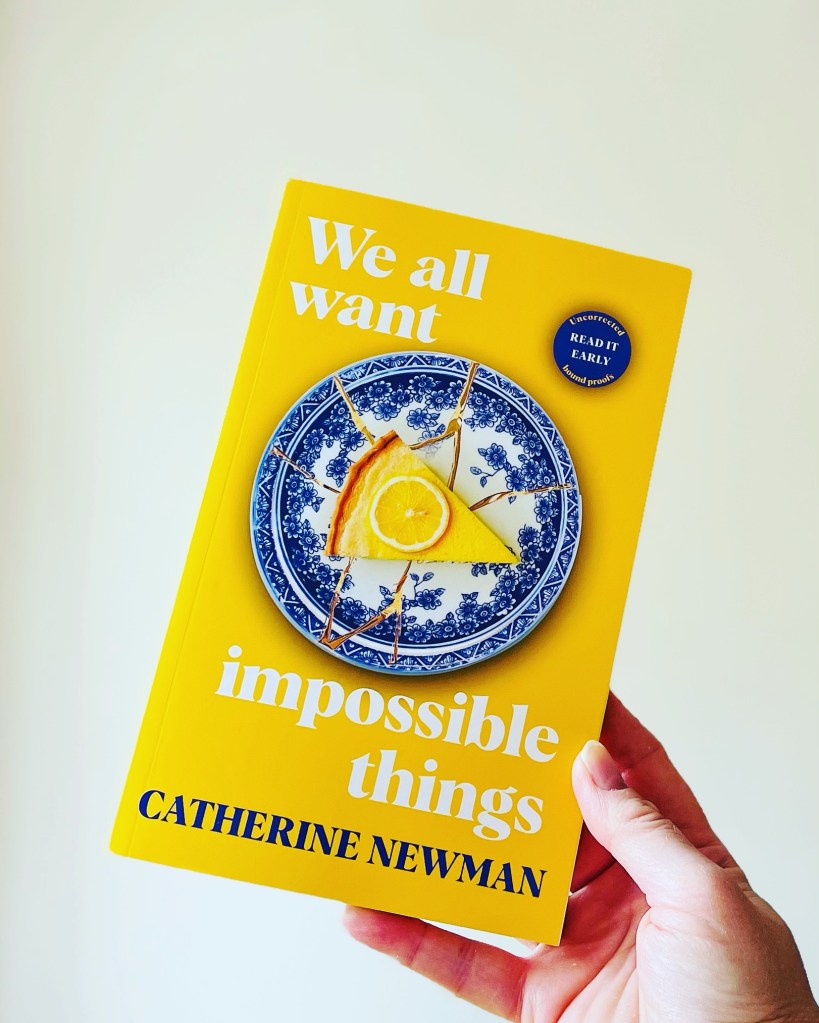
We All Want Impossible Things by Catherine Newman

We All Want Impossible Things

by Catherine Newman

Published by Doubleday Books on January 12th

Available from West End Lane Books and all Good Bookshops

What They Say

Who knows you better than your best friend? Who knows your secrets, your fears, your desires, your strange imperfect self? Edi and Ash have been best friends for over forty years. Since childhood they have seen each other through life’s milestones: stealing vodka from their parents, the Madonna phase, REM concerts, unexpected wakes, marriages, infertility, children. As Ash notes, ‘Edi’s memory is like the back-up hard drive for mine.’

So when Edi is diagnosed with terminal cancer, Ash’s world reshapes around the rhythms of Edi’s care, from chipped ice and watermelon cubes to music therapy; from snack smuggling to impromptu excursions into the frozen winter night. Because life is about squeezing the joy out of every moment, about building a powerhouse of memories, about learning when to hold on, and when to let go.

What I Say

There are novels you read and love, and then there are novels you read and love and nod your head in recognition, that make you laugh and add lots of post it notes so you can go back and reread the passages because they are so wonderful – and We All Want Impossible Things is one of them.

If you are looking for a sweet, subdued book about friendship – then this is not for you. If however like me, you love novels that show friendships in all their glorious, messy and magical forms, then this should absolutely be on your reading list.

Edi and Ash have been friends for longer than they can remember, and have that wonderful connection that comes with a lifetime of shared experiences and moments they only understand.

When Edi is diagnosed with terminal cancer, Edi’s husband Jude decides that to avoid their son Dash having to see his Mum pass away, that Edi will move into a hospice close to Ash, and Ash will provide the daily support she needs.

The power of Catherine’s storytelling is steeped in every single page of this novel. Not only must Edi and Ash now navigate a new and uncharted path through their friendship, but dealing with the day to day unglamorous realities of cancer, the etiquette of grief and dying, and the ever present knowledge that Edi is not going to be here for much longer, makes the women appreciate what they have now and all the things they have ever had together.

Ash seems to be split in two – dealing with Edi and being the present and unshakeable friend in her presence, but at the same time unravelling when she is away from Edi, seemingly separated from her husband and ricocheting from relationship to relationship as she tries to hold everything and everyone together. At times I felt completely frustrated with her, but it also makes you understand that there is no prescriptive way to deal with grief, and while we may not understand why Ash behaves as she does, it is not for us to judge her.

It is also important to say that this novel does not shy away from Edi’s condition, and this is not some airbrushed version of cancer. The day to day realities of what it’s like to have a terminal illness, and the physical, emotional and medical stresses that Edi and her family go through are laid bare. It was at times undoubtedly hard for me to read, having lost a Mum to cancer, but at the same time I was pleased that Catherine told Edi’s story with compassion and candour.

Catherine Freeman also perfectly understands the complicated and awkward nature of dealing with a loved one who is dying, and that there should be no shame in acknowledging the humour too. If Edi’s heart’s desire is to taste the cake from a recipe no one can find, that Ash will do everything she can to get hold of it, whilst at the same time Ash wonders when the most appropriate time would be to ask Edi if she can have the favourite t-shirt back she borrowed! This is what Catherine does so well – her characters are real, relatable and not perfect – and it made me love them even more.

We All Want Impossible Things is a glorious love letter to female friendships in all its unremarkable, remarkable and perfectly imperfect forms. Edi and Ash are characters who not only have the emotional shorthand that so many of us long for in friendships, but also resonate so deeply because they are just like us – not perfect, not always likeable, but they would do anything for each other however difficult that might be, and I completely loved them for it.

Thank you so much to Alison and Doubleday books for my gifted proof copy.

The Paper Palace by Miranda Cowley Heller

The Paper Palace by Miranda Cowley Heller

Published by Penguin Viking on July 8th

Available from West End Lane Books and All Good Bookshops

What They Say

Before anyone else is awake, on a perfect August morning, Elle Bishop heads out for a swim in the glorious freshwater pond below ‘The Paper Palace’ — the gently decaying summer camp in the back woods of Cape Cod where her family has spent every summer for generations. As she passes the house, Elle glances through the screen porch at the uncleared table from the dinner the previous evening; empty wine glasses, candle wax on the tablecloth, echoes of laughter of family and friends. Then she dives beneath the surface of the freezing water to the shocking memory of the sudden passionate encounter she had the night before, up against the wall behind the house, as her husband and mother chatted to the guests inside.

So begins a story that unfolds over twenty-four hours and across fifty years, as decades of family legacies, love, lies, secrets, and one unspeakable incident in her childhood lead Elle to the precipice of a life-changing decision. Over the next twenty-four hours, Elle will have to decide between the world she has made with her much-loved husband, Peter, and the life she imagined would be hers with her childhood love, Jonas, if a tragic event hadn’t forever changed the course of their lives. 

Tender yet devastating, The Paper Palace is a masterful novel that brilliantly illuminates the tensions between desire and safety; the legacy of tragedy, and the crimes and misdemeanours of families.

What I Say

Do you ever pick up a book assuming it is going to be one thing when in fact it is something completely different and all the better for it?

I am going to be honest and say when I first read the synopsis for The Paper Palace I really thought it was not my kind of thing. I thought it would be a novel where the well off and distant characters would be worrying about things of little consequence and even lesser relevance. I picked it up because I thought I should, because it had kindly been sent to me. The thing is, once I started reading it, I could not put it down.

The Paper Palace of the name is the place where Elle and Jonas and their families go to every Summer and have done since they met as children. It has undoubtedly seen better days, but it gives them that escape and distance from the realities and stresses of modern life and marriage. After a dinner party, Elle leaves table as does Jonas, and they have sex – bearing in mind Elle’s husband Peter, and Jonas’ wife Gina are sat at the table just out of sight.

The novel then follows the next twenty four hours in Elle and Jonas’ life, as they try to make sense of what they have done. What slowly and delicately unfurls is a whole shared history that Elle and Jonas have. Heller takes us right back to the moment Elle was born, which in turn allows us to see how her parents own experiences and behaviour influenced Elle’s decisions and actions. It seems that all Elle wants is a stable family with her sister Anna and a mother and father, what she actually gets is a chaotic and disruptive childhood, peppered with different father figures until her mother marries a man called Leo. Her mother has endured much through her own life, including being sexually abused by her step father, but this means that she now cannot emotionally connect with her children either.

Leo brings with him two children. Rosemary who tends to stay with her mother, and Conrad. An awkward, resentful and intrinsically desperately unhappy boy who longs for his father to pay him some attention. After initially being an irritating and awful stepbrother to Elle, things become incredibly sinister.

He starts coming into her room at night and watching her while she sleeps. It is important at this point in my review to say that his sustained attention becomes sexual, and culminates in events which are absolutely distressing to read but absolutely crucial and integral to the plot and narrative. What makes it even more horrific is the fact that Elle is unable to tell anyone and carries round her secret, still having to face Conrad every day. Until the moment Jonas works out what has happened to Elle, and their lives are changed forever.

The Paper Palace is a completely immersive novel- you can see the beautiful landscape, feel the coolness of the water and taste the leisurely breakfasts and dinners that the families have. You are part of the languid unstructured summer as the family spill in and out of the house and onto the beach and into the water. If they see other people nearby they feel they are intruding on their sacred peace, and as a reader you absolutely understand why.

Heller draws you in from the very start, and the way in which the lives of Elle and Jonas are revealed to us connects us deeply to them. Their histories and shared experiences are depicted in such a way that you cannot fail to feel a connection to them, and the drastic decision they make is at the heart of the novel, and drives the narrative without ever feeling forced or laboured. The characters work so well because you can see them standing in front of you, and understand how their past lives have shaped their present, but also make you see that their futures are up to them – if they are brave enough to take the chance.

I thought that The Paper Palace was going to be a linear, routine narrative about two people who have to deal with the consequences of a rash mistake. What I didn’t anticipate was that this novel is in fact always Elle and Jonas’ story, that their love for one another would permeate every single page and every decision they made, and that to follow their lives through this book is to know them and want only what they truly deserve. Is it each other? You will have to read it to find out.

I absolutely loved it.

I am also thrilled to announce that I have a copy to gift to one of you on my Twitter account @yearsofreading – please do have a look.

Thank you so much to Hannah Sawyer and Alexia Thomaidis at Viking Books UK for my gifted proof copy.

You can order your copy from West End Lane Books here

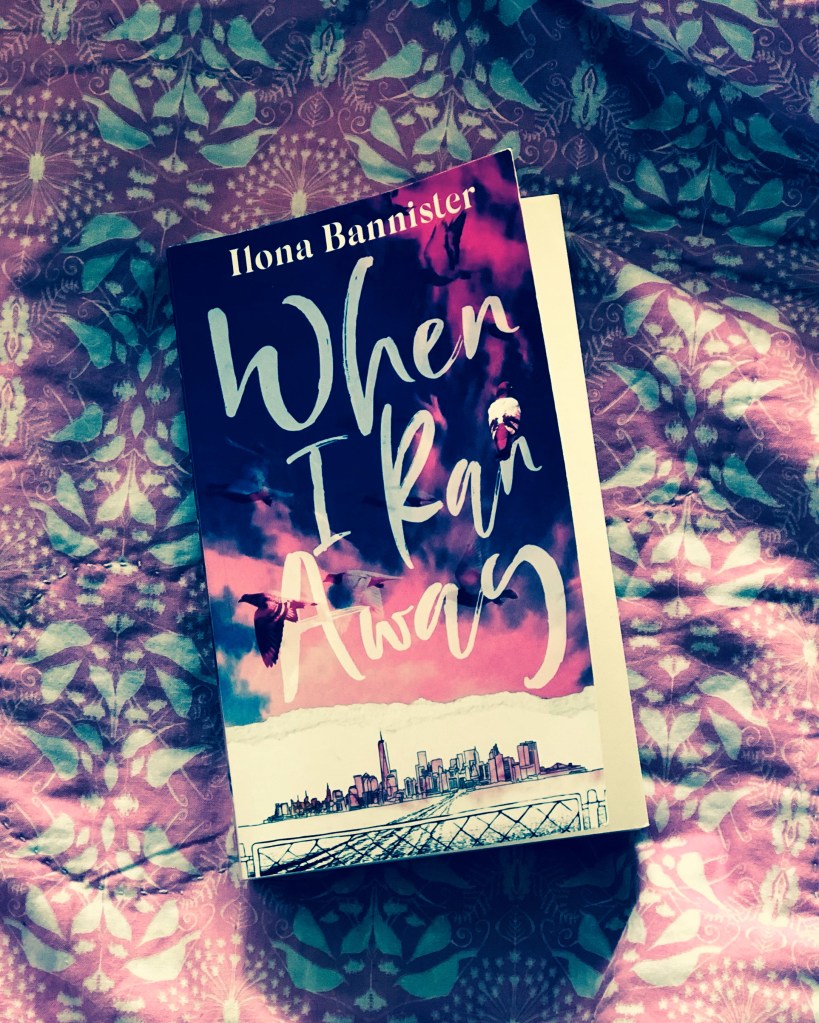
When I Ran Away by Ilona Bannister

When I Ran Away by Ilona Bannister

Published by Two Roads Books

Available from West End Lane Bookshop, All Good Bookshops and Online

What They Say

This morning Gigi left her husband and children.

Now she’s watching Real Housewives and drinking wine in a crummy hotel room, trying to work out how she got here.

When the Twin Towers collapsed, Gigi Stanislawski fled her office building and escaped lower Manhattan on the Staten Island Ferry. Among the crying, ash-covered and shoeless passengers, Gigi, unbelievably, found someone she recognised – the guy with pink socks and a British accent – from the coffee shop across from her office. Together she and Harry Harrison make their way to her parents’ house where they watch the television replay the planes crashing for hours, and she waits for the phone call from her younger brother that never comes. And after Harry has shared the worst day of her life, it’s time for him to leave.

Ten years later, Gigi, now a single mother consumed with bills and unfulfilled ambitions, bumps into Harry again and this time they fall deeply in love. When they move to London it feels like a chance for the happy ending she never dared to imagine. But it also highlights the differences in their class and cultures, which was something they laughed about until it wasn’t funny anymore; until the traumatic birth of their baby leaves Gigi raw and desperately missing her best friends and her old life in New York.

As Gigi grieves for her brother and rages at the unspoken pain of motherhood, she realises she must somehow find a way back – not to the woman she was but to the woman she wants to be.

What I Say

Over recent months, the role of mothers in the home has never been out of the spotlight as women have been juggling home life, professional life, home schooling and keeping everything going whilst attempting to process what has been happening in the world around us as we deal with the pandemic.

I read Ilona’s novel a few weeks ago, and can hand on heart say that I have never read a book that more perfectly gets right to the heart of what it means to be a mother. It is funny, heartbreaking, unflinching and true, but it also absolutely articulates what it is like to have a baby when you are a stranger in the country you live in, and you don’t have the in built support system it is assumed by the medical professionals that you must have to function.

If I also tell you that a lot of the action takes place in a single day in a London hotel while our protagonist Gigi is watching The Real Housewives of New Jersey, and you know how much I love the Real Housewives, I don’t think it’s difficult to see why I loved this novel so completely.

Gigi Stanislawski is caught up in the aftermath of 9/11, and it is there as she tries to get home to her parents that she meets Harry, an Englishman who she knows from coffee shop. It is when they eventually stumble to her parents house that she discovers her brother has lost his life. Harry and Gigi part, but fate brings them together ten years later, and they fall completely in love.

After losing her brother Frankie, Gigi discovered that his girlfriend Danielle was pregnant by her new boyfriend, and with no one willing to take the baby, Gigi did and became a single mother. While she works incredibly hard to balance her working life with looking after Johnny and dating Harry, nothing seems to phase her. When she marries Harry and they decide to move to London, and Gigi discovers she is pregnant, it finally seems like Gigi has the perfect life she has always deserved.

The brilliantly constructed dual narrative means we see Gigi holed up in a London hotel very close to where she lives watching Real Housewives. We don’t know why she is there, what has prompted her to run away, but what we do know is that Gigi is not coping with motherhood. This means that Gigi can share with the reader how she came to adopt Johnny, the reality of moving to a new country with a whole set of customs and social niceties that no one has explained, and most importantly how her experiences of being a mother have led to her running away from her husband and children

One of the many things I loved about this novel are the excruciatingly accurate scenes where Gigi has afternoon teas with other local mothers. However much they try and convince themselves and each other that they are completely supportive of every choice each parent makes, the passive aggressive statements and transparently superior side swipes that effortlessly fall from their lips were all too familiar. Gigi feels at a double disadvantage to these women as she has come to the UK from America, but also had a traumatic and difficult birth with her son Rocky. Ilona innately understands the social conventions and moral complexities of these events, and the language and dialogue is completely unforgettable.

As the novel moves through Gigi’s world, little by little the pieces fall into place and we understand what made her pick up her keys and phone and leave. Ilona draws us close to her, and as we see all her worries and internalised pain, Gigi is so real and relatable that you just want to reach her into the book and tell her it will be okay. The narrative moves forward and brings us along with it, and I read every single line because it resonated with me so deeply. You absolutely feel Gigi’s sense of not fitting in, and her bewilderment as to why she is not enjoying motherhood as everyone tells her she should.

When I Ran Away starts so many difficult and necessary conversations about the realities of motherhood and parenting. Ilona unflinchingly shows us the repetitiveness and absolute mundanity of motherhood, but also for me highlighted the incredibly common assumption that you automatically have an inbuilt family support system ready to leap in when you need it. If you do, that’s wonderful, but those who face parenthood without it need to be heard and understood too. If you take one thing away from this incredible novel, it should be that motherhood is not a competition, and that the most powerful thing we can do as women is to acknowledge that. To truly try and be real about motherhood, rather than falling into the trap of filtering and editing our world to give the illusion of being the picture perfect version we have been made to feel we should project is hard, but necessary if we really want to start talking about motherhood.

I absolutely loved it.

Thank you so much to Rachael Duncan at Two Road Books for my gifted proof copy.

You can buy your copy from West End Lane books here.

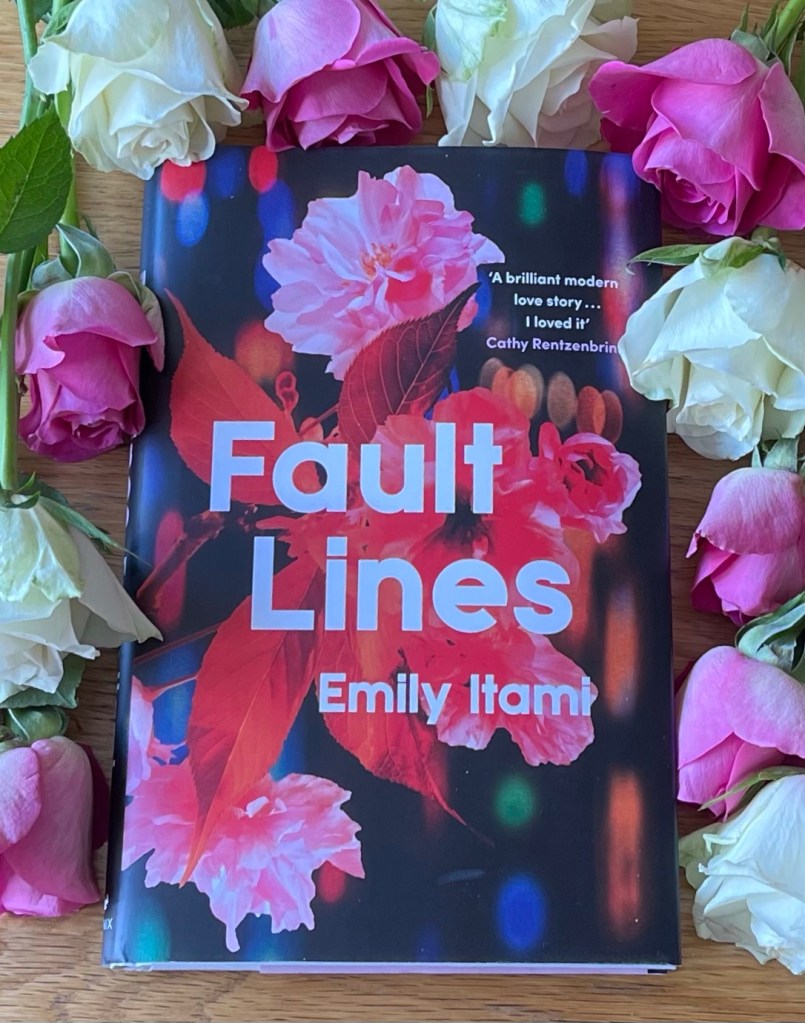
Fault Lines by Emily Itami

Published by Phoenix Books on 27th May

Available from West End Lane Books, and all Good Bookshops

What They Say

Mizuki is a Japanese housewife. She has a hardworking husband, two adorable children and a beautiful Tokyo apartment. It’s everything a woman could want, yet sometimes she wonders whether it would be more fun to throw herself off the high-rise balcony than spend another evening not talking to her husband or hanging up laundry.

Then, one rainy night, she meets Kiyoshi, a successful restaurateur. In him, she rediscovers freedom, friendship, a voice, and the neon, electric pulse of the city she has always loved. But the further she falls into their relationship, the clearer it becomes that she is living two lives – and in the end, we can choose only one.

Alluring, compelling, startlingly honest and darkly funny, Fault Lines is a bittersweet love story and a daring exploration of modern relationships from a writer to watch.

What I Say

Now more than ever, today’s mothers are met with a constant onslaught of online perfection and ideals even before most of us have managed to get dressed and eat breakfast. Every day and in numerous ways we are bombarded with different information telling us how we should look after our children and families, all the things we should be doing and lots of things we shouldn’t.

Mitzuki, the protagonist of Emily Itami’s brilliant debut novel Fault Lines, finds herself not only submerged in a world of expectation and comparison, but is also trying to face the cultural expectations that are placed on Mitzuki as a Japanese housewife. In a country with a myriad of customs and social conventions, she is constantly trying to be what everyone else wants her to be, and has learned to put her own needs and desires reluctantly to one side.

The thing is, right from the start, we are absolutely aware that Mitzuki is unhappy with her life, but rationally she knows she shouldn’t be. She has a part time job as a Inter Cultural Consultant, a hardworking husband, two beautiful children and an apartment that is amazing. If I tell you that at the beginning of the story that she botches an attempt to throw herself off her balcony, it is easy to understand that something is very wrong in her world.

Emily’s measured and taut writing means you totally feel the claustrophobic and limited world that Mitzuki is part of. She feels trapped by the world that everyone else tells her she should embrace, and simply being someone’s wife and someone’s mother is not enough. Her identity is being subsumed by everyone else, and she is wondering where Mitzuki is.

That is why when she meets restauranteur Kiyoshi by chance when she is working, she feels such an intense chemistry with him that suddenly she understands exactly what has been missing from her life. Passion. Being seen for being Mitzuki in her own right and not as a part of someone else’s life. The tension between them is palpable, and when Mitzuki meets Kiyoshi at a Tokyo Fashion Week Event, she knows that he will eventually be her lover.

Beautifully balanced with the present, we learn about her childhood in a series of interwoven narratives. When Mitzuki was presented with an opportunity to take part in a student exchange to New York, it was her father that convinced her to take part. It meant that a whole new world of spontaneity and opportunity opened up to her, which she loved being part of and presented her with numerous opportunities to pursue a completely different life as a singer. After a time, she missed her family and decided to come back to Japan, but to move out of the family home instead and assert her independence.

When Mitzuki starts to spend time with Kiyoshi, they explore the city together, and she sees the world with fresh eyes. I thought it was poignant how the calmness and dullness of the life she leads at home is contrasted with the vibrancy and cacophony of colours, sights and sounds she is met with when she and Kiyoshi are together. She is now living two lives – one of dutiful wife and mother, and one with Kiyoshi where she can finally be exactly who she wants to be again.

Ultimately, Mitzuki realises that she will have to make some incredibly difficult choices and sacrifices, and which ever ones she makes, it means that she has to compromise again for the sake of her family. You really get a sense of the internal struggle and moral dilemmas that she has to face, and how like numerous women you have to subsume what you really feel in order to maintain the equilibrium of your world.

It’s really hard to tell you all how much I loved Fault Lines, because I want you to read it to see for yourselves. Emily Itami has written an incredible debut novel that works so well because although we may not always condone the choices that Mitzuki makes, we can understand why she does. It may be a short novel, but I loved the fact it tackled so many ideas so perfectly. It talks about motherhood, parenting, marriage, identity, love and passion, but above all Fault Lines was completely and undoubtedly Matzuki’s story, and I thought she was fabulous.

I absolutely loved it.

Thank you so much to Gigi Woolstencroft and Phoenix Books for my gifted copy.

You can buy your copy of Fault Lines from West End Books here.

Luster by Raven Leilani

Luster by Raven Leilani

Published by Picador

Available from All Good Bookshops and Online

What They Say

Edie is just trying to survive. She’s messing up in her dead-end admin job in her all-white office, is sleeping with all the wrong men, and has failed at the only thing that meant anything to her, painting. No one seems to care that she doesn’t really know what she’s doing with her life beyond looking for her next hook-up. And then she meets Eric, a white, middle-aged archivist with a suburban family, including a wife who has sort-of-agreed to an open marriage and an adopted black daughter who doesn’t have a single person in her life who can show her how to do her hair. As if navigating the constantly shifting landscape of sexual and racial politics as a young black woman wasn’t already hard enough, with nowhere else left to go, Edie finds herself falling head-first into Eric’s home and family

What I Say

When I was asked if I would like to read and review a book from the Dylan Thomas Prize Shortlist, I knew immediately that Luster was the novel I wanted to read.

There’s always a slight trepidation for me in picking up a novel that has been all over social media, because there is always that nagging doubt that it’s a case of hype over substance, and that you won’t understand why it’s been so lauded.

Let me start by telling you about myself. I’m a 50 year old white woman, have been married for nearly twenty five years and have two teenage sons. On paper, a novel about a young black woman who faces prejudice and rascism and ends up living with her lover’s wife and daughter, and who is unapologetic in her sexuality and lives life day to day sounds a million miles away from my life. How could this novel possibly appeal to me? Well, do you know what? It absolutely and completely did.

To simply categorise Luster in such a simplistic way does not do it justice. For me, this is a novel about a woman who is trying to make her way in the world, to try and find out where she fits in and what she wants, to have an emotional connection and sense of love from someone and for someone. Isn’t that what we all want?

Edie works in a publishing house, at a job she likes, in an apartment she tolerates, and has had numerous relationships with men at the office. When she is fired from her job for her behaviour and sending inappropriate emails, and then loses her apartment, Edie has no clue what she is going to be able to do.

After a disastrous relationship with Mark, and a whole host of office relationships, Edie has been seeing Eric who she met on a dating app. They have spent a long time talking to each other, and eventually they decide to meet. An older married dad of one, whose wife Rebecca, knows he is sleeping with Edie, theirs is a strange and complicated relationship. Punctuated by lust, and Edie wanting to be loved but at the same time not knowing what she wants that to be, they always seem to be slightly disconnected.

When Edie has nowhere else to go, she ends up moving into Eric and Rebecca’s home, where she can see how Akila, their adopted black daughter is struggling at home and school. There is almost an unspoken agreement that Edie will support Akila, but it is also interesting and incredibly uncomfortable to see how she becomes part of this barely functioning household.

When Eric is out of town, Rebecca and Edie are thrown together, and their relationship is undoubtedly unsettling. They vacillate between tentative friendship and outright hostility and Edie is never quite sure if she is a guest or an unofficial housekeeper for them, which also makes it unsettling reading for us too. For Rebecca, it almost seems to be a case of keeping your friends close, and your enemies closer.

I thought it was also interesting to see how Edie is longing to be an artist, and is trying to find a way to use her personal experiences as an impetus for her art. She is constantly striving for a way of expressing herself, and as the novel progresses, we learn of the fractured relationship with her parents, her own traumatic experiences including her abortion and falling pregnant with Eric. It seems that only by living through, and accepting what she has lived through that she finds her artistic voice and expression.

Luster is a frank, unfiltered look at what it means to be a young black woman in America. Raven Leilani has created a character in Edie who goes through so much, and has experienced a world that is so far removed from mine, but I found myself protective and enamoured by her. Her desire to love and be seen for who she is and what she wants is real, refreshing and engaging. We may never really understand what Rebecca’s motives were in asking her to move in, or why Eric had a relationship with her. Yet we absolutely understand Edie’s need to feel a connection to someone, to be seen, to be part of the world around her.

Ultimately for me, the one thing that resonated so completely about Edie is what she herself says at the end of the novel:

‘And when I am alone with myself, this is what I am waiting for someone to do to me, with merciless, deliberate hands, to put me down onto the canvas so that when I’m gone, there will be a record, proof that I was here.’

I loved it.

Thank you so much to Bei Guo at Midas PR for my gifted copy in exchange for an honest review.

The Lamplighters by Emma Stonex

The Lamplighters by Emma Stonex

Published by Picador Books on March 4th

Available from all Good Bookshops and Online

What They Say

Cornwall, 1972. Three keepers vanish from a remote lighthouse, miles from the shore. The entrance door is locked from the inside. The clocks have stopped. The Principal Keeper’s weather log describes a mighty storm, but the skies have been clear all week.;
What happened to those three men, out on the tower? The heavy sea whispers their names. The tide shifts beneath the swell, drowning ghosts. Can their secrets ever be recovered from the waves?
Twenty years later, the women they left behind are still struggling to move on. Helen, Jenny and Michelle should have been united by the tragedy, but instead it drove them apart. And then a writer approaches them. He wants to give them a chance to tell their side of the story. But only in confronting their darkest fears can the truth begin to surface . . .
Inspired by real events, The Lamplighters by Emma Stonex is an intoxicating and suspenseful mystery, an unforgettable story of love and grief that explores the way our fears blur the line between the real and the imagined.

What I Say

I have to be honest, when I first received a copy of The Lamplighters I wasn’t sure that it would be my kind of novel. The story of three lighthouse keepers going missing? I just didn’t think it would engage me at all.

I was completely wrong. The Lamplighters is a remarkably haunting and compelling story of how important our memories are, of those left behind when the unthinkable happens, and how the only people we truly know are ourselves.

In 1972, three Lighthouse Keepers; Arthur Black , Bill Walker and Vincent Bourne simply disappear from the Maiden Rock Lighthouse in Cornwall. The door is locked from the inside, the place is clean and the table is set for two people, and the clocks are set to 8.45. That’s it. No Lighthouse Keepers, no clues, and a mystery that lies unsolved for twenty years.

In 1992, an author called Dan Sharp wants to try and solve the locked door mystery that has had such a huge impact on the families that were left behind and the communities that had to deal with all the attention this brought on them. Dan decides to get in contact with the wives and girlfriend of the Lighthouse Keepers, and we meet Helen, who was married to Arthur, Jenny who was Bill’s wife, and Michelle who was going out with Vinnie at the time of his death. Helen and Jenny are keen to speak to Dan, but for some reason they are estranged from each other at a time when they should have been closer than ever. Michelle doesn’t want to get involved, and initially decides not to speak to Dan. What was interesting for me was that how in the background of this narrative, always seeming slightly ominous, was the ever present Trident organisation that has effectively paid off the families to ensure their silence and the women are very mindful of this.

The novel moves seamlessly between the two narratives – that of 1972 and 1992, where we see the reality of life for the men in a lighthouse, and the lives of the people who are left behind after they disappear. What Emma does so well when describing the daily routines of the men, is to show how repetitive and mundane but entirely necessary their roles are. Arthur as the senior lighthouse keeper is meticulous and incredibly proud of what he does, and he wants the other men to appreciate how important their jobs are. He may seem aloof and introspective, but his dour demeanour hides a tragedy that has served to put a wedge between himself and Helen. Bill seems to always be slightly resentful of Arthur, and although initially we may believe it is because he covets Arthur’s job, the truth is far more destructive. Vinnie is the youngest and enthusiastic about his new job, but we learn that he has spent time in prison, and has brought and hidden a gun onto the Lighthouse.

With all three men hiding something from each other, we start to see just how claustrophobic and isolated they are. Stuck in an inaccessible lighthouse, having lots of time to think about things as they do their jobs, little by little, cracks start to form between them. The fact that they have to work night shifts in rotation too, all add to the fact that the lines between daytime and night time become blurred, and their imaginations start to work overtime and we are never quite sure what is real and what is imagined. All the time, ever present is the unforgiving and powerful sea all around them, and as a reader you are all too aware of how all encompassing and dangerous nature is, and how they are completely at its mercy.

Meanwhile back in the Keeper’s Cottages, we see how Jenny and Helen are poles apart in their personalities, and we also discover that Bill constantly makes Jenny feel inadequate as he holds Helen up as to the wifely example she should aspire to. As we hear their stories in 1992, in the form of monologues they deliver while speaking to Dan, it adds an authenticity to the narrative. They tell us not only the reality of having to be a Lighthouse Keeper’s wife, but also help to fill in the stories of their husbands, so we start to fully understand exactly why Arthur and Bill living together in such an enclosed space can only lead to tragedy.

Emma’s slow drip feed of revelations about each character’s personalities adds to the undeniable tension both in the Lighthouse and between the women at home. No one is without fault or flaw, and it is impossible to not empathise with each person as their story is slowly revealed. The moment that Arthur makes a discovery that changes everything he believed he knew about his wife is beautifully understated, and this devastating revelation sets in motion a chain of events that culminates in Dan Sharp trying to uncover the mystery twenty years later.

To say anything about what happens next would spoil The Lamplighters for you, and I have no intention of doing that! What I will say is that as the novel draws to its conclusion, you really feel the sense of panic and despair that permeates the Lighthouse, and there is a sense of other worldliness which only serves to add to the tension as little by little the plots seamlessly falls into place. You understand how incredibly frustrated and bewildered the women must be, and how they are unable to really live their lives after what has happened to them, and that the burden on them since the disappearance has been all consuming and overwhelming.

The Lamplighters worked so well for me because it absolutely wrong footed me – I had it all worked out. Until I really didn’t! Emma has written a novel that not only captures the physical and emotional toll of working in a Lighthouse, and the secrets that are held within, but also gives a voice to those who are so overlooked in history – the women who are left behind to run the men’s world when they are not there. It is a sensitive and emotional novel that perfectly articulates how memory can be an all encompassing force, and that when we are left alone with our thoughts for a long time, they can be just what we need to comfort us, but also the very things that serve to destroy us.

I absolutely loved it.

Thank you so much to Camilla Elworthy and Katie Bowden for my gifted copies.

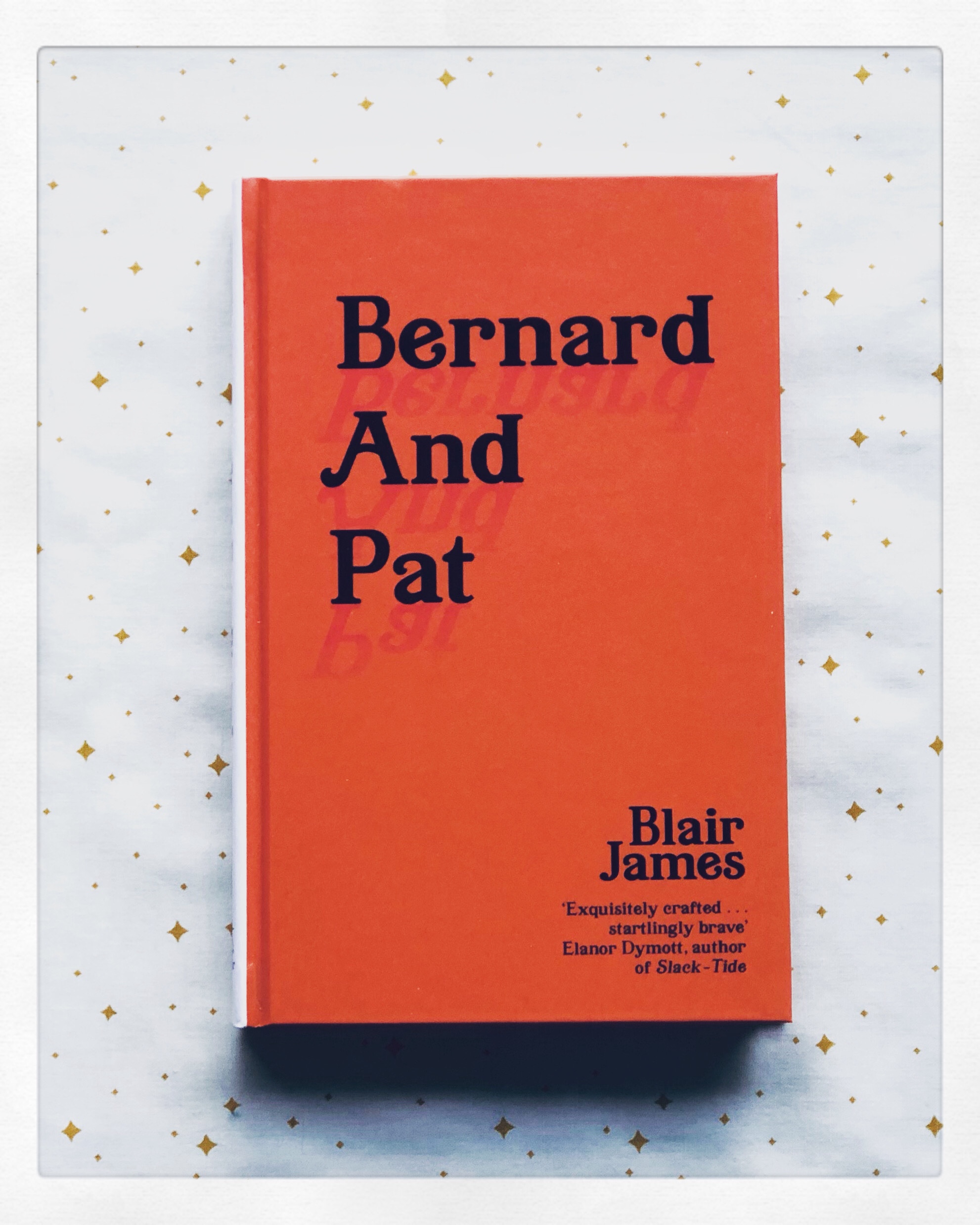
Bernard and Pat by Blair James

Bernard and Pat by Blair James

Published by Corsair

Available from all Good Bookshops and Online

What They Say

I suppose that these are the horses from which we are thrown.
We see things as we are, not as they are.
How do we best see? With eyes old or new?
How well do we rise after falling?

Catherine is small and everyone else is big. The world has lots of rules which she cannot keep up with, and lots of things happen that just don’t feel right. With Dad gone and Mum at work, Catherine spends her days with Bernard and Pat. These are days that she will never forget but never quite remember, either.

Bernard and Pat is a tour-de-force, a novel deeply aware of the peculiarities of memory and the vulnerability of childhood. Catherine’s voice is unforgettable.

What I Say

“I need it all, I need to know everything so that I can be anything because I do not know what to be, not what I am.”

How often do with think about our childhood, and the memories that make up that time? Do you remember every detail as if it was yesterday, or do you select the best and worst parts and the rest swims in front of your eyes definitely there, but you can’t be absolutely sure of every detail.

In Catherine, the narrator of Bernard and Pat, her memory is elusive. Sometimes she can recall every little thing, events and occasions are remembered with a piercing clarity that many of us can recognise, but seemingly without the comprehension and realisation that viewing them through adult eyes can bring. Catherine is being looked after by the apparently ordinary and overtly Christian Bernard and Pat while her Mum goes to work after her father passes away. Her brother James goes sometimes too, but what is very clear from the first few pages is that Bernard is sexually abusing Catherine.

The novel is told in short, sharp chapters that perfectly echo the concentration span and understanding of a young child, but as the novel progresses and the vocabulary becomes more sophisticated and erudite, it becomes clear to the reader that Catherine is now an adult narrating her story. Catherine has been profoundly affected by the trauma, and copes by dissociating her adult self from her experiences by using her childish voice. The story is punctuated by snapshots of Catherine’s life and especially her time at Bernard and Pat’s house. Little by little, from things she tells us about Bernard, we start to see how he engineered certain situations in order to molest Catherine.

As a reader it is heartbreaking to read Catherine’s story, to understand that this was happening when she was supposed to be safe. More shocking is that even when she tells her Mum that Bernard has been showing her pictures of naked women, and he is confronted, he manages to explain it away by saying that Catherine saw him looking at a catalogue to choose a birthday present for Pat. Bernard is respected in the community, is intelligent and plausible, so Catherine stays in his care. We are also completely aware of what is happening to Catherine, and Blair drips tension into every page as we wait to see what will happen to Catherine next as we are powerless to do anything other than be a helpless bystander.

I thought that the relationship between Bernard and Pat was also an interesting if troubling dynamic. Does Pat know or suspect anything about Bernard’s behaviour, and if so, why does she do nothing about it? I felt that there were hints to suggest that she did know, and that is what makes this novel even more upsetting, in that there is an adult in the situation who could have done something, but chose not to. Catherine subsumes her anger at what is happening to her, but in a series of recollections, we see how she is directing her anger at other, more weaker children around her.

As Catherine tells her story, we see how deeply she grieves for her Dad, and wishes that he was still there, because then she wouldn’t need to go to Bernard and Pat’s house, and this awful experience would never have happened. What becomes evident through the novel is that she is so devastated by what has happened to her that she even has to eventually change her name to Katy to dissociate herself from the horror of what has happened, and that she will never be truly free of it. When as an adult she sees Bernard in a supermarket, all the feelings come back and she has to relive it all again, trapped by her history she could not escape.

Bernard and Pat is unflinching in its depiction of child abuse, but it engages the reader because the horror of the situation is what is in the narrative we don’t know. We fill the gaps with our imagination and knowledge as adults, and like Catherine, are able to understand the severity and awfulness of what is happening to this child. A novel with this as the subject matter is undoubtedly hard to read, but Blair James instinctively understands exactly how to tell this sensitive and traumatic story with compassion and power.

Is it challenging to read? Absolutely. Yet at the heart of Bernard and Pat and testament to Blair’s writing is our total connection to Catherine. Our understanding of the unthinkable situation she is in, and how totally vulnerable she is makes Catherine’s story absolutely devastating but impossible to ignore.

I loved it.

Thank you so much to Kimberley Nyamhondera for my gifted copy.